What Ugandans think of Obama’s “Special Forces”
For Ugandans the Americans are basically aiding a military infrastructure that will mostly terrorize local people and strengthen an unpopular dictator.
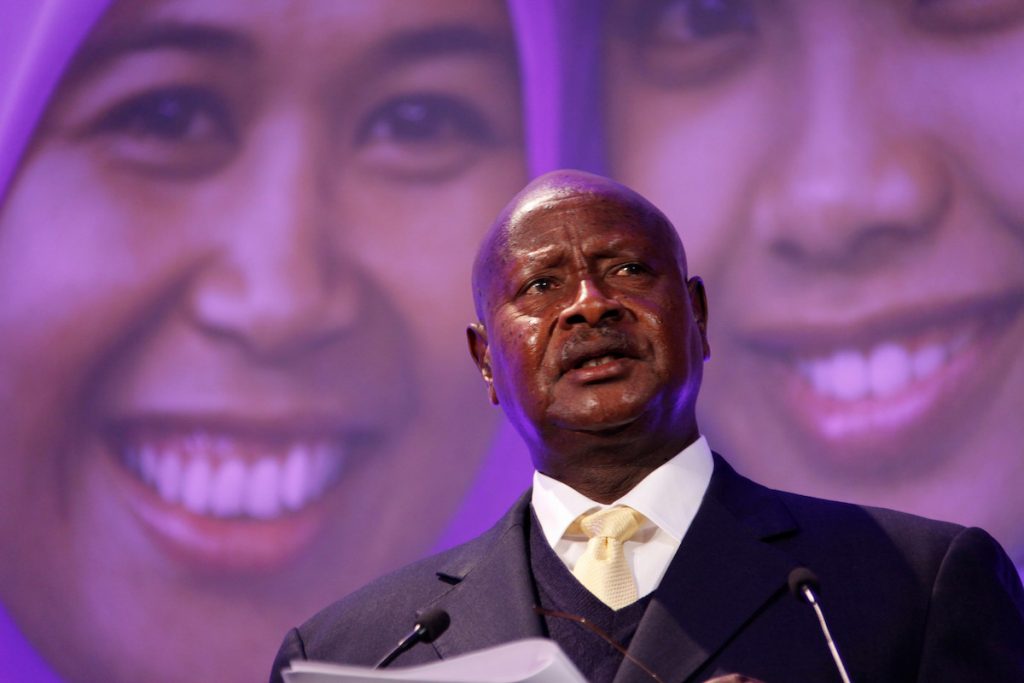
Uganda’s President Yoweri Museveni in 2012 (Russell Watkins / DFID Flickr CC.)
President Barack Obama’s decision to send 100 armed “special forces” to the Central African Republic to flush out Joseph Kony’s 400 odd fighters (link to the announcement) has elicited the range of predictable responses. The famed broadcaster John Pilger deplored it and American human rights organizations (shocker) welcomed it. So did the Western media. Pilger is not close to the action in Central Africa (the last substantive reporting Pilger did on Africa was his 1998 with his film “Apartheid did not Die“), but his instincts are usually good. As for American human rights organizations, the only thing we learned is that they are a powerful lobby in Washington.
But what do Africans in the region think? Especially in Uganda, the country from where Kony originates. Though I’ve read the Ugandan press online, it’s still been hard to find those kinds of opinions in one place. For that I turned to Iranian TV. What?
Yes Iran’s Press TV (basically their version of a global news channel) has a program Africa Today and last week’s edition tackled the question in the title. The video is below. The program is actually fairly decent. It’s worth watching presenter Henry Bonsu and his guests Tabu Butagira, a journalist based in Kampala, and Vincent Magombi, a professional commentator and “a political analyst” work their way through Obama’s motives and what local actors may get out of the increased presence of American military personnel.
The panelists reference the newly discovered oil on the borders of eastern Congo and Uganda, having an armed US presence close to “Islamic fundamentalism” in northern Sudan, the fact that larger numbers of American military advisors are already present in the region, and that Kony’s LRA is a spent force inside Uganda at least. The last time the LRA was a threat there was in 2003 according to the panel. The big winner is Yoweri Museveni. For Ugandans the Americans are basically aiding a military infrastructure that will mostly terrorize local people and strengthen an unpopular dictator. (UPDATE:We used to link to the Youtube video here, but the link is dead.)