Who speaks for Iran?
Between imperial narratives and state propaganda, debates about the war on Iran often erase the diversity of Iranian society and the voices of its marginalized communities.
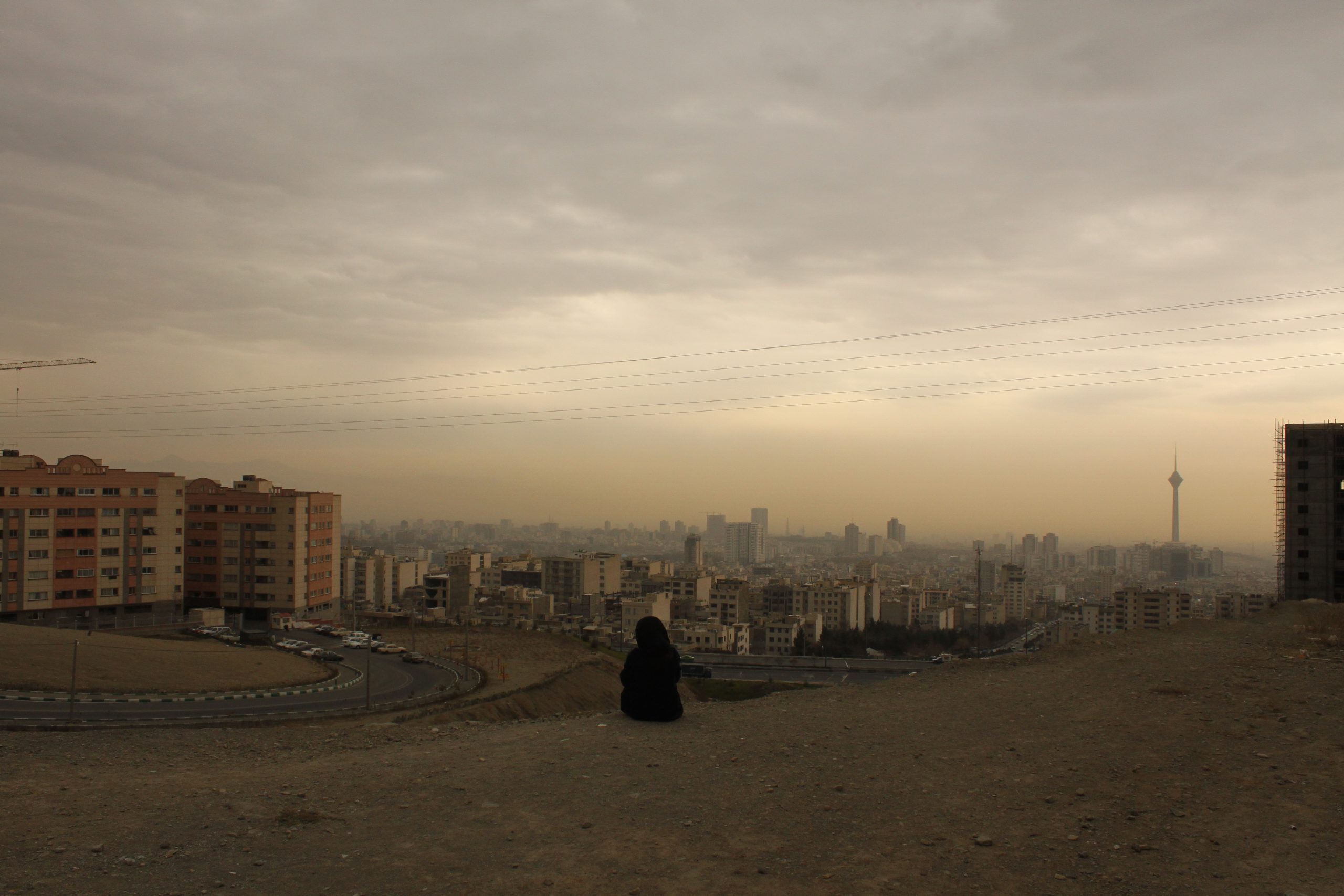
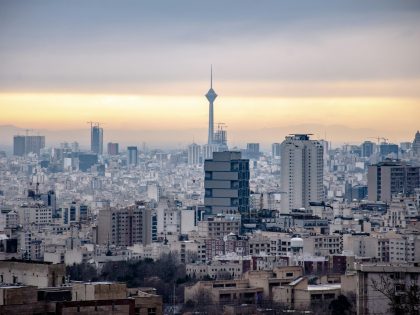
Tehran. Image credit Faraz Habiballahian via Shutterstock © 2021.
- Interview by
- William Shoki
When Israel and the United States launched their assault on Iran in February 2026, one question seemed to animate debate as much as the attack itself: what did Iranians actually think about it? Some claimed Iranians were cheering the bombs on and the killing of Ayatollah Khamenei, finally free from a regime they despised. Others insisted they had rallied around the flag, that national solidarity had overridden whatever grievances people held against the Islamic Republic. Everyone, it seemed, had an Iranian to cite in support of their position.
Writing in the aftermath of the US kidnapping of Venezuelan president Nicolás Maduro, the journalist Vincent Bevins noted that it is trivially easy to find a single Venezuelan who will confirm whatever you already think—and that invoking that person as proof that you are “listening” is not quite the same as taking Venezuela seriously as a real country, with the full range of opinions that implies. The observation travels. Iran, too, is a real country: ethnically diverse, religiously plural, and home to political currents that rarely surface in international coverage of it.
Priscillia Kounkou Hoveyda is an Iranian Congolese filmmaker, founder of the Collective for Black Iranians, and a PhD candidate at the University of Cape Town, where she focuses on Blackness in Iran. Africa Is a Country editor William Shoki spoke with her on the morning of March 11, as the conflict approached its third week. They discussed the information landscape around Iran, the diversity of Iranian society, the historical relationship between the Islamic Republic and African liberation movements, and what it might mean to take Iranian voices seriously—all of them, not just the ones that confirm what we already think.
William Shoki
I wanted to start by asking you to just set the scene for us—how do you understand the information environment around Iran, and what’s at stake in how it gets narrated?
Priscillia Kounkou Hoveyda
The Iranian information landscape has been of interest to the biggest powers in the world: Americans, Israelis, and the Islamic Republic, in no particular order. There is no news network, no channel, no media that’s actually speaking to the Iranian people out of a genuine desire to inform them about what’s ahead of them, or behind them. Everybody has an agenda, starting with the Islamic Republic, and because the Islamic Republic is a theocracy, every piece of news coming out of it is an act of propaganda, following a political agenda. This matters enormously when it comes to solidarity, because what’s happening to solidarity on the left is that that aspect: the dictatorship, is lost in people’s understanding of Iranians’ reality today.
Instead, we see a show of solidarity for systems instead of an expression of solidarity for the people in Iran. All systems—the American system, the Israeli system, the Islamic Republic system—all carry political agendas. There are degrees to this, of course. But in the Iranian context, we know that all the systems involved, whether foreign or national, are all following their own political agenda; their narratives are adjusted only in accordance with their existential needs, not the needs of the people in Iran.
This is also important when it comes to Africa, South Africa, Black people, and Black liberation struggle movements. There are indeed historical records of the Islamic Republic’s stance alongside the ANC—while, let’s be clear, Pahlavi’s monarchy developed and maintained strong security and economic ties with apartheid South Africa. And yet, one shall still ask: While the Islamic Republic expressed solidarity with Black liberation movements, where does it stand in relation to its people’s resistance movements? A resistance that we have witnessed happening for decades and that emanates from all margins of Iranian society, who have been living under the yoke of the Islamic Republic’s system of repression. One shall indeed pause and reflect on decades of crushed resistance from Kurdish Iranians, Baluch Iranians, as well as grassroots, Iranian women-led movements like Woman, Life, Freedom.
In 1979, yes, the Islamic Revolution was working-class-led. Yes, those were the aspirations of the revolution. But those aspirations were not fulfilled. And that’s independent of US economic sanctions—there is also an Iranian reality, one that doesn’t always need a reference to the American world. That particular reality is one of failure: a failure to build an equitable society, where a genuine right to independently form and express an opinion is respected. You are not allowed to express dissent in Iran. If you do, you will be detained and arrested. There are political prisons for that. And it’s not just a few people—it’s the everyday Iranian. From the university student who expressed dissent at a protest, to the Kurdish Iranian who is tired of seeing their ethnic minority being discriminated against, stigmatized, denied political agency, all the way to the Afro-Iranian populations living alongside the Strait of Hormuz, the Sunni Iranians of Arab descent, Iranians of South Asian descent—because the Persian Gulf is a melting pot of people from all over the region. These people are marginalized in Iran. So what kind of resistance movement, what kind of fight against imperialism, is real if it is domestically oppressing its own minoritized groups?
And in the movement of solidarity for Iran, what gets erased when it comes to the left is the realities of everyday Iranians, who are under state repression. We are, in fact, losing the core of what it means to hold a political position actually grounded in the working class, actually led and defined by its marginalized and minoritized groups—minoritized by the Islamic Republic, yes, but also a continuation of a marginalization that was already taking place under the monarchy. The Islamic Republic did not stop marginalizing people simply because it released African Americans alongside women during the 1979 Iran hostage crisis. The Islamic Republic also did not stop marginalizing its people simply because in 1984, it published the first stamp with Malcolm X. I still have it—I have it here in the collection of stamps my grandfather left me. Yes, the Islamic Republic was the first country in the world to issue Malcolm X on a stamp. And written on it is “The International Day Against Racial Discrimination.” My grandfather bought it from the post office and placed it in his collection alongside all his other stamps. But what about Black Iranians in Iran? Is the Islamic Republic only to be assessed in relation to foreign liberation movements, yet not in relation to decades of crushing Iranian dissidence?
William Shoki
That was really rich, and I think it put across forcefully what must be put across forcefully. I want to ask you about why it is that Iranians are so profoundly invisibilized—not only in international media coverage, but across the political spectrum. Why does it feel as if, contrary to everything you’ve just described—that Iranian people are a heterogeneous group representing a variety of different life stories, histories, and backgrounds—what often happens in the way Iranians are represented is not just that they’re presented as a monolith, but that they’re completely invisibilized? They’re not even factored into the conversation. There’s always the specter of the Iranian people, but no one talks about exactly who they are. Why do you think that’s the case?
Priscillia Kounkou Hoveyda
It’s two things. One is state-enforced censorship. That’s a very important factor contributing to the erasure and invisibilization of the diversity of political opinions and voices that Iranian society carries, and has always carried. That censorship existed also before 1979. My point is that it never stopped. It has been continuously enforced, and to this day, it is being enforced: surveillance, state censorship, and all the other elements that are part of a very complex, oppressive system like that of the Islamic Republic.
And second, it is the foreign-sponsored meddling in the “Iranian story” that amplifies a far-right, imperialist agenda in Iran through satellite TV programmes that have been playing in every other Iranian home.
But what is important to keep in mind is that a system can’t exploit dissent if people are not expressing any dissent, because, for example, they have reasonable access to economic opportunities, are not systematically being discriminated against because of gender or belonging to an ethnically minoritized group, etc. The dissent that this machine backed by Israel is exploiting is real—it is the product of a life under a dictatorship. It is a vulnerable point of view, one that is squeezed and pressed and fed up with living under a theocratic system, and therefore one that can be more prone to exploitation. And I think that’s what creates the erasure of the diversity of opinions and political views coming out of Iran, it’s the combination of state censorship and repression that gives rise to dissent that then an information machine funded by foreign actors exploits.
That said, if you pay close attention, you should be able to notice that erasure. You should notice how conveniently, every time you hear about Iran, it seems to come from people close to power—or from power itself, represented by the voice of the minister, the new Ayatollahs, the ruling elites, and those whose politics align with them and whose voices are therefore amplified. But then one must wonder: Why am I not hearing from the everyday Iranian? It’s not that people don’t know how to speak. It’s that they are erased, ignored, doubted, and censored.
William Shoki
So then, you’ve described very helpfully this dual dynamic, where on the one hand, there is internal repression, which sidelines the full texture of Iranian political perspectives in favor of a narrative that promotes the state’s position, and where that void is filled by the amplification of reactionary, anti-regime narratives, particularly those promulgated in Western Europe and North America. Given those conditions, what does that mean for how we should understand events in Iran? Once this latest uprising broke out, a very lively debate emerged across the political spectrum—particularly in left and progressive spaces—about how to understand what this moment meant, and whether it represented the legitimate grievances of the Iranian people or was it the product of a color revolution, a direct outcome of US, Israeli, and allied meddling. How are we supposed to interpret what is happening in Iran? And in making that interpretation, why has it become so difficult for people to appreciate that there is a multitude of perspectives, often expressing real ambivalence? It’s entirely possible, for example, to conceive of Iranians who oppose theocratic rule but also oppose foreign intervention, who oppose war, who oppose bombing. Yet there’s constant pressure toward a binary: Either you support the agency of ordinary Iranians and therefore must support foreign intervention, or you oppose imperial meddling and therefore must support regime continuity.
Priscillia Kounkou Hoveyda
There’s so much in what you’ve just said, and what I can say is that there’s one variable that has been consistent for me—not just about Iran, but about everywhere—and it is this: If the narratives you’re hearing do not consistently center the voices of the marginalized, something is probably wrong, something is probably not to be trusted. When you hear from a society, but you hear only from the dominant voice—whether it’s a dictator or not, whether it’s an invader or not—then, one must ask oneself: who is missing in this narrative? Why is it only the dominant voice, that is the voice that represents the dominant group or the ruling elite, that is being centered? In the case of Iran, the dominant voice is Shia Muslim and ethnically Persian, representing the dominant composition of the Islamic Republic, meanwhile certain religious minorities are excluded, such as the Baháʼí, and ethnic minorities face significant systemic discrimination and underrepresentation in the public and political sphere.
So first, we need to look at places, countries, through the people who make up that place, beyond the ruling elite: Which ethnic groups, which languages, what are their socioeconomic realities, what’s their social mobility? Because Africa Is a Country is the platform that it is, and because the left claims to be—we claim to be—deeply intellectual, we should look at Iran for what it’s actually made of: its people, not its systems. And when we say “people,” we should approach it in a way that is heterogeneous, not essentialist, not tokenizing any religion or any struggle, not romanticizing whatever political aspirations they may hold. Once you look at a place through the people who make it up, in all their diversity of opinions and backgrounds, you should then ask yourself: In the narratives I’m hearing, am I also hearing from the marginalized voices of this particular society? Or am I, interestingly, hearing far more from the ruling elites than from, say, the everyday Black Baluch Iranian woman living in some corner of Iran—someone we never hear from? Do we even know these women exist? What is everyday life like for a Black Baluch Iranian woman under the Islamic Republic, under the bombs, under the constant threat of invasion? Where are those points of view? Is hearing from a theocratic system and its elite supposed to be enough to think we’ve heard from the people? That’s very naive, and yet it’s what people do all the time. They quote people in power within an oppressive system as evidence of having heard from the people, as evidence of understanding the diversity, the multiplicity, the complexity of Iranian society.
I worry about this. I don’t think there is Iranian exceptionalism, but I do think every place has its own particular form of it. What is specific to Iran is that it represents, for a lot of anti-imperialists, the token that must stand up to what the left is fighting against—irrespective of what the Islamic Republic is doing to its own people. But can you really trust a system that is oppressing its own people? Once we honestly ask that question, then comes the harder one: How do we hear from Iranian people? Let’s demand that we hear from the multiplicity of Iranian voices. Let’s give space to those conversations. Let’s hear from the complexity of that reality and that point of view. And let’s not project our ideals or ideologies onto what we think resistance should look like. Instead, let’s work towards making that ideal a reality—because it’s not there yet. This is a very flawed, destructive, oppressive situation that will continue destroying my country, terrorizing my people, and giving foreign actors the space to speak over the voices of Iranians: the university student, the working person, the unemployed—and there are so many unemployed people in Iran with their own claims and demands—people who’ve been minoritized for generations and are tired of it, people who don’t want their children to wake up to the sounds of bombs, who don’t want their schools, hospitals, streets destroyed, and who also demand a fairer society for themselves and their children, greater freedoms and rights.
I know that I’m anti-war. You know that I’m anti-imperialist. When I say “leftist,” I don’t mean it in the sense that is being articulated today, because I think the left has become somewhat of a product of an elite that intellectualizes in academia, writes very complex essays and analyses, but has moved away from actually listening with empathy to people, to communities, to marginalized voices. I don’t think the left is doing this work. I think the left is too busy listening to the sound of its own voice, finding echo in media spaces, in academia, in scholarship—and perhaps too consumed with fighting the far right and the fascists, which it should do, but not without acknowledging grassroots movements, communities, marginalized voices.
The crushed protests of the Green Wave movement (2009), the Woman, Life, Freedom movement (2022) as well as of late, the protests in January 2026—might have been infiltrated, like any other effort by working-class, grassroots, and minoritized groups in Iran to rise up against the systems that oppress them, but the fact that there is foreign meddling does not erase the grassroots fights, the protests, the dissent that has existed in Iran since before the internet, since before social media and TikTok. It does not erase the working-class dissent, women’s dissent, minoritized groups’ dissent, the everyday Iranian dissent, the everyday Iranian woman who is simply tired of being policed in the street by the Guidance Patrol. None of this becomes null and void because there is foreign meddling. There’s been foreign meddling in African independence movements—that’s part of why the African independence movements didn’t end up being the liberation we were fighting for. But that doesn’t mean that African people’s quest was not legitimate and real. I’m not only Iranian—I’m also Congolese. My people have been fighting for their freedom in Congo, and that fight was interrupted; it was hijacked. Yet their resistance was and is still very much legitimate and very much real.
William Shoki
Yeah, absolutely. A universal truth. I’m hesitant to move too quickly into analysis or prediction about where things are going currently, but thinking about all of the groups you’ve described that are erased in this conversation—ordinary Iranians, working-class Iranians, students, minority communities, Kurds, Baluchi, Azeris, women, and other marginalized groups—the working class, the unemployed, the subaltern, all the oppressed groups in the country right now—what have the events of the last two weeks meant for them, as far as you’re aware?
Priscillia Kounkou Hoveyda
It can only ever be “as far as I’m aware,” because nobody holds a truth so totalizing that they can say this is what everyone thinks. Anybody who says that should not be trusted—and that’s essentially what systems and people in power do: They lump everyone into one position. My experience and my conversations—when they’re not interrupted because of blackouts and censorship—is that it’s a mix of opinions and points of view. Are we surprised? People are different. People hold different opinions. They’re at different stages in their lives, they have different experiences in relation to life in Iran, they come from different backgrounds, they have had different challenges, and different traumas. If you ask a man and a woman how safe it is to walk in the streets of any country, they’ll give you different answers based on their socioeconomic status, their race, their age, and their gender. So, among the margins and the working class, it is also complex and diverse.
You have people who are against the war, who say, “We don’t want to be bombed. We fear for our lives, for our loved ones. We don’t want our country destroyed. We don’t want to wake up to the sound of bombs.” And then you have people who say, “Let the bombs fall, I’m fed up of living in this dictatorship.” They’ll say, “What about the enemy? We’ll deal with that, one problem at a time.” There are people like that. You also have people who say we must continue fighting for the more equitable society we want. And you also have people who want Reza Pahlavi. There are people in the margins who want him. I disagree with some of them, and I agree with others. But really, is my opinion more important than theirs? I don’t think so. What matters is the multiplicity of points of view held within Iranian society. And what it indicates, in my view, is that in an ideal world, the Iranian society would hold a referendum. People would go and decide what they want, freely, transparently—hearing from all that makes Iranian society, from all of those considered of age to share their opinions about what they want the fate of their country to be. Should this theocratic regime continue? Do people want another form of political system? Iranian people can think for themselves. And then we would be able to see the diversity of opinions, and what the main points of view actually hold. Isn’t that the ideal of a free and fair society that centers its own people?
William Shoki
What I’m appreciating about what you’re saying is that it’s a reflection of reality: We simply cannot say there is one definitive Iranian perspective that will illuminate with instant clarity what needs to happen. The only way to know the way forward is to ask, through a free, fair, and democratic process that genuinely captures the aspirations of the Iranian people.
And as you acknowledged earlier, every country is unique, but what you’ve just described characterizes social relations across the region—the profound resilience of authoritarian regimes that primarily protect the interests of ruling and elite national groups, regimes that are to varying degrees financed by foreign powers or subject to foreign interference.
Priscillia Kounkou Hoveyda
And one more thing that I think will come up, so I want to bring it up now. There is Reza Pahlavi, the son of the last ruling King in Iran before the 1979 revolution, and he has been offering himself as the one who can manage a government transition for the Iranian people—tweeting from LA, or London, or New York, somewhere in the West, presenting himself because, he says, people are calling his name in the streets. While it’s not untrue that some people are calling his name in the streets, some of them are probably Mossad and CIA, but it’s not untrue that there are Iranians who genuinely want him and his monarchy back. Then there are people who want him simply because they think there is no one else, so he’s the default, the lesser evil according to this group of people. And then, there are a lot of people who disagree and who don’t want him—which is precisely why it can’t be him. In the same way that the Islamic Republic can’t hold a genuine referendum because it’s an interested party, Pahlavi presents a different but analogous problem. And so this is where the conversation should actually start. What do we do? How do we make possible, as fair and as equitable a process as possible, for Iranian people in Iran to self-determine, to decide their own fate? How do we make that a reality? Not through an electoral commission coming from Europe—we know their biases. So how, then? This is where the conversation should start. Instead, on the right, you have people backing a MIGA (Make Iran Great Again) agenda and celebrating war, and on the left, you have people now rallying with the Islamic Republic—which is a theocracy. So who, in all of this, is rallying with the people and with their right to self-determination? Who is focused on paving a path? Not that it’s our job to pave it—it’s not, and nobody asked us. Iranian people in Iran should pave the way. But how do we give space and carve out space for that conversation? How do we push the systems and the agendas aside so that Iranian communities can come to the center and express what they want and self-determine what they want their society to be? That’s what I wanted to contribute to this conversation, Will. We need to push that space open for the diversity of Iranian points of view on what they want for their country to be centered.