Slow death by food
Illegal gold mining is poisoning Ghana’s soil and rivers, seeping into its crops and seafood, and turning the national food system into a long-term public health crisis.
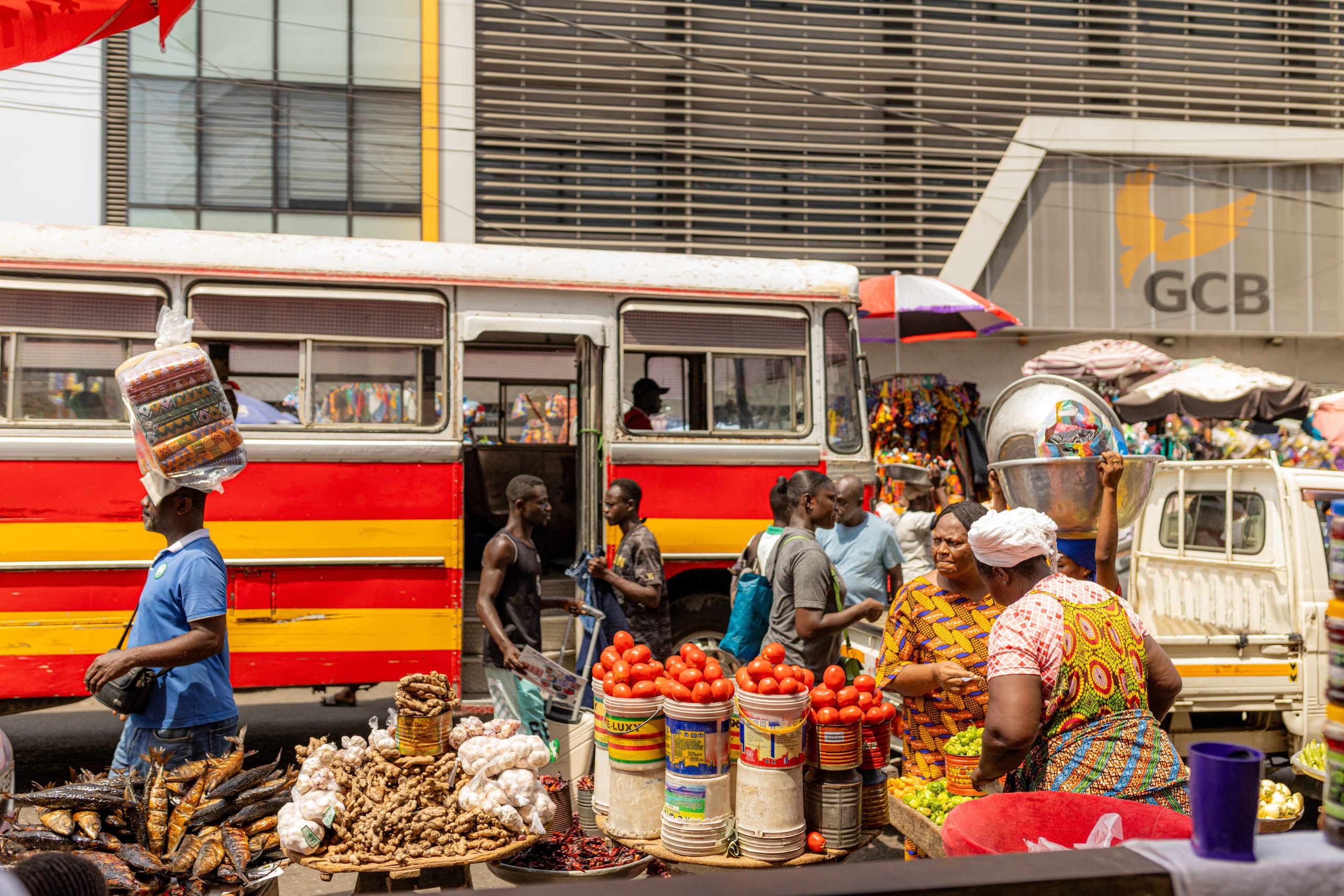
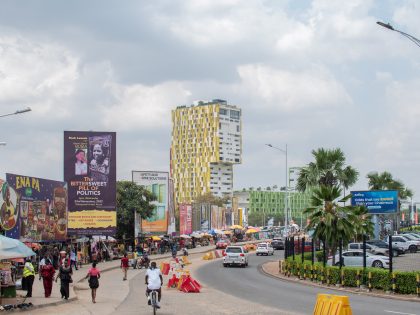
Makola Market, Accra. Image credit 26daysoff via Shutterstock © 2024.
Every part of Ghana’s food system is corrupt. The water, the land, the food, and the body form a symbiotic relationship. A study conducted by Mensah et al. in 2025 revealed that on a galamsey mining site, abandoned for six years in Ajamesu, a village in the Ashanti Region, cucumbers were being grown in strongly contaminated soil. Galamsey is the Ghanaian term for illicit artisanal small-scale gold mining. The harvested cucumbers contained high trace amounts of mercury, cadmium, iron, arsenic, and copper. The research report indicates that daily consumption of cucumbers and produce containing these metals has adverse health risks, including an increased risk of cancer among adults and children.
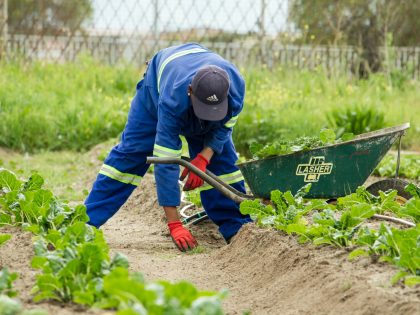
In rural Ghana, there are hundreds of abandoned mines on former arable lands. The backbone of most rural economies is agriculture. Areas affected include Nyaboo, Agogo, Odumase, Goaso, and Tepa—all former breadbaskets. Cultivated produce in these areas includes garden eggs, tomatoes, onions, peppers, and green peppers—all central ingredients in Ghanaian cuisine. They also supply major markets in Kumasi and Accra, after which these ingredients make their way all over Ghana, and thus to millions of households. None of the recently abandoned lands can properly support plant growth, not unless soil toxicity caused by galamsey is reversed, or nutrients are supplemented via heavy use of fertilizer, or the soil rejuvenated. All food cultivated on these lands will absorb and store poisonous metals directly found in the land. And for non-polluted areas, through the use of contaminated irrigation water. Considering that the entirety of the Ghanaian diet revolves around legumes, cereals, vegetables, and animal products, primarily cultivated in the affected and soon-to-be-affected areas and seafood from polluted waters, the persistence of these metals denotes the imminent collapse of our food system.
For eight times the minimum wage, all a galamsey miner in Manso-Adubea has to do after each day shift is to wash the mined gold in a lead mercury mixture with water pumped directly from Nsuo Abena, W’aha, or any of the surrounding rivers that people depend on for survival and agricultural activities. Afterwards, he dumps the water-heavy-metal solution directly back into the land. Sometimes this washes downstream into rivers. Other times, it is absorbed into the soil.
The journalist Anthony Labruto reports that as of September 2024, 60% of Ghana’s water bodies had been polluted due to galamsey-related activities. Major rivers affected include Birim, Tano, Densu, Subin, and Pra—all serving thousands of communities. Further findings from the study by Mensah et al. indicate that, unlike large-scale firms that treat their waste before disposal, galamsey miners directly dump into the environment, often causing irreparable damage to the land, waters, fauna, and flora. Public health expert, Kelvin Tamakloe, adds that communities that have remained untouched by galamsey will experience acid rain, which will inadvertently expose the land, air, and waterbodies to these same heavy metals and chemicals. Since agricultural activities are still largely reliant on rainfall, food cultivated all over Ghana will become contaminated. Therefore, there will be no safe zones or communities. In short, the entire food chain is corrupted or will be, and this poses a significant risk to food safety, security, and health. He adds that consistent consumption of products contaminated with heavy metals will potentially lead to genetic and epigenetic changes in future offspring. This could present as neurological disorders, developmental abnormalities, and cancer.
Africa’s food systems remain under constant threat and are therefore vulnerable. In the past decades, foodways have been significantly impacted by colonialism, climate change, urbanization, and the rapid depletion of arable land, for example. The specific climate impacts on Ghana’s food systems present a rather harrowing picture. Across Ghana and other parts of Africa, an urgent humanitarian crisis brews as food systems and foodways become increasingly vulnerable to ecological threats.
The rapaciousness of galamsey, the complicity of the media, the involvement of the political elite, independent mining corporations, including the Chinese, compounded with poverty, makes it the most potent form of ecological violence and a direct threat to Ghana’s food system. The reason is that, unlike other crises such as annual floods, corruption, and inaccessible healthcare, whose effects are tangible and readily discussed in the media in digestible packets, the effects of galamsey are not immediate, but long-term, if you ignore the loss of farmland and proliferation of water pollution. The effects compound over time and thus require a specific type of messaging to connect polluted waters to polluted lands to polluted foods and the imminent collapse of our food system and, inadvertently, health infrastructure. The Ghanaian media remains incapable or unwilling to do this work. Furthermore, the government and relevant agencies, including the Ghana Water Company, Forestry Commission, and the Environmental Protection Agency, remain reticent to categorize this as a national emergency—a position held amid major anti-galamsey protests in 2013, 2024, 2025, and 2026, including adjunct allied protests by artist collectives such as The Beyond Collective. I suppose that classifying galamsey as a crisis might impel the government and relevant stakeholders to do the hard work of doing their actual work.
With ongoing parallel crises, some of which have persisted for more than five decades, Ghana is a country ill-equipped to handle yet another crisis that affects everyone, albeit unequally. The (political) elite will remain untouched while farmers in Agogo, communities, and families all over Ghana face the consequences of the government’s inaction. Nonetheless, contracts are still being awarded to small-scale artisanal mining companies amid brutal clashes and growing concerns about the safety of Ghana’s food system—including the passing of legislation L.I 2462, which permits mining in forest reserves and allows the President to approve mining licenses in “globally significant diversity areas.”
Indisputably, the tenacity of Ghana’s food systems has always been questionable. Both Akomea-Frempong et al. and Northern Presbyterian Agricultural Services (NPAS) report heavy use of fertilizer, some of which include DDT, banned worldwide since 2004. However, the galamsey crisis and its incongruous relationship with the ecosystem and biodiversity have transformed an environmental crisis into a blooming food-chain emergency. This will have wide-reaching consequences on health and even the economy. It will also reveal the rather shambolic state of the underlying systems and their fragility, particularly the already inept food safety frameworks that are unable to address existing issues with straightforward solutions.
Thus, several questions emerge: how does soil toxicity present, and is it reversible? How are poisoned rivers and biodiversity destruction manifesting in real time? How will this crisis disrupt the food system? For example, if only 10% of tomatoes—a key ingredient of Ghanaian cuisine—are cultivated here, what happens if that percentage decreases? How has the loss of specific fish and seafood species, which previously thrived in these rivers, affected fishermen, and what happens to the health of consumers who feed on seafood harvested from these rivers?
To these questions, Ian Kwakye, an Environmental Scientist and Conservationist, argues that the food system has already been corrupted. Arable farmlands have been forcefully encroached upon, sometimes even willingly given away to mining companies. To wit, some cocoa farmers in Bono Ahafo, Ashanti, and the Western region—all breadbaskets—have sold off their farms for galamsey activities. This means that companion crops such as cassava, beans, cocoyam, and tomatoes are no longer being cultivated in these areas and that has impacted food availability, cost, and ultimately food security. Licensed hunters report low to no catches because biodiversity has been damaged due to illegal mining activities. In areas where farming activities haven’t been fully disrupted, and where contaminated irrigation waters are also used, food produced will contain high amounts of these trace metals. In communities where mining activities have burgeoned for years, and where vegetation has been destroyed, Ian cites the increased likelihood of erosion, low soil fertility, and reduced food production. Farmers have shared growing concerns about previously mined areas not supporting plant growth. They also complain of decreasing yield in even unmined areas. Fishermen in the Western region, Shama, for example, have reported dwindling catches over several years, due to marine litter, including a decline in fish diversity.
Galamsey remains a well-ignored environmental emergency. The current reality of the Ghanaian food system and the slow descent into an environmental catastrophe is caused directly by the government’s inaction.