Afrobeats after Fela
Wizkid’s dispute with Seun Kuti and the release of his latest EP with Asake highlight the widening gap between Afrobeats’ commercial triumph and Fela Kuti’s political inheritance
Screenshot from Wizkid on Instagram (Fair Use).
A few weeks ago, some disturbing comments appeared on the official Instagram page of Wizkid, Africa’s most successful musician of the streaming era. The social media post, which tagged @bigbirdkuti, the official Instagram account of Seun Kuti—the controversial musician and son of Fela Kuti—was a frontal weigh-in on the recent back-and-forth between Seun Kuti and Wizkid FC, Wizkid’s fanbase.
See the posts below for yourself:
Perhaps Wizkid was euphoric about crossing Spotify’s 10 billion mark, or media-savvy enough to use this controversy to promote his latest project, REAL, Vol. 1. The jury is out on his intentions. But his actions left the Nigerian music community disappointed and somewhat concerned about the cultural legacy of Fela Kuti, a figure revered as the most influential African musician of the 20th century.
Fela Kuti needs no introduction to lovers of Nigerian music. He recently received a posthumous Grammy Lifetime Achievement Award, a first for an African musician. At the forefront of inventing Afrobeat, a fusion of highlife, funk, American Jazz and Yoruba music, Fela was also a countercultural figure and activist who was always in trouble with the government of the day. His activism and protest music made him, his family, his band members and his followers sitting ducks for successive military regimes. He was brutalized and jailed several times for his criticism. Following his death in 1997 at a relatively young age of 58 from an HIV-related ailment, his influence persisted in contemporary Nigerian music, now called Afrobeats.
I belong to the school of thought that believes Fela’s youngest son and leader of Fela’s Egypt 80 Band, Seun Kuti, made himself vulnerable (and continues to do so) by acting like a social media influencer. He ought to find a more creative conduit for his inexplicable rage, lest he lapses into crime again. Perhaps consider retaining the services of a therapist or joining an anger management class. And Wizkid should rein in his fan club, Wizkid FC, as the Nigerian politician and presidential aspirant, Mr Peter Obi, ought to rein in his own netizen loyalists. Everyone should be more civil, more gracious, and more responsible. The Nigerian government should build lasting monuments around the legacies of unsung heroes like Fela Anikulapo-Kuti—but this is not the point of my piece.
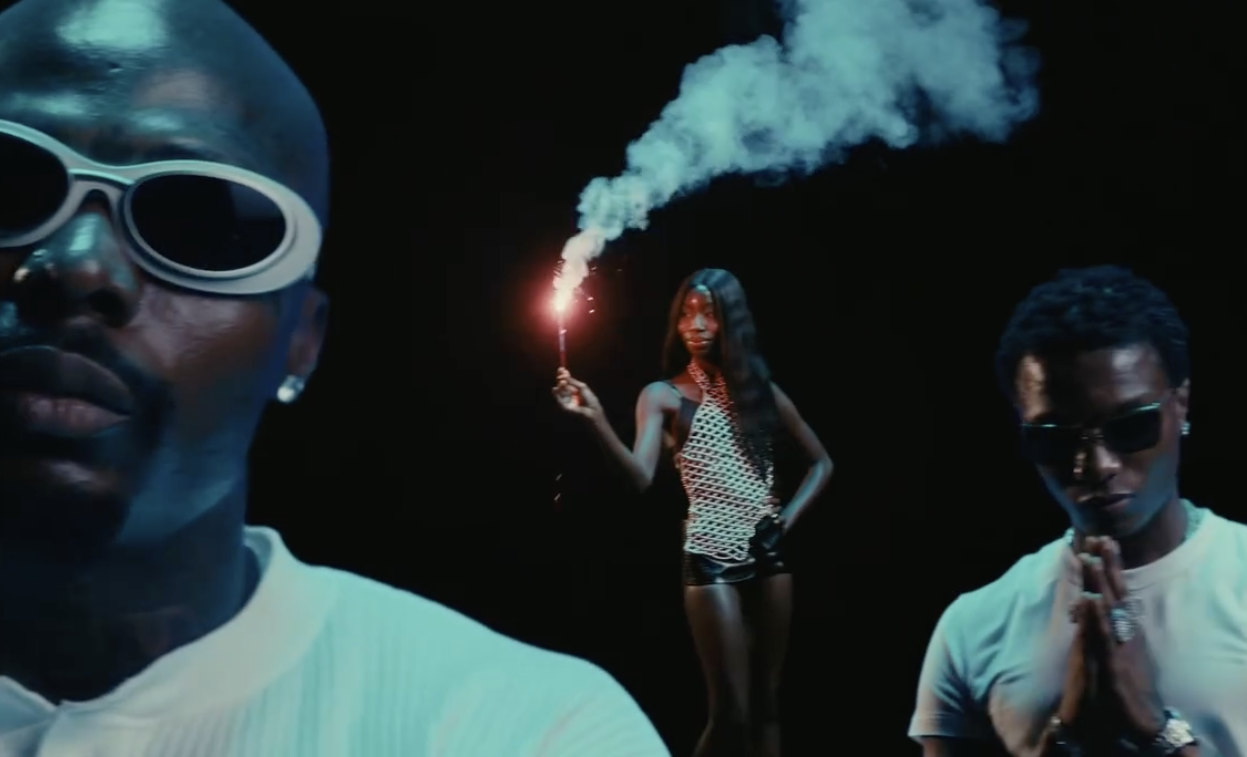
I am here to tell you about REAL, Vol. 1, the most elite Afrobeats release of 2026 so far. A 4-track extended play duet record with Asake, lasting ten minutes and produced almost entirely by Magicsticks. On the opening track, “Turbulence”, Magicsticks gets help from DJ Tunez, perhaps adding extra licks to the thumping bassline. Asake opens with his typical verse, which begins with dysphoria, offers some instructive street wisdom and ends with his inflated assessment of his sexual prowess. Wizkid takes that baton in his verse. Similarly, he starts with his happy family, offers advice about minding his own business (he would be wise to take his own advice), and ends by bragging about his lifestyle.
What is “Turbulence” really about?
References to turbulence are usually reserved for aviation, but Asake co-opts the term meaningfully for the chorus, “Turbulence, oh, turbulence, yeah I dey drop oh, turbulence.” That sharp drop from a high, either drug or ego-induced, deserves acknowledgement in transit from a popping party to a relatively quiet hotel room in the wee hours. Between the sombre brag and sober counsel, there is something vulnerable about ‘Turbulence,” perhaps because of the mood it evokes. You can’t knock off the preoccupation with the female body, but you can tell that it stands in for something dysphoric.
Wizkid handles the hook on that Private School Amapiano bop, “Jogodo”, but this is hardly the song’s highlight. Either the early brass solo on the record or Asake’s indulgent verse stands out, but the mood on “Jogodo” is more luxuriant, gregarious and less vulnerable than “Turbulence.” In all, the song aligns with Amapiano’s ethos of letting the music—that generous measure of ambient synth and percussion—do the heavy lifting.
“Iskolodo” is built on dreamy piano chords, a splatter of idiophonic percussion and a smattering of Spanish words. A delicate nod to Latin America is consistent with the Giran-Republic era, as well as Asake’s past life as a drummer. The music on “Iskolodo” is hypnotic on its own, almost ruined by the duo Wizkid and Asake’s inchoate lyrics, yet the music’s atmospheric mood is somehow preserved.
“Alaye” is yet another Amapiano song. It is best to leave Amapiano pundits to determine what exact school of Amapiano Magicsticks appropriates on this record. Both Wizkid and Asake are in a jubilant mood, but paradoxically, they also obsess about time in their verses. Expectedly, as with most Afrobeats songs, they privilege feeling over thought, mood over meaning, and the kernel of an idea darting all over like the disappearing cursor of neonlight, chased by an obsessed reveler.
A dear friend once said finding meaning in Afrobeats is as efficient as fetching water from a well with a basket. They are probably right. Somewhere between the brain rot that is the internet and social media, our short attention span, AI’s revolution and the goody bag swung around the drug dealer lurking outside the nightclub, Afrobeats is losing whatever is left of its lyrical armoury, relying entirely on the producer’s craft to do all the heavy lifting.
I have always found Asake’s courtship with Wizkid rather curious. I have returned to his collaborations with Olamide. From the incredible, ceiling-shattering verse on “Amapiano” to the extremely melodic “New Religion,” Asake clearly makes better music with Olamide. Olamide, not Wizkid, helps Asake’s creativity attain magical alchemy.
REAL Vol. I is the kind of record that would get better if you are hotboxing with your mates in a rented BnB. But I have one question for Wizkid: Was REAL Vol. 1 worth calling Fela’s name in vain?