If commercials were a competition
A sample of some of the TV commercials made specifically for the 2012 African Cup of Nations football tournament.
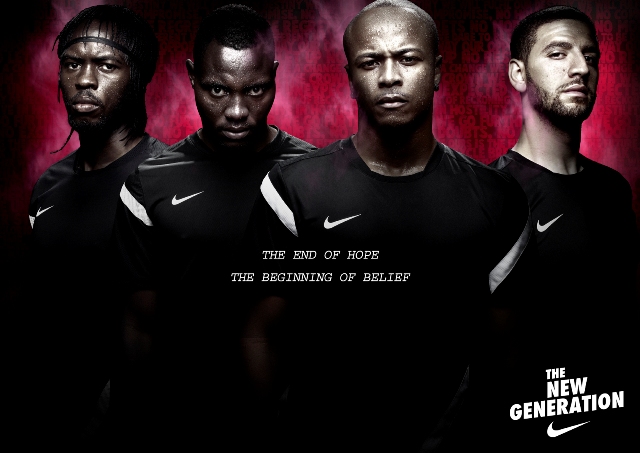
Gervinho, Andre Ayew, Kwadwo Asamoah and Abel Taarabt (Image: Nike).
The semi-finals of the 2012 African Cup of Nations are played later today. I’ll have to find a video stream of the games somewhere online (none of the American TV stations or sports channels are broadcasting the tournament live). Meanwhile, as someone obsessed with media, I could not help but notice the TV commercials on Eurosport or any of the other channels whose streams I’ve been lucky to access.
Probably the most striking ad is Nike’s “New Generation” ad with Andre Ayew (of Olympique Marseille and Ghana), Gervinho (of Arsenal and Cote D’Ivoire), Adel Taarabt (Queens Park Rangers and Morocco) and Kwadwo Asamaoah (Udinese and Ghana). At least three of these players – Ayew, Gervinho and Asamaoah – will be involved in matches today. The ad is part of Nike’s series of commercials, “The New Masters of Football,” which aims to shake off “the stereotypical view of the African game.” The “New Generation” ad opens with a voice over by an actor: “Too often we have seen African dreams turned to dust, or end in defeat, no matter how glorious. We pledge to break the cycle.”
Then there’s this ad shot in Dubai for Indian-owned phone company, Muse, in support of Cote d’Ivoire’s national team. A few members of the Ivorian national team are joined by local actors.
Predictably there are ads with children. Like this one in which legendary Liberian footballer George Weah joins a group of children in Soccer City Stadium in Johannesburg, South Africa, to kick footballs into a goal stacked with drums. It’s for another mobile and phone card company, Lebara.
Finally, Lebara has another ad that looks like it was also shot in South Africa. For this one they got the Indian composer A R Rahman to compose something.