Has digital feminism peaked?
The scandal around Ezra Olubi has exposed the contradictions of Nigeria’s middle-class, online feminism.
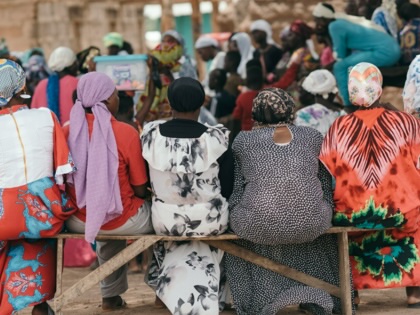
Photo by Abdulai Sayni on Unsplash
Nigeria’s netizens were agog recently with the emergence of various allegations of sexual misconduct and abuse against Ezra Olubi, a popular entrepreneur, software developer, and co-founder of Paystack, one of Nigeria’s most successful financial technology companies. The saga unfolded after the tech entrepreneur was accused of patterns of abuse and harassment by a former lover and long-time acquaintance, Max Obae, popularly identified on X as a feminist. Obae’s allegations included claims that Ezra was demeaning to women and his subordinates, treating them as less human. While Olubi has been convicted in the social media court of justice (and now fired from Paystack), the accusing eye has also turned to Nigeria’s digital feminists, some of whom, it seemed, had been exposed for failing to practice what they preach. Online commentators quickly pointed out that Obae, alongside a few other popular digital feminists, had been happy to be around Olubi, benefiting financially (in some cases, quite substantially) from his success—through access to interest-free loans and cash gifts, among other perks—while claiming to be radical feminists. Some media users keenly following #Ezragate have gone as far as to doxx and out popular Nigerian feminists for their previous online and offline interactions with Ezra.
As a consequence of all of this, Nigerian feminists have been spotlighted as a whole and accused of resisting control only from men whom they deem lacking in social and financial strength. Various troll accounts focused on promoting patriarchy have capitalized on this to push their agenda that feminism cannot thrive in the Nigerian context regardless of the economic class involved. In the fashion of Robert Bolt’s quote from A Man for All Seasons, they claim “everyone has her/his price in money, or pleasure, titles, (wo)men, bricks-and-mortar, there’s always something, or in suffering.” A consensus has seemingly emerged: Nigeria’s radical digital feminists are not fighting against the oppression of women; they are fighting to be the oppressor or to benefit from proximity to wealth. They feel wronged only when patriarchal abuses originate from economically powerless men.
The supposed betrayal of feminism in Nigeria has emerged as a more interesting debate than the original allegation leveled against Olubi. Somehow, this brings back the question of what Nigerian feminism is and what the major asks are. Is it reduced to men-hating social media rants by petite bourgeois radical feminists, or does it include the struggle of suburban and rural women fighting challenges such as child marriages and socioeconomic marginalization, among other social issues? Who is included in the discourse on Nigerian feminism? Is it reserved only for formally educated women who may be financially and sexually liberated, or can women from disadvantaged settings who earn little or nothing sit at the table?
While the broadly accepted definition of feminism is equality of the sexes, in general parlance in Nigeria, feminism is synonymous with being antagonistic to men. Introducing oneself as a feminist does not bring admiration but rather disgust. Men who discuss their feminist ideals are considered weak and thought to be encouraging the bad behavior of wild women. One may wonder, if this bad PR stems from how patriarchal most communities in Nigeria are or if the recent wave of popular feminists has been overzealous. Women from the ruling class are not spared, very few women are given a chance to access top political offices. Even when fortunate to, they are compelled to pander to men in power or face dire consequences, as seen in the case of Senator Natasha Akpoti. If women with socioeconomic and political might can be ousted for being bold and outspoken, the plight of women from disadvantaged backgrounds can only be imagined. Female custodians of patriarchy and their male counterparts tell women to “hush and not act like women,” lest they lose the little power they have. Nigerian women continue to suffer the curse of gender demotion imposed by Abrahamic religions and colonialism. One thing is for sure: The activities, actions, or inactions of a few individuals should not speak for the majority.
Feminism in Nigeria has not always been mostly regarded as a negative movement. In precolonial Nigeria, the image of a powerful woman was not frowned at. We read stories of Moremi of Ife, Amina of Zazzau, Inikpi of Igala, Emotan of Benin among others who overturned systems with their bravery. Although these individuals may not be considered as feminists, they were vital in activism and governance. Despite how stifling the colonial system was, women like Nwanyeruwa, Sawaba, Ekpo, and Abayomi pressed on and did not let their guards down. They organized, conscientized, and made administrators cower under their might. Events such as Calabar Women’s Protest, Aba Women’s Riot, and Abeokuta Women’s Revolt give us an insight into how powerful women-championed movements were. In recent years, we have seen feminist organizations focus on empowering girls and women and on expanding financial freedom, while also pushing the government to discard patriarchal laws. Despite some fair criticism, digital feminism has also had some real-world impact in Nigeria. Most notably, during the critical moment of the EndSARS movement, an online group called the Feminist Coalition (FemCo) emerged championed fundraising and provided protesters with legal, health and financial support. However, it is apparent that they do not get enough publicity for their work as they are drowned in the noise that says feminism is synonymous with men-hating. Several organizations with similar feminist agenda struggle to have their voices heard above the daily online debates on the status and place of women in the home and society at large. It is not hard to understand why; people kill to get the scoop on the latest gossip and lack interest in sensible conversations.
The discourse of feminism in the Nigerian context has always been quite complicated due to the disparity in socioeconomic classes, culture, and religion. While Nigerian feminism can be described in simple terms as a movement for the emancipation of Nigerian women, the scope of feminist movements, activities, and struggle greatly differ. It is not far-reaching to say that no two women may have the exact experience.
The problem is deeper still. As is characteristic of every sociopolitical and economic concept in the country, the privileged class has hijacked and now controls the popular narrative of what the concept means. By the virtue of their relative lack of social visibility, the voices and effort of the Nigerian working-class women have been drowned. But is the feminism of lanyard-wearing annual conference attendees the same feminism of girls and women in disadvantaged communities who cannot freely attend schools or earn a living? One is done from a place of relative comfort, and thus, debates center around gender stereotypes and sexual liberation; while the second fights two enemies: first, the general socioeconomic oppression and second, patriarchy.
This is not to undermine the experiences or struggle of the wealthy, but to reflect that regardless of the situation and social class, women are subdued and restricted.
Online feminists need to move away from endless debates on who turns the fufu or who cooks the soup, as several issues that demand urgent attention. According to the 2018 Nigeria Demographic and Health Survey published by the National Population Commission (NPC), 31 percent of women aged 15–49 in Nigeria have experienced physical or (in some cases, and) sexual violence. The 2014 NPC Violence Against Children Survey states that about 50 percent of girls who are victims of sexual violence experienced the abuse perpetuated by a family member while 17 percent of victims were abused in school. Thus, a lot of homes and schools in Nigeria are unsafe places for girls and women. Despite femicide, child marriage and statutory rape being underreported, social media platforms are rent with several personal experiences of these ills. A number of on-the-ground organizations work with limited resources to empower and protect women and children. Feminists should, in social media spaces, raise their voices to compel decision-makers to invest in better conditions and then safety of girls and women in Nigeria. There is no one way to advocate—both groups can coexist and work in synergy.
There is still a lot to be done in terms of emancipating women. One event cannot define the struggle of Nigerian women who constantly fight against all odds. There is no doubt that every feminist expresses, in their own way, what they see as a crushing tool for patriarchy. However, the feminist struggle in Nigeria needs to depart from sitting in the middle class and embrace more women in disadvantaged communities for the most impact. While it is laudable to champion online spaces and regularly point out the evils of patriarchy, empowered educated women also need to go offline to organize and conscientize women. There is a lesson to be learned from Funmilayo Ransome-Kuti, who opened Abeokuta’s Ladies Club to all women from different social strata to form Abeokuta Women’s Union, a movement so powerful that it unseated a king and ruffled colonial administration. Nigerian middle-class feminists need to embrace women from the working class and rural communities, understand and internalize their struggles and put their weight behind them to ensure their emancipation. Whether ceilings are made of glass or of bricks, they need to be smashed to smithereens. What Nigerian women need as a collective are equal access to education, opportunities, financial freedom, respect, and dignity.