Khartoum, the most selfish city: if we let it be
Khartoum’s recovery is not a national recovery. Until Sudan confronts the violence that has long been concentrated outside the capital, 'liberation' will remain a hollow word.
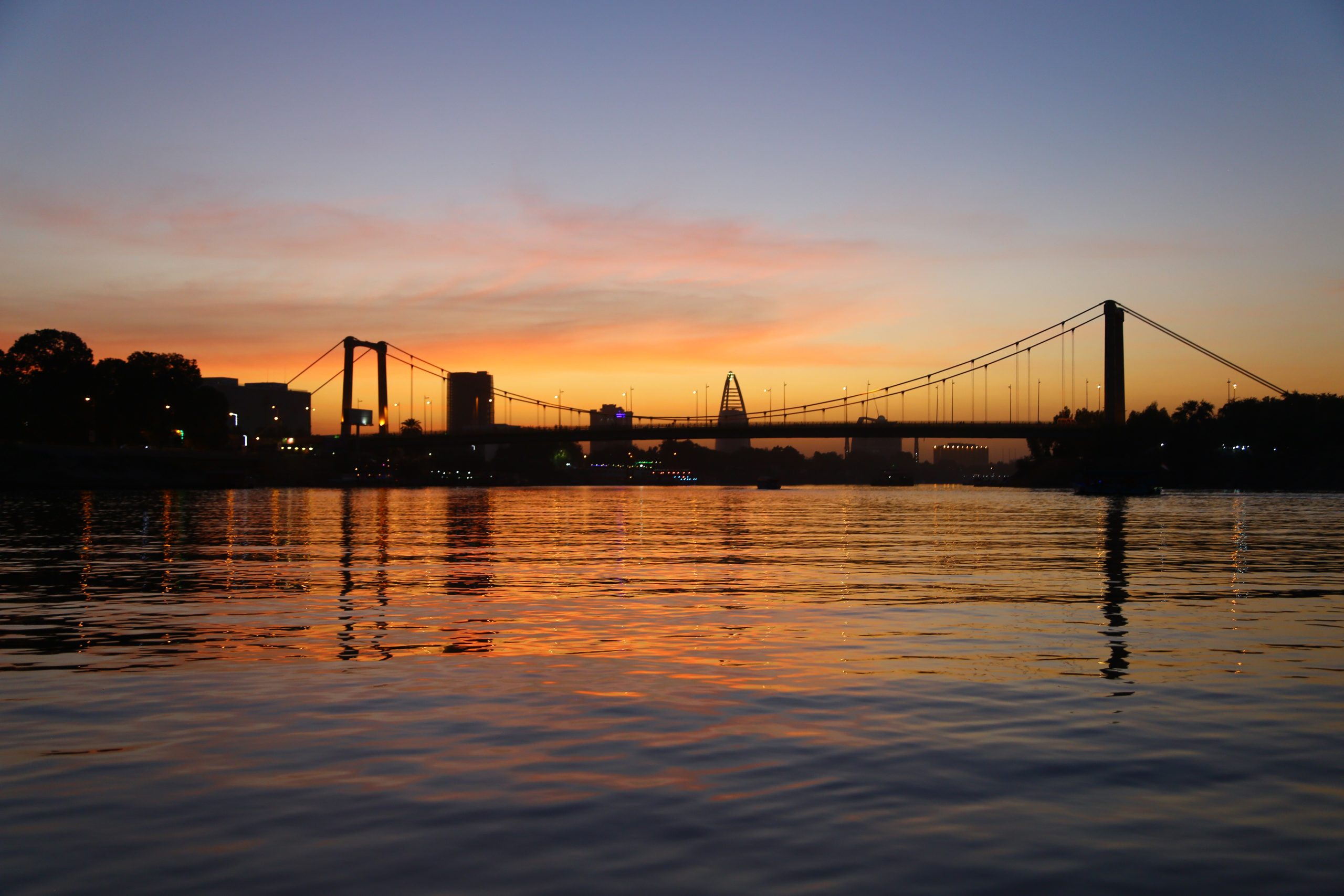
Nile River in Khartoum. Image credit IK Pro via Shutterstock © 2019.
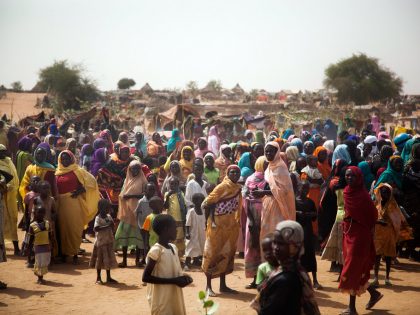
While many celebrated the “liberation” of Khartoum from the UAE-backed Rapid Support Forces (RSF) by the Sudanese Armed Forces (SAF) in March 2025, the 18-month siege of El-Fasher, Darfur, which started in May 2024 and continued until the city’s fall to the RSF in October 2025, was largely ignored. Today, factories in Khartoum have gone back to manufacturing soda, the airport has been refurbished, and Sudan TV continually declares that it is safe for people to return to the capital. Even in the midst of devastation, the effects of the war are uneven—the war is happening all over Sudan, but the genocide is confined to Darfur. People who fled Khartoum to Egypt are slowly trickling back, and the conversation has turned to rebuilding “the nation.” It’s almost like we want to believe that if Khartoum is restored, the rest of the nation can be, too.
More than a decade ago, Nesrine Malik, a Sudanese-British journalist, published an essay titled “Khartoum: the most selfish city?” What was then a question has, within the context of the war, become a certainty. Deriding the fact that the capital remained an image of stability while war raged on in Darfur, Kordofan, and the South, Malik characterized Khartoumites as being blissfully unaware at best or apathetic at worst about what was going on in the rest of the country. The April 15, 2023, attack on the capital by the RSF confirmed that the chickens had finally come to roost. As a paramilitary group created by the SAF, under the aegis of former President Omar Elbashir, the RSF was menacing proof of the central government’s willingness to outsource the violence necessary to protect its extractive crony capitalism.
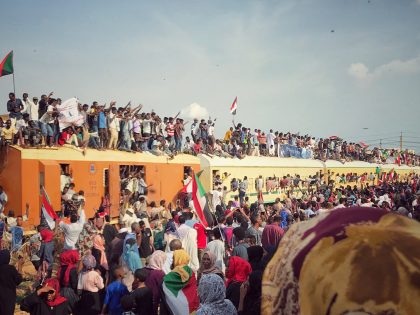
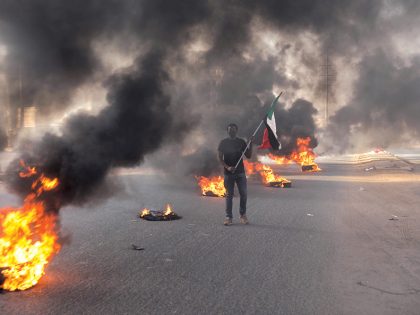
The Sudanese people, of course, bore no responsibility for this. They led strikes, marches, and protests as part of the 2018/2019 revolution against the government. During these protests, signs began to appear, declaring rather belatedly that “the whole nation is Darfur.” Something was beginning to shift in Khartoum, a glimmer of hope that we could perhaps renegotiate the enduring bargain of the 1956 state, which saw an overrepresentation of people from the northern and central states but minimal representation of people from other parts of the country. The revolution reaching Khartoum was the beginning of a reckoning that had already taken place in the rest of the country. The lives that were already unlivable in the extractive zones of Jebel Amer in Darfur, the Nuba mountains in Kordofan, and Abyei in the South, were now being replicated in the capital. These protests were a long time coming, though not a certainty. As the government began to buckle under the weight of its own rentierism, first went the oil subsidy, then the bread subsidy, and after that the pharmaceutical subsidy.
That “the whole nation is Darfur” was a worthy slogan, but what did it mean materially? Khartoum was, without a doubt, the most developed city in the country. Founded in 1825 by Muhammad Ali Pasha, north of the ancient Nubian city of Soba, Khartoum would go from being the capital under Turco-Egyptian rule to being the capital of the British Empire’s outpost in Sudan. Its territory was expanded to what is today known as Greater Khartoum, or the triangular capital, through the construction of two bridges in 1909 and 1928 linking Khartoum proper to North Khartoum (Bahri) and Omdurman respectively. So, its self-importance is not without cause. Khartoum has historically been, and continues to be, a place that people flock to for opportunities and to flee conflict. Its flavor is largely Arab (or whatever that means in the Sudanese context), Muslim, and migrant. Today, there are few people who are native to Khartoum. Nevertheless, many now call it home.
War turned the city into a ghost town for those who stayed. The RSF took up people’s houses and entire neighborhoods as outposts, coercing those who lived there to comply with their demands to secure survival. These people would later be accused by SAF of being collaborators—some were simply given a hard time, and others were shot dead. All of this is to say that there is no good guy in this war, only people caught in the middle trying to survive. So, what does it mean to return to Malik’s essay in the midst of an ongoing war? Does one not run the risk of sounding unsympathetic to people, namely Khartoumites, who have already endured the destruction of their homes, livelihoods, pillaging, rape, violence, starvation and death? What if we took seriously the idea that “the whole nation is Darfur?”
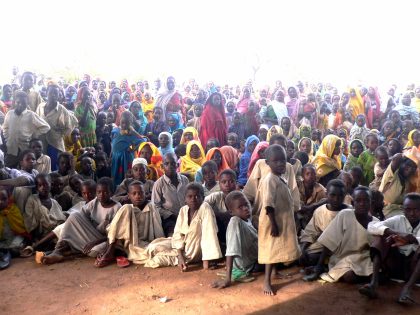
The war has been uneven in its distribution of violence, but it is undeniable that the brunt of it has been in Darfur. The SAF insisted on the “liberation” of the capital but would not even carry out sustained humanitarian air drops to the city of El-Fasher when it was under siege—abandoning the famed capital of North Darfur and securing safe passage for themselves when the standoff began to wear thin after 18 months. There is no way that a Darfuri can completely rely on the SAF, as many so-called Balabisa (from the Arabic word bal) do regularly. The Balabisa emerge out of a commitment to supporting the war no matter the costs. They gleefully support SAF, calling for the military to “just drench” the enemy in blood. There are indeed balabisa amongst Darfuris, as there are in other parts of the country and diaspora, but Darfuris do not have that luxury of forgetting that the SAF is undeniably implicated in what has happened to Darfur since 2003.
Outside of Darfur, the RSF drone attacks continue in Kordofan, which is even less talked about. And, most recently, Babanusa, a town and crucial transport junction in West Kordofan, was abandoned by the SAF’s 22nd infantry and left to the RSF after almost two years of siege. Darfur has the benefit of having had a Euro-American campaign launched in the early 2000s, when the genocide began, advocating for an end to the violence. The point is not that the atrocities in Khartoum should be ignored, but that when we reduce the nation to Khartoum, we are resurrecting the very system that was ushered in by the 1956 state, which allowed violence to be visited upon everyone outside the capital: the Nubians in the far North, the Fur, Massalit and Zaghwa in Darfur, the Nuba in Kordofan, and Dinka, Nuer and Shilluk in the South.
Some have argued that the emergence of the RSF and its capacity to recruit is a direct result of the center pillaging the peripheries. In the early days of the war, video footage circulated of RSF soldiers entering the houses of Khartoumites, expressing unabashed shock at the most mundane artifacts of daily life. One of the most jarring moments was seeing how covetous the RSF were of children’s trophies locked away in cabinets by proud mothers. Another soldier recorded his amazement that Khartoumites had access to cold, refrigerated water. So much of the country has done without because the center hoarded even these small luxuries. This is not to overlook the fact that even within the capital, there was great class, racial, and ethnic stratification.
The uneven distribution of our attention, resources, and advocacy in the face of this war and genocide that is being waged on citizens across the country, remains the reality. There is no denying that there has been a singular focus on Khartoum. Before its “liberation,” images of the capital’s destruction circulated regularly on social media: the Republican Palace, 60th street, the national museum, the Airport Road, Nile Street, and the list goes on. All eyes have remained on Khartoum and central Sudan. This was the case even as atrocities were perpetrated elsewhere, such as the June 2023 attacks against the Masalit (a persecuted Darfuri ethnic group). The whole nation was no longer Darfur, but Khartoum. As the SAF fought to regain Khartoum, those who insisted on business as usual simply relocated to Port Sudan, the new interim capital.
It is worth resurrecting the slogan “the whole nation is Darfur” in the aftermath of Khartoum’s “liberation,” because we cannot afford to move on with rebuilding while parts of the country are still on fire. Let us not go back to our selfish ways. We cannot afford to look away from yet another genocide in Darfur.