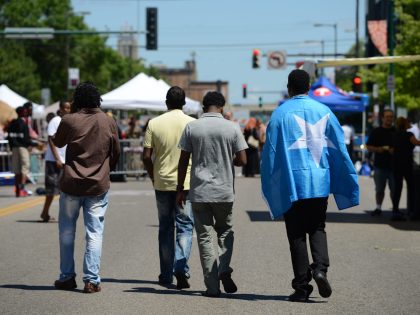
Minnesota was promised to us
Somalis have answered Trump’s latest racist tirade not with outrage but with a tidal wave of trolling.
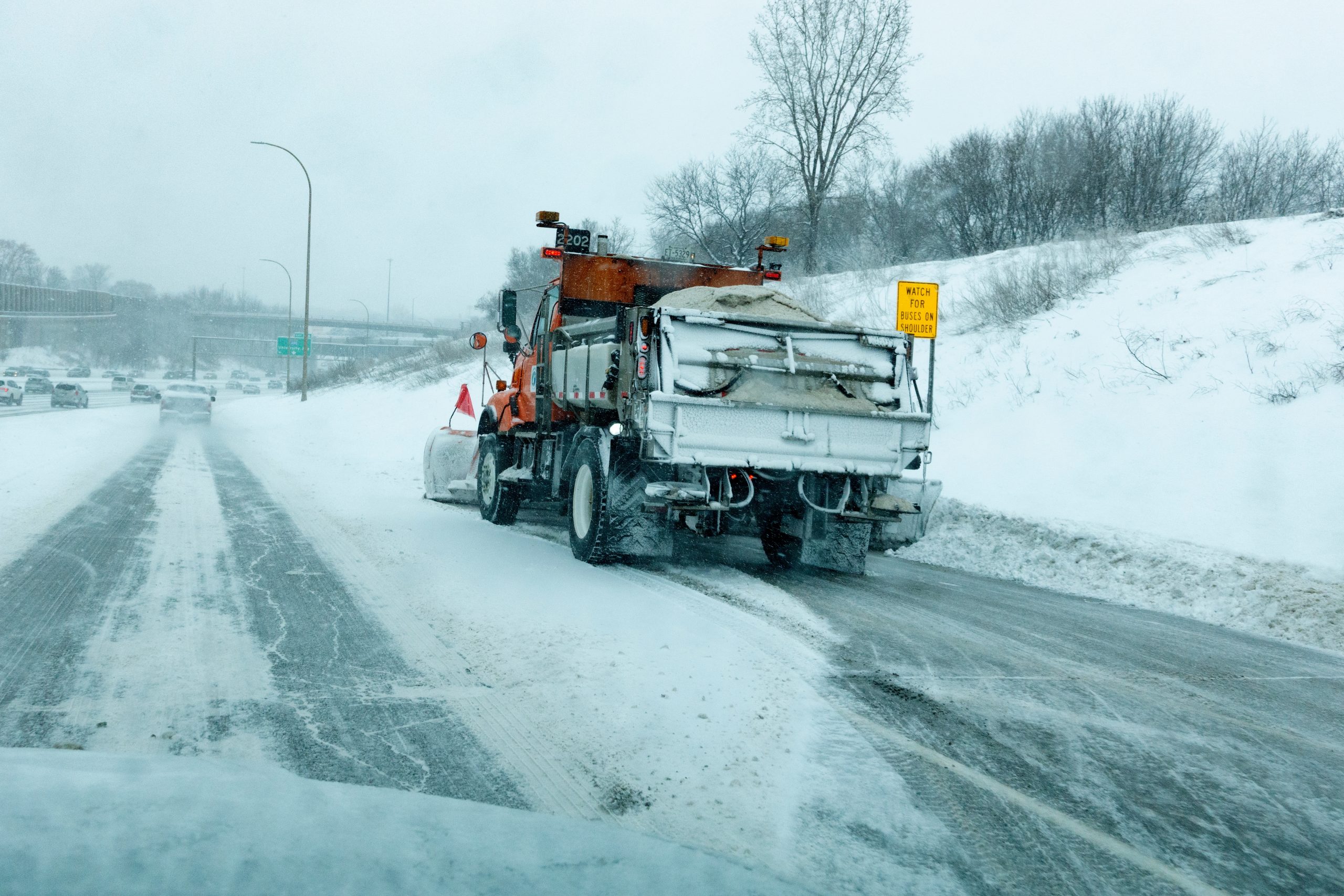
Winter in St. Paul, Minnesota. Image credit Steve Skjold via Shutterstock © 2019.
Last week, Donald Trump, in a speech in front of hundreds of spectators, decided to brand Somali immigrants and their American-born descendants “garbage” and ridiculed their home country. However, it seems that the US president didn’t know who he was messing with, as Somalis, rather than taking it on the chin, immediately took to social media platforms and unleashed an avalanche of satirical trolling that brilliantly neutralized his racist rhetoric.
Almost everyone on the internet will have seen the wave of memes from what is arguably the most viral Somali social media moment since we found Nimco Happy or the 2020 Eid-ul-Fitr controversy, when Saudi Arabia announced a moon-sighting marking the end of Ramadan but Somali religious authorities disputed it.
Many have asked where all of this is coming from, but far from being spontaneous outbursts against the Somali community, it fits into a longstanding pattern that dates back to Trump’s first term. One of his opening salvos was when he posted that Ilhan Omar and other members of the progressive Squad should “go back and help fix the totally broken and crime-infested places from which they came.” Remember when he stood before a crowd, after attacking Ilhan Omar, as they chanted: “Send her back!”
This year, however, he has significantly escalated his rhetoric, frequently targeting the sole Somali member of Congress and making disparaging remarks about Somalia, at times concurrently. I’ve lost count of how many times he’s said he told “the head of Somalia” to take her back, or given his take on how bad Somalia is.
A part of me knows this isn’t entirely about Somalia.
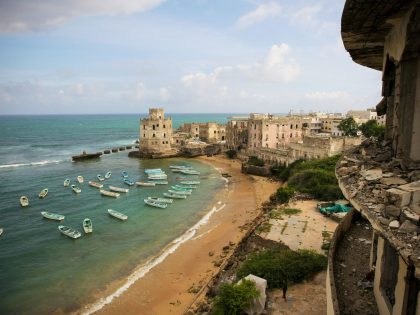
The country is far from being fully out of the woods—still emerging from a three-decade civil war—and no responsible person would claim everything is perfect. But his remarks are undeniably outdated. Much of Somalia is, in fact, doing fine, and despite the political turbulence, many Somali cities are safe to visit. Tourism has even been picking up of late. Djibouti, Ethiopia’s Somali state, and Kenya, each with sizable Somali communities, are also fine.
Somalis simply find themselves caught in the crosshairs of Trump’s broader vendetta against the Democrats. Ilhan Omar—whose politics he casts as their most radical expression, and who happens to be a Black Muslim congresswoman—offers a convenient target for rallying his base.
Trump’s frequent references to Somalia tap into a reservoir of images and associations shaped by US films, reporting, and literature, from Black Hawk Down to Call of Duty. It’s almost too perfect for his rhetorical purposes. A ready-made nightmare vision that, in his framing, Ilhan Omar and the Democrats are bringing to life in the US.
So when he says things like “The Democrats have no leader. They remind me of Somalia, OK?,” you get what he means and how it will land.
Another part of it is that he, along with other prominent far-right figures, is broadly racist toward Africans, while reserving particular ire for Somalia, which in their minds embodies the worst of the continent. His attacks on the Somali community serve to rally his base, give them a visible opponent, and play on their fears about the direction of the country. Not only have official White House accounts incessantly posted about Somalis, but so have figures like Elon Musk, Ted Cruz and Matt Walsh, who, like Trump, has remained fixated on the topic all year.
“Unbearable levels of hypervisibility for such a relatively small global population,” complained Somali poet Momtaza Mehri. Most of us are also struck by the intensity and focus of it all and the danger it poses to Somalis in the US, who must also contend with ICE, which Trump has unleashed like a pack of drug dogs hunting for what he calls illegals. Aaron Reichlin-Melnick, of the American Immigration Council, called it “a state-sponsored hate campaign” against the community.
What do you do in a moment when a well-resourced, fanatical president turns the full power of the executive branch on a small minority community, and repeatedly launches rhetorical attacks that give other people license to spew hate?
I wouldn’t call sabbaaxad a Somali martial art, though that’s probably the closest description. It essentially relies on using an opponent’s momentum and power against them in wrestling, conceptually not too different from judo in that sense. Unlike judo, however, it assumes the practitioner doesn’t need to be especially strong or big, just smart. And I think that is what happened here.
After Trump called the Somali community “garbage” that contributes nothing, focusing the world’s attention on them, Somali social media users took advantage of the moment to highlight not only how absurd it was for the president of the US—a country born as a settler colony—to adopt anti-immigrant rhetoric, but also to do so as an ally of Israel, which is employing the same state-building techniques as the US did: namely, genocide and ethnic cleansing.
Somalis seized the moment to parody the story logic that the Zionist project relies on, particularly the way it wraps its territorial claims in a curated mix of cherry-picked scripture, mythology, and exaggerated frontier heroism. By mimicking those tropes, and turning them against Trump, they spotlight how such narratives have long been used to launder the dispossession of Palestinians and to retroactively sanctify the ethnic cleansing of Indigenous peoples in the Americas.
The viral video that kicked it all off was a young Somali woman on TikTok claiming that Minnesota was promised to Somalis 3,000 years ago. Since then, Somalis have been joking that they want a two-state solution, that Americans have 49 other states they could choose from, so why not give them one? That Somalis everywhere should make “Som-Aaliyah” to Minnesota. That Somalis were among the founding fathers. That Somali explorers discovered Minnesota, and so it is theirs. And that Minnesota is a made-up name and was actually called “Juba and Somalia.” There are way more examples here.
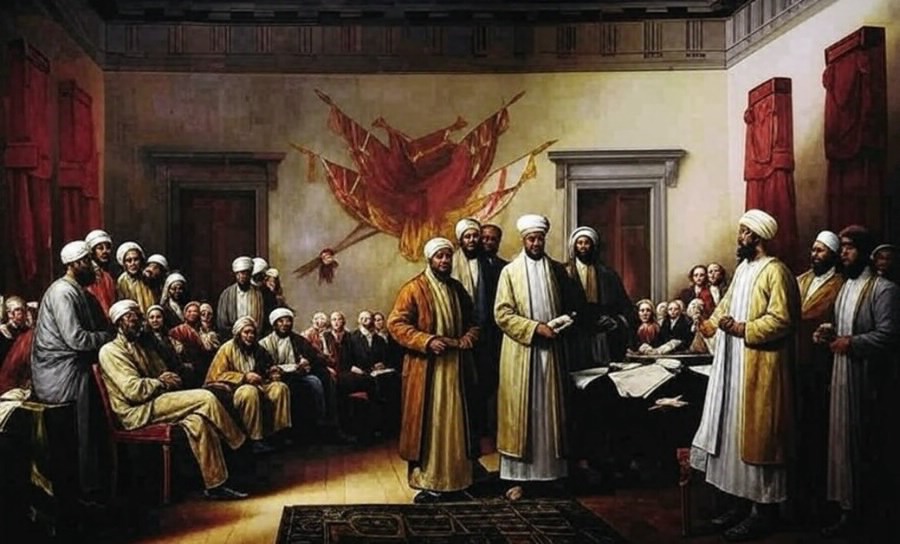
The jokes land because the pattern is unmistakable. Somali Twitter simply flipped the script, and it’s given everyone a good laugh, while also exposing just how absurd these claims are, and how much we’re letting Zionists and the far-right get away with.
If a state can anchor its legitimacy in ancient texts, a level of selective memory, and a self-appointed mission to rid us of the supposed barbarians of Palestine (I still don’t know who even asked), then why shouldn’t Somalis claim they helped draft the US Constitution or that Minnesota was divinely promised to them in the Bronze Age?
You can say it isn’t true (obviously), but then the Somali Public Affairs Committee (mocking AIPAC) will just offer Ben Stiller some money to say otherwise. Did you see the way he immediately jumped to the defense of the Somali community after Trump’s garbage remarks?
I don’t want to downplay the seriousness of a US president behaving this way, singling out and targeting a community, but Somalis also tend to relish this kind of banter.
If you haven’t explored the world of Somali nicknames, you’re in for a treat.
One of my favorite Somali poems is by Abdullahi Qarshe, the iconic poet who chuckled at the Cold War’s division of Berlin, the same city from which Africa had once been carved up. “Look and be entertained,” he said. Abdourahman Waberi, the Djiboutian writer, took this spirit even further, crafting an entire novel that playfully upends global hierarchies in The United States of Africa.
But it has proved especially effective against a president who routinely mocks his political opponents in an effort to diminish them. Too often in the past, his barbs—especially those aimed at Somalis—were largely ignored, with the exception of Ilhan Omar, who often gave as good as she got. This time, though, they’ve been met with a response that is funny, illuminating, and unexpectedly graceful.