World Cup Diary 2010: Plastic Horns
Researchers claim to have found evidence that vuvuzelas can lead to permanent hearing damage. But it won't stop the "tradition." Neither will FIFA
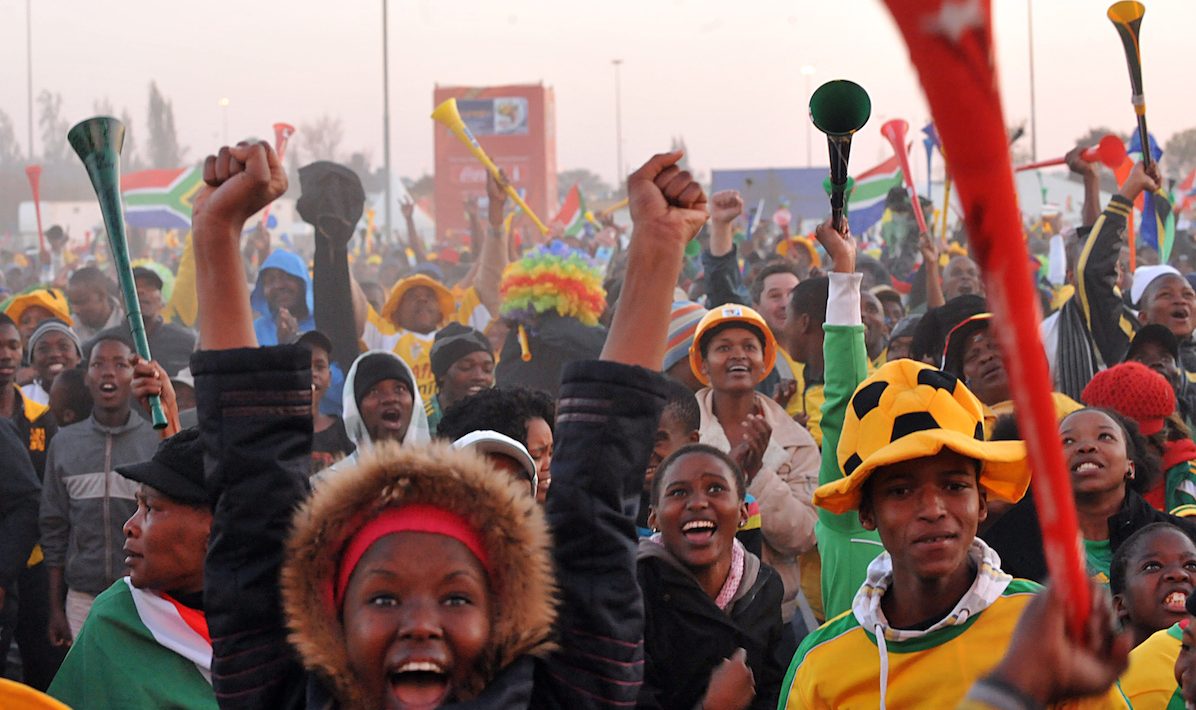
South African Football fans in Soweto during the World Cup in 2010. Image via Wikimedia Commons.
It’s hard to describe the vibe here. Yes, there are unreasonable expectations around the South African men’s national team (captured well by Tony Karon on Time magazine’s World Cup blog), and the plastic horns known as vuvuzelas may be annoying, but yes, you “can feel it.” There is a video of Spain’s Andres Iniesta trying to blow a vuvuzela and failing.
Earlier this month, The Guardian in the UK reported that the vuvuzela can be bad for your health:
. . . Researchers even claim to have found evidence that vuvuzelas can lead to permanent hearing damage. A study by academics from Pretoria and Florida universities tested the hearing of 11 spectators before and after they attended a South African Premier League match.
The researchers said the average sound exposure during the near two hours was 100.5 decibels and peaked at 144.2 decibels. National standards for occupational noise require hearing protection for workers exposed to 85 decibels and above.
NPR ran a story about how players hate them. Lionel Messi said the vuvuzelas “make his job harder,” while the French captain, Patrice Evra, blamed a disappointing tie with Uruguay on the vuvuzelas. We can’t sleep at night because of the vuvuzelas. People start playing them from 6 a.m. We can’t hear one another out on the pitch because of them.”
For now, it seems the “tradition” of the vuvuzela will prevail in this World Cup.
Football is a marginal sport in the white parts of South African cities, so I have been trying to see whether attitudes are changing. I have to say that away from the big stadiums and the tourist districts and downtowns – I spent some time today in central Cape Town with my four-year-old daughter and we enthusiastically engaged with visiting Chilean and Algerian fans.
As for the locals, there is a lot of spirit (gees, the Afrikaans word for spirit, is the preferred term here) as this short video by The Fader shows.
The Fadel has a deal with Nike to produce “Pitch Perfect,” an online documentary series on “ . . . the music, art and culture of South Africa in 2010.” Blk Jks and some local groups like Dirty Paraffin are added in for good effect in these short videos.