Gen Z’s electoral dilemma
Long dismissed as apathetic, Kenya’s youth forced a rupture in 2024. As the 2027 election approaches, their challenge is turning digital rebellion and street protest into political power.
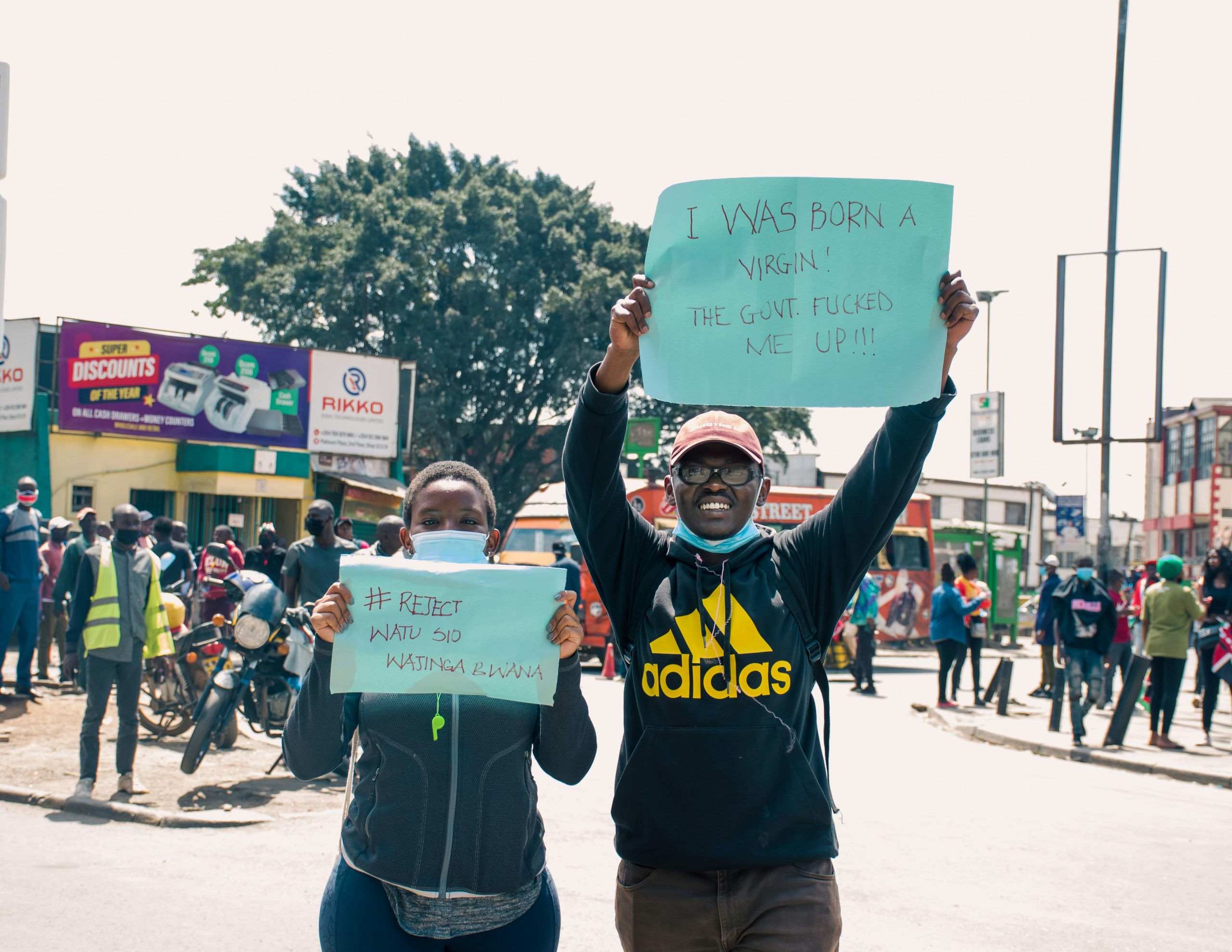
Photo by Hassan Kibwana on Unsplash
The conventional wisdom regarding Kenya’s youth prior to mid-2024 centered on their ostensive political apathy. This apathy, however, is not characterized by laziness or ignorance but by a rational, deep-seated disillusionment with a political system that repeatedly fails to translate electoral choice into meaningful change for the majority.
Successive political elites in Kenya have failed to address critical structural economic constraints, leading to chronic high unemployment and poverty, particularly among the youth. For many Gen Z and Millennials, the traditional formula for upward mobility—education coupled with hard work—has increasingly felt like a bait and switch; a sentiment mirroring the growing global skepticism toward established economic models among young adults.
The consequence of this disillusionment was manifest in the 2022 general election. Voter apathy was notably evident among the 18-to-34 age demographic. Despite representing approximately 28 percent of the total eligible electorate, and under-35s comprising 75 percent of the overall population, only 2.3 million citizens aged 18 to 24 successfully registered to vote by May 2022. Available data suggests this translated into youth representing likely less than 10 percent of the total votes cast.
This electoral retreat was a deliberate act of rational nonparticipation—a withdrawal of legitimacy from a process dominated by political dynasties and ethnic kingpins. Many young people viewed staying away from the polls as a conscious tactic to highlight the system’s flaws. Ironically, this widespread disillusionment created an opportunity for a politician who positioned himself outside the traditional elite framework; William Ruto’s populist “Hustler Nation” ideology, and his campaign’s focus on transforming the economy from the bottom up, successfully recognized and capitalized on this deep-seated youth skepticism. This message deeply resonated with the country’s youth, the working class, and the unemployed who formed the “Hustler Nation.” For many Gen Z voters, the promised policies, such as the Hustler Fund, symbolized a genuine commitment to uplift the marginalized. This narrative provided a temporary channel for antiestablishment sentiment, proving that the youth were not inherently apolitical but profoundly skeptical of the prevailing political structure.
However, this foundational political capital was rapidly eroded by the actions of the administration barely a year into its term. To manage debt and address budget deficits, the government introduced successive austerity measures and regressive taxes through contentious legislation, including the 2023 and 2024 Finance Bills. These tax hikes specifically targeted essential goods like bread, sanitary products, and digital services—items crucial to the low-income households the government promised to protect. This direct contradiction served as the primary trigger for the June 2024 uprising. The administration’s pursuit of policies that disproportionately harmed the base it claimed to represent was perceived not merely as a policy failure, but also as an ideological betrayal, which severely compromised the president’s legitimacy.
The political mandate of Gen Z
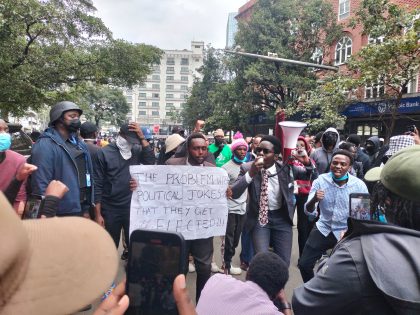
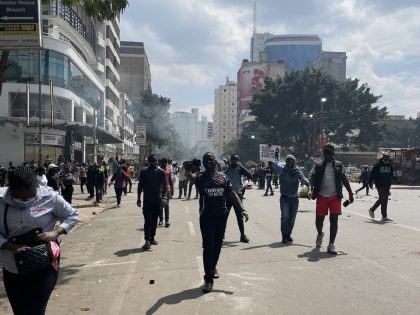
Amidst a crippling cost-of-living crisis, inflation, and high youth unemployment, the shared experience of protest, violence, and economic duress formed a cohesive “peer bond” among this generation. The core demands articulated by Gen Z are systemic: They center on demands for justice, accountability, better governance, and definitive action against corruption and the cost-of-living crisis. What’s more, the state’s response to their dissent—marked by arrests, police violence, enforced disappearances, and efforts to silence persons both online and offline—has further crystallized this generation’s priorities.
Yet the forces of traditional Kenyan politics remain strong. Analysts caution that Kenya’s political history suggests that transformative promises often collapse back into the “familiar patterns of ethnic bargaining and elite accommodation.” The challenge facing Gen Z is transitioning from effective disruption—where digital organization is cheap, decentralized, and ideologically focused—to electoral efficacy, which is expensive, bureaucratic, and traditionally reliant on regional ethnic mobilization.
Herein lies Gen Z’s democratic dilemma. The generation demands good governance but harbors deep distrust in the “democratic” process; a May 2025 poll revealed that 50 percent of Kenyans had no confidence at all in the integrity of the 2027 elections. This skepticism makes the formal process of building a national, nonethnic political party extremely difficult. If Gen Z fails to build durable alternative political structures and must instead align with an existing political vehicle, they risk having their revolutionary energy absorbed back into the patronage system, thus reinforcing the very classism and ethnic-based politics they fought in the streets. Their ability to field national candidates who transcend these ethnic structures will be the ultimate test of their movement’s ideological sustainability.
The opposition vacuum and the end of the Odinga era
Kenya stands at a critical juncture in the approach to the 2027 general elections, which are shaped by two defining narratives: the credibility crisis of the incumbent administration and the structural vacuum created by the demise of the opposition’s longstanding figurehead Raila Odinga. Raila, prior to his passing, had bargained his way into the government yet again, propping up the same president he had attempted to oust the previous year and negotiating 50 percent of formal leadership positions (the so called broad-based government) under the guise of stabilizing the country, and echoing his handshake with Uhuru Kenyatta in 2018. This move reconfigured the mainstream political landscape, leading to Deputy President Rigathi Gachagua’s impeachment. Gachagua, leveraging his ethnic political clout in Mount Kenya, later aligned with the dissident parties opposed to the union, forming a newfangled opposition, a popular anti-Ruto front.
Raila’s death has exacerbated the preexisting tension between the Orange Democratic Movement’s traditionalist faction, who view Ruto’s policies as antithetical to the party’s ideologies, and the pro-Ruto faction comprised of ethnic bigots and opportunists cashing in on Gachagua’s ouster. While Odinga’s long career had often embodied the cyclical elite accommodation that fostered youth apathy, his passing simultaneously removes the most consistent, organized infrastructure for mass opposition politics. The resulting acceleration of opposition fragmentation could potentially gift President Ruto a significant advantage in 2027, as it complicates the ability of any single challenger to build a national alliance. What’s more, Ruto has subsequently attempted to leverage Odinga’s legacy by citing a “pact” with the late prime minister regarding national development, attempting to seek legitimacy through association.
This political instability confirms the deeply cynical views held by Gen Z regarding the governing elite. They perceive the ruling parties as consuming themselves through internal warfare—a battle waged between competing patronage networks for the control of resources, rather than the establishment of any ideological or policy struggle.
However, the vacuum created by these factors has not automatically benefited the array of long-serving opposition figures in the anti-Ruto front, who have featured quite prominently in traditional politics. Gen Z’s engagement will pivot on which candidates can credibly address their demands for accountability and systemic change, and none of these veteran candidates possess the political “purity” or the systemic detachment necessary to bridge the trust gap with this skeptical demographic.
Ruto’s credibility crisis
Ruto’s (ostensive) core agenda remains the “Bottom-Up Economic Transformation Agenda” (BETA). His primary outreach to youth has been through flagship programs such as the Hustler Fund, launched in 2022, to offer microloans as low as KSh 500 ($4). Following the 2024 protests, Ruto launched the NYOTA program in 2025, offering grants up to KSh 50,000 ($400). These initiatives are viewed by some analysts as not genuine economic fixes, but as calculated political tools; individualistic microloan and grant programs are seen an attempt to disrupt Gen Z’s collective solidarity by reverting to transactional patronage politics, which keeps individuals on survival mode rather than attentive to the systemic political demands of the movement.
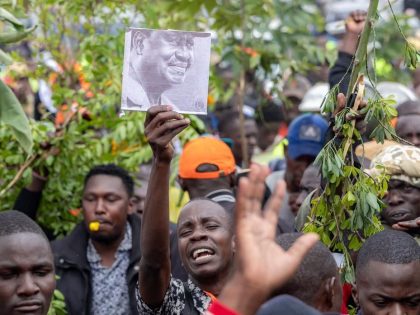
The current Gen Z verdict on Ruto is dominated by the narrative of betrayal. The administration’s attempt to levy punitive taxes was perceived as reneging on the central promise to ease the economic burden on the “Hustler Nation.” Furthermore, the president is held directly accountable for the state violence, abductions, killings, and enforced disappearances carried out against unarmed protesters. His failure to enforce the accountability measures he promised during his campaign has deeply eroded his credibility with the politically awakened youth.
The most promising candidates for capturing the Gen Z mandate are those who emerged prominently during the 2024–2025 protests, namely: Okiya Omtatah, David Maraga, Boniface Mwangi and Sungu Oyoo of the Kenya Left Alliance. These disruptors possess the moral authority required to resonate with the youth but face immense logistical challenges.
Senator Okiya Omtatah has been a ubiquitous public figure in Kenya for years, earning his reputation primarily through legal activism. Renowned as a fierce public interest litigator, he has filed multiple cases against individuals and institutions, consistently utilizing the judiciary to demand public accountability and adherence to the law.
Omtatah’s political philosophy provides a sophisticated critique of Kenya’s systemic governance failures. Drawing from his background in civil society advocacy, he argues that the traditional political class is not engaged in a fight to “destroy the prison” of corruption and dysfunctional governance. Instead, their vicious struggle is only about “who becomes the chief warden,” promising marginal improvements (like fumigating rooms or larger rations), without altering the fundamental structure of the oppressive system.
Omtatah advocates for a movement away from civil society isolation, demanding that core issues such as human rights, justice, and accountability be mainstreamed into the national political narrative. His legislative platform reflects his background in law, focusing on institutional accountability and financial oversight. In his role as senator, he serves on key committees, and his policy focus has involved challenging government inefficiency, such as raising concerns over revenue collection shortfalls and the criteria used for debt payments at the county level.
However, while his rhetoric is revolutionary, his primary method—legalism and parliamentary oversight—is inherently slow, requiring patience. This contrasts sharply with Gen Z’s impatience for immediate, disruptive action and the speed of digital mobilization. Therefore, his ability to maintain radical credibility while operating within the established political structures remains a crucial test for his national appeal.
The emergence of human rights activist Boniface Mwangi as a presidential contender for 2027 presents a crucial test case: This is, whether the authentic, antiestablishment momentum of the protests can be translated into electoral victory. Mwangi, a longtime critic of the ruling class, positions himself as the voice of the younger generation, centering his platform on dismantling the crisis of debt, cost of living, and police brutality.
Boniface Mwangi established his reputation not through traditional politics but through fearless activism and photojournalism, notably documenting the 2007–2008 post-election violence. He is recognized for his commitment to speaking out against human rights violations and for organizing high-profile activism through the youth organization PAWA254. His formal political involvement began with the formation of the Ukweli Party in 2017, when he ran unsuccessfully for the Starehe Constituency parliamentary seat on an explicit anticorruption platform.
The Ukweli Party’s philosophy centers on creating a Kenya where citizens can realize their full potential, prosper economically, and thrive in a socially cohesive community. Mwangi has consistently pledged to lead a “new Kenya” founded on justice, equity, and democratic values. His platform is built around ending inequality and corruption, restoring dignity, and creating opportunities.
While his candidacy embodies the antiestablishment principles of the 2024 revolt, his viability as an activist candidate hinges on overcoming Kenya’s entrenched political infrastructure. Considering his unsuccessful run for parliament in 2017, the structural barriers are immense, including competing against candidates backed by generational wealth, overcoming the deeply ingrained habit of ethnic voting blocs, and enduring the state’s demonstrated readiness to use legal and physical intimidation against grassroots critics.
David Kenani Maraga, the 14th chief justice and former president of the Supreme Court of Kenya, enters the 2027 race with a powerful legacy of institutional integrity. His tenure was highlighted by the 2017 decision to nullify the presidential election, a landmark moment that cemented his reputation for judicial independence and constitutional fidelity.
Maraga’s core platform centers on restoring ethical and accountable leadership, promising to ensure that the rule of law is adhered to rigorously. A critical component of his appeal to the Gen Z demographic is his explicit and timely engagement with the issue of digital rights. Following the state’s crackdown on digital dissent in 2024–2025, Maraga publicly asserted that digital rights must be protected to safeguard the freedom of expression. He made these comments specifically in the context of state actions against bloggers and activists, exemplified in the state killing of Albert Ojwang. This strategic move is vital: While his age and judicial background might lead some Gen Z voters to perceive him as disconnected or overly conservative, his authoritative defense of online freedoms successfully bridges the institutional gap. By leveraging his legal authority to defend online dissent, Maraga positions himself as the institutional guardian of the digital protests, a necessary reassurance for a generation that fears state surveillance and force.
Maraga offers Gen Z a unique value proposition that differs sharply from the other nontraditional candidates: the promise of institutional competence and stability combined with a deep, proven commitment to accountability. Mwangi offers radical change but is untested in governance; Omtatah offers legal fundamentalism that risks legislative paralysis. Maraga’s background implies mastery of state machinery and constitutional implementation. His promise of effective, ethical leadership provides a more predictable and potentially efficient path for reform, which may appeal to the pragmatic segment of Gen Z seeking tangible results and effective service delivery alongside anticorruption measures.
The rise of the Kenyan left
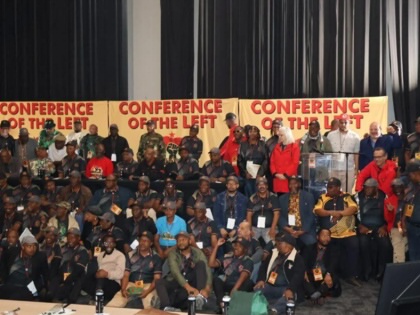
Beyond single activists, organized political movements are attempting to formalize the protest energy. The Left Alliance, backing Sungu Oyoo as their presidential candidate, actively played a role in organizing the June 2025 protests and is currently transitioning toward seeking electoral power. This alliance provides the ideological clarity that the leaderless protest movement often lacked, focusing on structural economic reform, anti-austerity policies, and combating elite impunity. Their aim is to establish “liberated territories” where tangible reforms can be implemented, effectively presenting concrete examples of a better society.
The primary hurdle for these candidates is that, while they possess immense digital resonance and moral authority, running a national presidential campaign in Kenya demands vast funding, established regional party structures, and traditional grassroots mobilization to meet the constitutional nomination thresholds set by the Independent Electoral and Boundaries Commission (IEBC). The lack of a formal, centralized structure, while initially protecting the movement from co-option, becomes a significant weakness when attempting to transition to a traditional ballot contest. The challenge for disruptors is, thus, building scalable infrastructure without compromising the core digital authenticity and antiestablishment identity that first attracted Gen Z.
The political landscape leading into the 2027 elections has been fundamentally ruptured by the disillusionment and digital organization of Generation Z. For this demographic, the election is now a contest of trust, defined by who can most credibly restore the social contract fractured by the administration’s repressive response to economic discontent.
The incumbent, William Ruto, enters the cycle severely disadvantaged due to an irreversible loss of credibility and trust among the youth. His political survival depends on successfully maintaining traditional ethnic blocs and overcoming the severe deficit in institutional confidence that currently undermines the legitimacy of the entire state apparatus.
The established opposition, while benefiting from Ruto’s unpopularity, is trapped by the age/authenticity gap. If veterans like Kalonzo Musyoka attempt to compete using traditional coalition politics without adopting the genuine radicalism and personnel of the Gen Z movement, they risk being filtered out as irrelevant by the youth, who prioritize nontraditional leadership.
The greatest potential for electoral success lies with activists, such as Boniface Mwangi, whose platforms directly mirror the demands of the uprising. Their challenge, however, is monumental: converting decentralized, leaderless digital momentum into centralized, nationwide electoral infrastructure capable of meeting the financial and logistical demands of a presidential campaign.
Ultimately, the true risk to Kenya’s democracy in 2027 is the possibility of mass youth abstention resulting from deep institutional mistrust. If they (we) opt for continued street politics over the perceived illegitimacy of the ballot box, this outcome would paradoxically benefit the entrenched political establishment they (we) seek to dismantle, by lowering the threshold required to win based on traditional ethnic arithmetic. The revival of a more just project Kenya rests on whether the energy of their (our) uprising can be channeled into a legitimate, formal political outcome. The onus is on us.