Scarlet Lion

The American documentary photographer and photojournalist, Glenna Gordon, talks on five photographers who influenced her work.
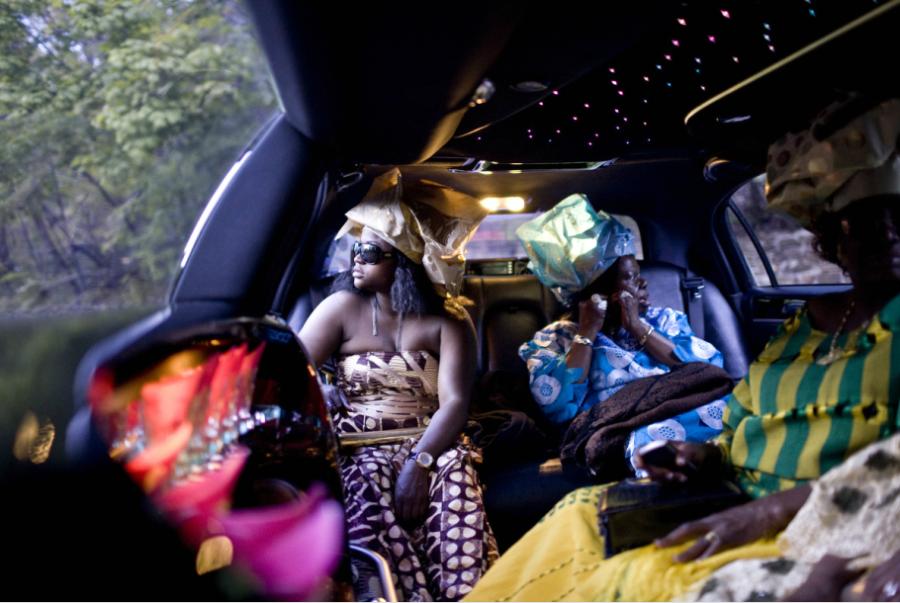
Image by Glenna Gordon.

I shot this short, no-frills interview in my office at The New School. The format is simple: The subject sits on a chair in my office while I point the iPhone at them. They decide what 5 things they want to talk to about. The first guest is Glenna Gordon, photographer and blogger based in Liberia. She happened to pass through New York City. Glenna decided to talk about her 5 favorite photographers.  First, Malick Sidibe; second three photographers from the PANOS Agency (Andrew McConnell, Robin-Hammond and Kieran-Dodds); then Tim Hetherington,  Krisanne Johnson; and, finally, Lynsey Adario.

Watch:

Some other notes: I did not want to add any props, so the video is accompanied by a list of references at the end of this post. I tried to make as little edits as possible. It was my first attempt.  I messed up the color at the end, but I’ll get this right over time. You may also get sea sick from the wobbly camera work (if you can call my holding a phone camera that).

For more on Glenna’s work, see here.

Further Reading

The rubble of empire

Built by Italian Fascists in 1928, Mogadishu Cathedral was meant to symbolize “peaceful conquest.” Today its ruins force Somalis to confront the uneasy afterlife of colonial power and religious authority.

Atayese

Honored in Yorubaland as “one who repairs the world,” Jesse Jackson’s life bridged civil rights, pan-Africanism, empire, and contradiction—leaving behind a legacy as expansive as it was imperfect.

Bread or Messi?

Angola’s golden jubilee culminated in a multimillion-dollar match against Argentina. The price tag—and the secrecy around it—divided a nation already grappling with inequality.

Visiting Ngara

A redevelopment project in Nairobi’s Ngara district promises revival—but raises deeper questions about capital, memory, and who has the right to shape the city.

Gen Z’s electoral dilemma

Long dismissed as apathetic, Kenya’s youth forced a rupture in 2024. As the 2027 election approaches, their challenge is turning digital rebellion and street protest into political power.

A world reimagined in Black

By placing Kwame Nkrumah at the center of a global Black political network, Howard W. French reveals how the promise of pan-African emancipation was narrowed—and what its failure still costs Africa and the diaspora.

Securing Nigeria

Nigeria’s insecurity cannot be solved by foreign airstrikes or a failing state, but by rebuilding democratic, community-rooted systems of collective self-defense.