This is not about Jacob Zuma's sex life
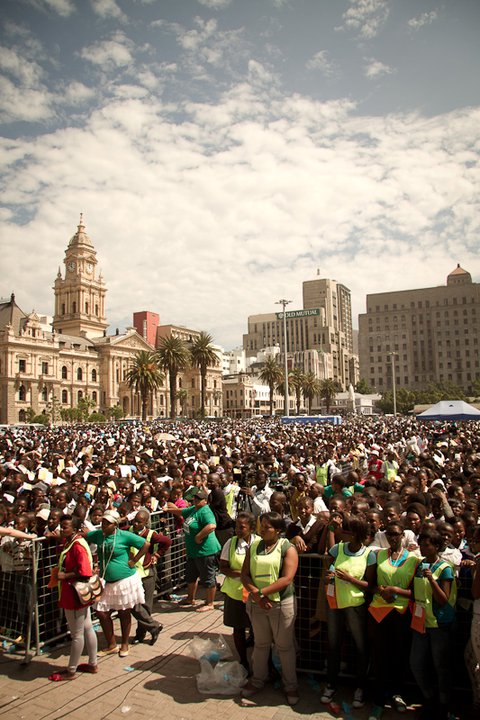
On Monday tens of thousands of young South Africans marched in Cape Town, South Africa, to demand access to a quality education; that is for “… stocked libraries, running water, electrical connections, sports facilities, computer centres and sanitary toilets.  In other words, all the infrastructural facilities that students need in order to learn and thrive.” For a sense of the appalling conditions under which the majority of mostly black elementary and high schoolers learn in South Africa, see here.  The organizers were profiled by The New York Times a while back. The media there and here–with a few exceptions–chose to either ignore or downplay the march’s significance because it was not about the buffoonish Julius Malema, Kenny Kunene, Jacob Zuma’s sex life or his children’s business dealings, the media statements of the ANC Youth League, and no damage to public or private property was reported.

More here and here.

Further Reading

Slow death by food

Illegal gold mining is poisoning Ghana’s soil and rivers, seeping into its crops and seafood, and turning the national food system into a long-term public health crisis.

A sick health system

The suspension of three doctors following the death of Chimamanda Ngozi Adichie’s son has renewed scrutiny of a health-care system plagued by impunity, underfunding, and a mass exodus of medical professionals.

Afrobeats after Fela

Wizkid’s dispute with Seun Kuti and the release of his latest EP with Asake highlight the widening gap between Afrobeats’ commercial triumph and Fela Kuti’s political inheritance

Progress is exhausting

Pedro Pinho’s latest film follows a Portuguese engineer in Guinea-Bissau, exposing how empire survives through bureaucracy, intimacy, and the language of “development.”

The rubble of empire

Built by Italian Fascists in 1928, Mogadishu Cathedral was meant to symbolize “peaceful conquest.” Today its ruins force Somalis to confront the uneasy afterlife of colonial power and religious authority.

Atayese

Honored in Yorubaland as “one who repairs the world,” Jesse Jackson’s life bridged civil rights, pan-Africanism, empire, and contradiction—leaving behind a legacy as expansive as it was imperfect.

Bread or Messi?

Angola’s golden jubilee culminated in a multimillion-dollar match against Argentina. The price tag—and the secrecy around it—divided a nation already grappling with inequality.