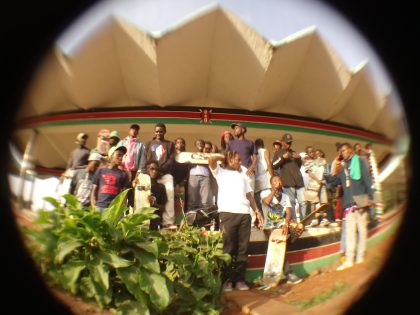
Tell ’em to skate
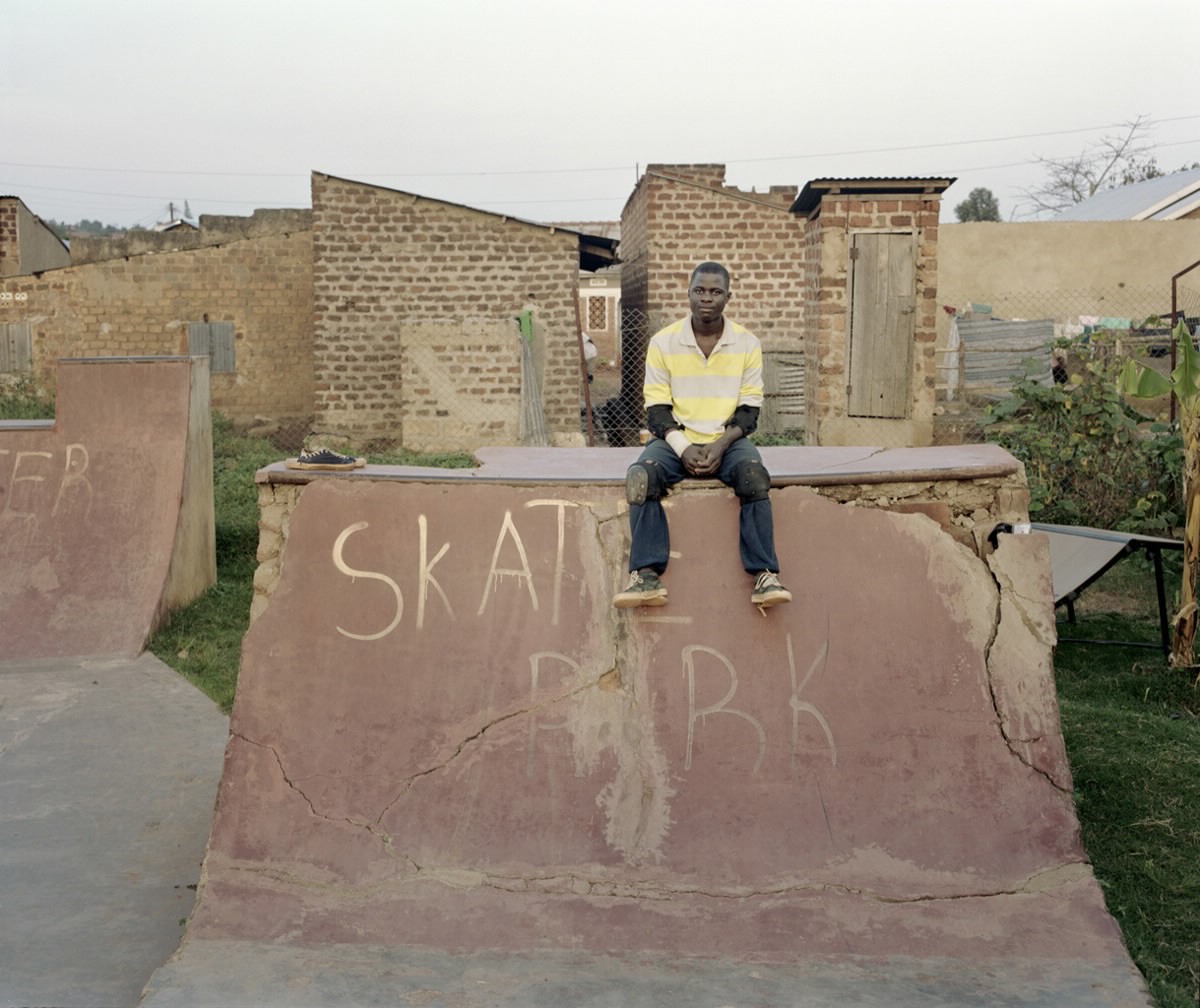
The first, and only, half-pipe in East Africa, built entirely by the youth from the Kampala suburb of Kitintale.
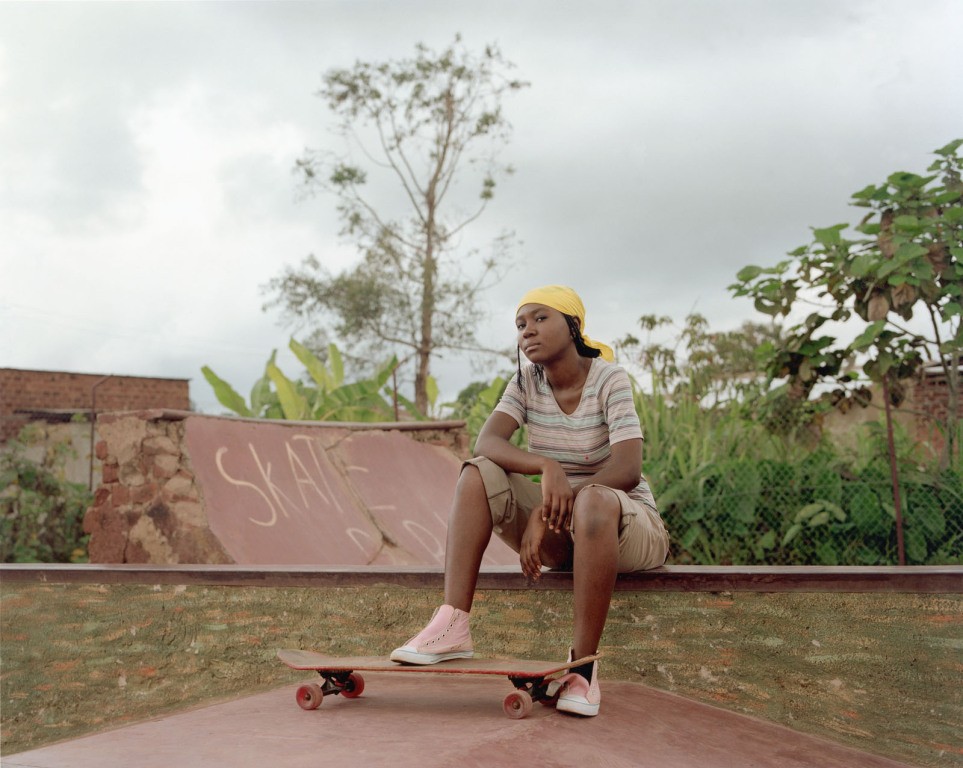
Images: Yann Gross.
The Uganda Skateboard Union has (deservedly) been getting a lot of love lately. They’ve been featured in the UK Independent, GOOD, and now in the current issue of Guernica. Much of that has been facilitated by Swiss photographer Yann Gross, who has also documented the skateboarders. He had initially gone to Kampala to visit a girlfriend.
When I first saw the skate park, I couldn’t believe it . . . the first and only East African half pipe was located in the middle of nowhere: a field with some goats running around.
I decided to stay a few months in the suburb and every day I went to skate at the park. The kids were still learning how to ride on the board, so I was able to teach them some tricks. Then, we organized a contest in order to promote skateboarding in Uganda, since nobody knew about the game. We visited the local newspapers and TV channels and even invited the National Council of Sports Assistant.
By all accounts, this is the first, and only, half-pipe in East Africa, built entirely by the youth from the Kampala suburb of Kitintale. Now, with some assistance from Birdhouse Skateboards and the Tony Hawk Foundation—who are both sponsoring the park on an ongoing basis—they’ll be skating for a while. Needless to say, I like this.
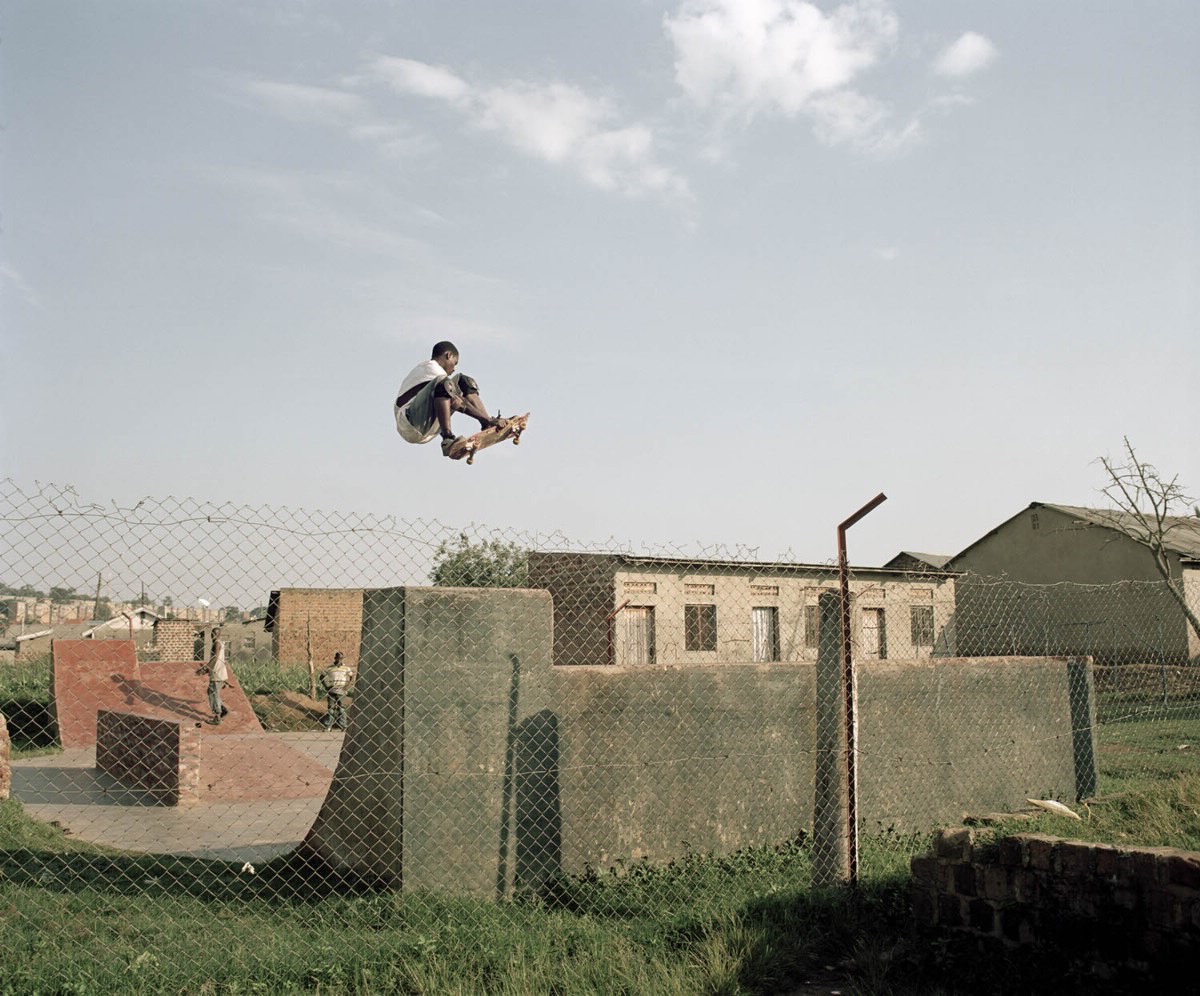
And I love the photos. For more, you can read their blog here (highly recommended for some great action shots), visit their website here, and see more pictures on Gross’ site here.
Sorry, I’ve had Gyptian’s “Hold Yuh (the remix featuring Nicki Minaj) in my head for a couple of weeks now.