Tanzania’s national sound?
What happens when singeli, a genre born in Dar es Salaam’s working-class underground, becomes a symbol of national culture, embraced by the very state that once distrusted it?
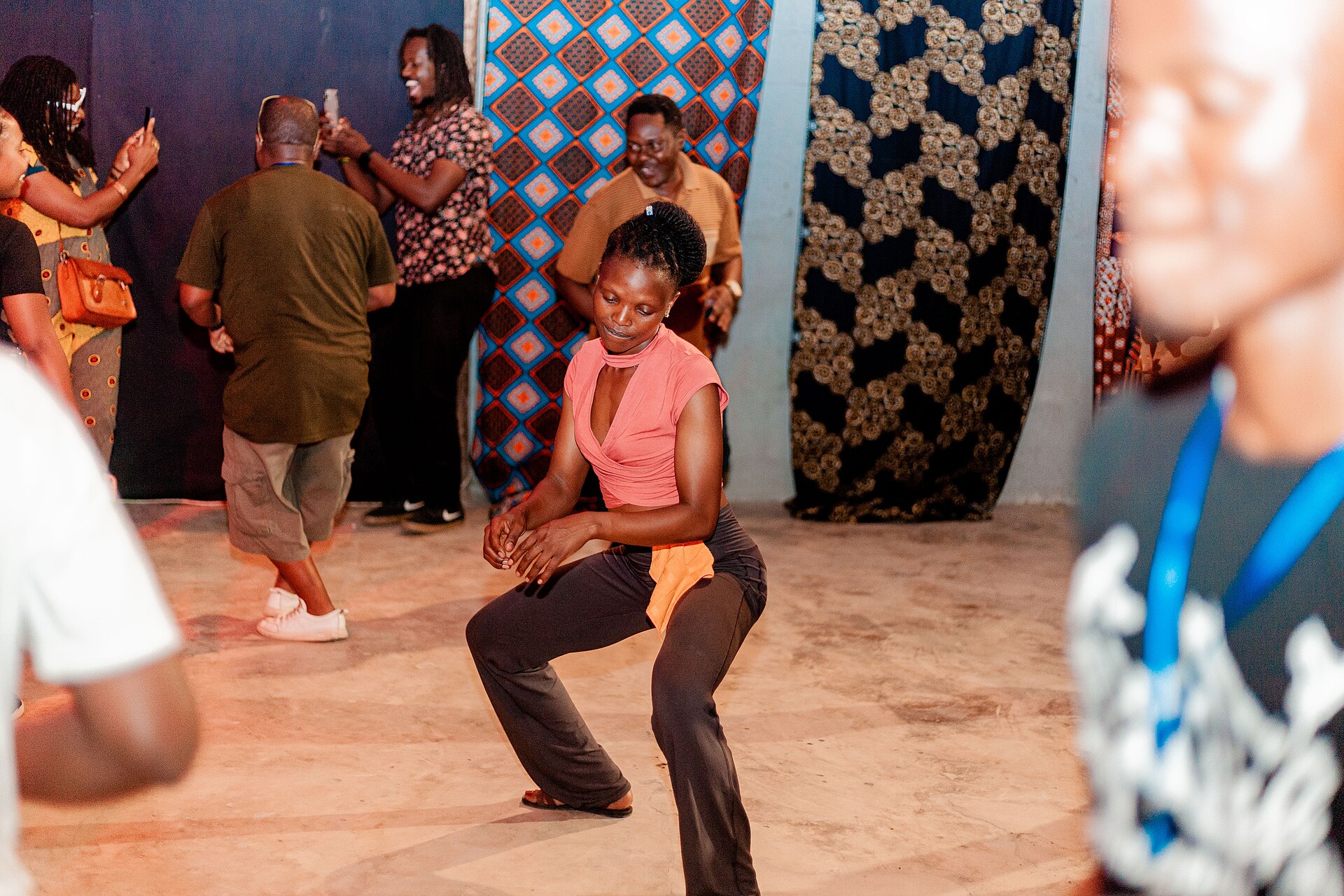
“The Singeli vibe is alive” by Rasheed H. Rasheed on Wikipedia CC BY-SA 4.0
In a video posted on Boiler Room’s Instagram, a voice declares: “Singeli is the national rhythm of Tanzania.” In just a little over a decade, Singeli, with its electronic, high-tempo fusion of Mchiriku, Taarab, and traditional drumming, has garnered more domestic and global acclaim than any other Tanzanian music genre.
Originating from the bustling block parties of Dar es Salaam’s working-class areas, Tandale, Manzese, and Mbagala, Singeli started as an underground trance-inducing sound. The state initially disapproved of its cheeky, sometimes vulgar lyricism, as well as the rave-like, uninhibited, and sexually suggestive dance culture, but the young artists who devised the sound saw entrepreneurial potential in its authenticity.
While the genre’s emergence is owed to the authentic expression of youth experience of uswahilini—a signifier of both the spaces and cultural practices that working-class Tanzanians embody—its ascension has largely relied on its universalization and mollification. You can now expect to hear Singeli in the streets, nightclubs, family events, political rallies, and government ceremonies alike.
Now, state officials have not only come around to embracing it as a source of national pride, but they have also vowed financial investment and commitment to its growth. In May 2025, the Tanzanian Ministry of Culture, Arts and Sports (MICAS) solidified its investment by submitting a nomination dossier for Singeli to be listed in UNESCO’s Representative List of Intangible Cultural Heritage of Humanity. An article reporting on a MICAS and UNESCO-organized workshop in preparation for the nomination put it aptly: “from festive events to political rallies, Singeli continues to evolve as a dynamic form of cultural and social expression, bridging generations and honoring tradition.”
How might we contextualize this dynamism? How might we understand the genre’s transition from underground working-class expression to something the Tanzanian state is eager to nationalize? One way is to interpret Singeli’s dynamism as, in fact, ambivalence. The genre’s ability to both challenge and reproduce dominant narratives—precisely what has contributed to its ascension—has also made it susceptible to state appropriation.
To understand Singeli’s prominence as well as its criticisms, it is important to situate its emergence within Tanzanian cultural history.
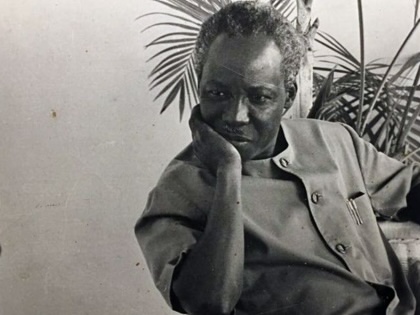
Post-independence Tanzania embarked on a nation-building project to counteract a colonial legacy that cast indigenous cultures as a source of shame. In his inaugural address to parliament in 1962, then-president Julius Nyerere charged the Ministry of National Culture and Youth with building a national culture that was both uniquely Tanzanian and globally compatible. At the forefront of this was ngoma (the Kiswahili word for drum, as well as traditional song and dance from Tanzanian ethnic groups), selected for its accessibility across the population regardless of religious or educational background. This national culture was expected to be supra-ethnic, such that ngomas from over 120 ethnic groups would merge and transform into unifying national ngomas.
Commercial ngoma dance troupes like Muungano or TOT in the urban landscape of Dar es Salaam quickly found that it was difficult to merge ngomas from different ethnic groups, which were intimately tethered to their own language and histories. They also found that it was ngomas like Sindimba of the Makonde and Lizombe of the Ngoni—both erotic dances from ethnic groups in southern Tanzania with an emphasis on kukata kiuno (waist gyration)—that were popular among urban audiences. However, the state viewed these ngomas as primitive and lewd and instead preferred to use the more restrained and desexualized ngomas as a national symbol. In her book Performance and Politics in Tanzania, Lauran Edmondson refers to these as “tourist ngomas,” which exclusively communicated the tasteful, respectable version of Tanzania invented by the state.
Of all the performance art forms inspired by ngoma that have sprung from Tanzanian urban centers, Singeli bears the closest resemblance. There is a likeness in the use of drumming and other percussive sounds as the backbone of Singeli, as well as an emphasis on performance and dance. The two genres are also similar in their uninhibited, sexualized expression through dance. A signature of Singeli dance culture is the chura dance, named after the frog position that women assume as they frantically kata kiuno and twerk on the ground. Sometimes men also echo this expression through kukata kiuno. The all-day ngoma parties of the old rural Tanzanian days closely resemble vigodoro—the all-nighter parties of today where the genre prevails.
Just as the ngomas that were deemed lewd, much of what makes Singeli what it is has often been criticized for challenging dominant norms around respectability that have prevailed since Tanzania’s flag independence. The initial reputation of Singeli as a genre for uhuni (hooliganism) is reminiscent of the moral panic around the popularity of Lizombe and Sindimba, which culminated in the latter being briefly banned from public performance in the early 1960s.
A key distinction, however, is that Singeli has been able to achieve the supra-ethnic quality that ngoma could not. In her dissertation, “The Struggle for Real Tanzanian Music,” Anke Van der Stockt interviews Singeli artist K. Mziwanda, who cites the genre’s generality as more representative of the national population than specific ngomas could ever be. She says:
To us, every tribe has its own traditional music. Zigua people have their music, Makonde people they have their own too, but we need to have one thing which will stand neutral and represent all the tribes. . . . That’s why I decided to do Singeli music because it can include all the elements from other traditional music and can get support from all the corners of the country.
Instead of awkwardly foisting ready-made ngomas, Singeli is an organic product of an urban cultural melting pot.
The result is a genre that is unifying and accessible in ways other artistic expressions have not been, but with core elements that are deemed lascivious and vulgar. The state’s response has been to embrace the former while criticizing and even outright rejecting the latter. Far more pacified versions of the genre have been platformed on state-sanctioned stages, with sounds and lyrics that are much less encouraging of the rave-like quality we were first introduced to. In an article in The Citizen reporting on a halftime show featuring Singeli artists, George Msigwa, the MICAS Permanent Secretary, assured audiences of “excessive” Singeli content before adding, “if any artist steps out of line, there are systems in place to address that.” The genre even features in political rallies as jingles for electoral campaigns, and in 2024, notable Singeli artist Montana Boshen released a Singeli track in praise of the ruling party, titled CCM Daima Singeli.
Singeli’s prominence exists at a very different time than its predecessor, ngoma. The state’s eagerness to nationalize Singeli is explicable when we consider its long-standing ambition for a symbol of national pride, even at the expense of the genre’s authenticity.
Scholar Francis Nyamjoh suggests that the performance of culture can be viewed as an adaptation to one’s environment, rather than through the binary structure of hegemony and resistance. The embodiment of uswahilini, and its manifestation in Singeli has not always been legible or accepted in mainstream Tanzanian media, so it is tempting to think of Singeli as a counterculture—as something wholly resisting dominant narratives. But when we use Nyamjoh’s framework, we see that Singeli is not necessarily resisting hegemony; it is instead a response of working-class youth to their living conditions. The way the genre sets itself apart is not by resistance, but by a strategy of creation. That is to say, Singeli is not trying to change core values; it is instead concerned with illuminating how these values show up in the environments where the artists reside.
The hit track Afande by Dogo Paten and Zuchu re-enacts dialogue between a police officer and the accused as they justify their choices as a matter of financial necessity rather than insolence. Zuchu sings, “Afande niache. . . . Nikadange, nipe namba ntawatumieni.” The first part translates to “Officer, let me go. . . . ” In the second part, we understand that the character is going kudanga (a slang term for the practice of entertaining for money, adjacent to—but not quite—sex work), and will thereafter send the officer some of the money made. It is a proposition said with the tacit knowledge that the officer will likely acquiesce to the promise of a future bribe. Afande addresses multiple societal issues, including poverty, crime, and the corrupt police force, while retaining its humor and simplicity. It is not resistance per se, but it illustrates how Tanzanians are maneuvering around structural shortcomings and financial insecurity.
Similarly, Meja Kunta’s Madanga ya Mke Wangu is also complex in its analysis of dominant narratives. Its lyrics depict an alternative framework for womanhood, but one that is perhaps even less geared towards dignity. In the song, a husband encourages his wife kudanga for their household income: “Kesho o usije kurudi bila hela/. . . . Kama ukipata bwana wa kizungu/ Nenda nae kwa Mpalange/ Mi mumeo nimekuruhusu kadange/ Mwaka huu wife lazima tujenge” (“Tomorrow do not return without money. . . . If you get a white man/ Go with him to Mpalange/ I, your husband, have allowed you to entertain him/ This year my wife we must build”). The idea that husbands are the sole breadwinners is being subverted, sure, but through exposing a sordid power imbalance that could afford a man the authority to objectify his wife and her body for income.
Singeli and the artists who make it are not necessarily striving to be radical. The genre is more accurately a looking glass into the conflicting embodiment of Tanzanian values and norms, without a plea for any sort of intervention. To be clear, artistic expressions need not condemn what they are depicting to be considered valuable. The observation of an often-undervalued working-class population that constitutes the majority of the country is crucial.
But here is an example where an ambivalence—one that is actually read as neutral and ordinary—makes Singeli an easier site for appropriation. These lyrics, often received as the everyday happenings of uswahilini, are then viewed as the status quo, instead of what they actually are: symptoms of systematic inequalities that ought not to exist. Somewhere along a Singeli track’s release and its reception, there is a stripping of all confrontational quality. While the state does indeed go out of its way to pick on and amplify Singeli’s most mollified iterations, the genre’s offerings have, over time, also lent themselves to appropriation through their insistence on ambivalence.
The bulk of Singeli’s resistance lies in its sonic experimentation. But here too, it is difficult to ignore that the most hardcore interpretations of the genre—the ones that really lean into its rave-like, electronic qualities—are often met with local suspicion or outright disapproval.
Consider DJ Travella’s 2022 avant-garde, almost psychedelic album Mr. Mixondo, which would certainly fall under what the Permanent Secretary describes as noisy, but that marked my initiation from casual Singeli listener to fan. Or even the much tamer Sisso and Maiko DJ sets that are still able to blend the most interesting and unconventional makings of the genre with Kiswahili traditions—the DJ duo is often clad in white vests, with kikois wrapped around their waists and kofias to match. You would be hard-pressed to hear these iterations of Singeli on the radio, at the club, and certainly not at a state-sanctioned event.
Of course, this sort of co-option also relies on economic precarity. Singeli’s rise to being a sonic powerhouse has not translated into financial success for many of its artists. This is unsurprising and sufficiently discussed; the poor infrastructure that underpins the Tanzanian art scene turns all art media into risky endeavors. Artists often end up at the mercy of state sanctions, and in turn, the state can symbolically align itself with the working-class population that conceived the artistic expression, without changing the power dynamics that necessitated it in the first place.
It is difficult not to be cynical, but perhaps there is still room for the genre’s legacy to be one of genuine dynamism, and not one defined by how easily it seems to have been co-opted.