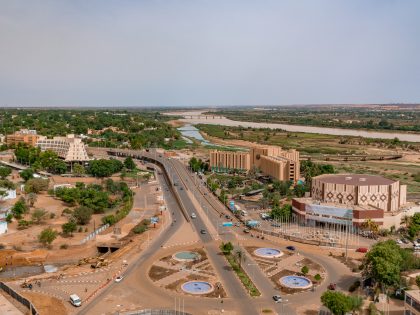
Christine Lagarde cares for Niger
Journalists rarely ask the IMF chief technocrat to consider whether or not she gives any kind of a shit about the people who are getting screwed by her "austerity" agenda.
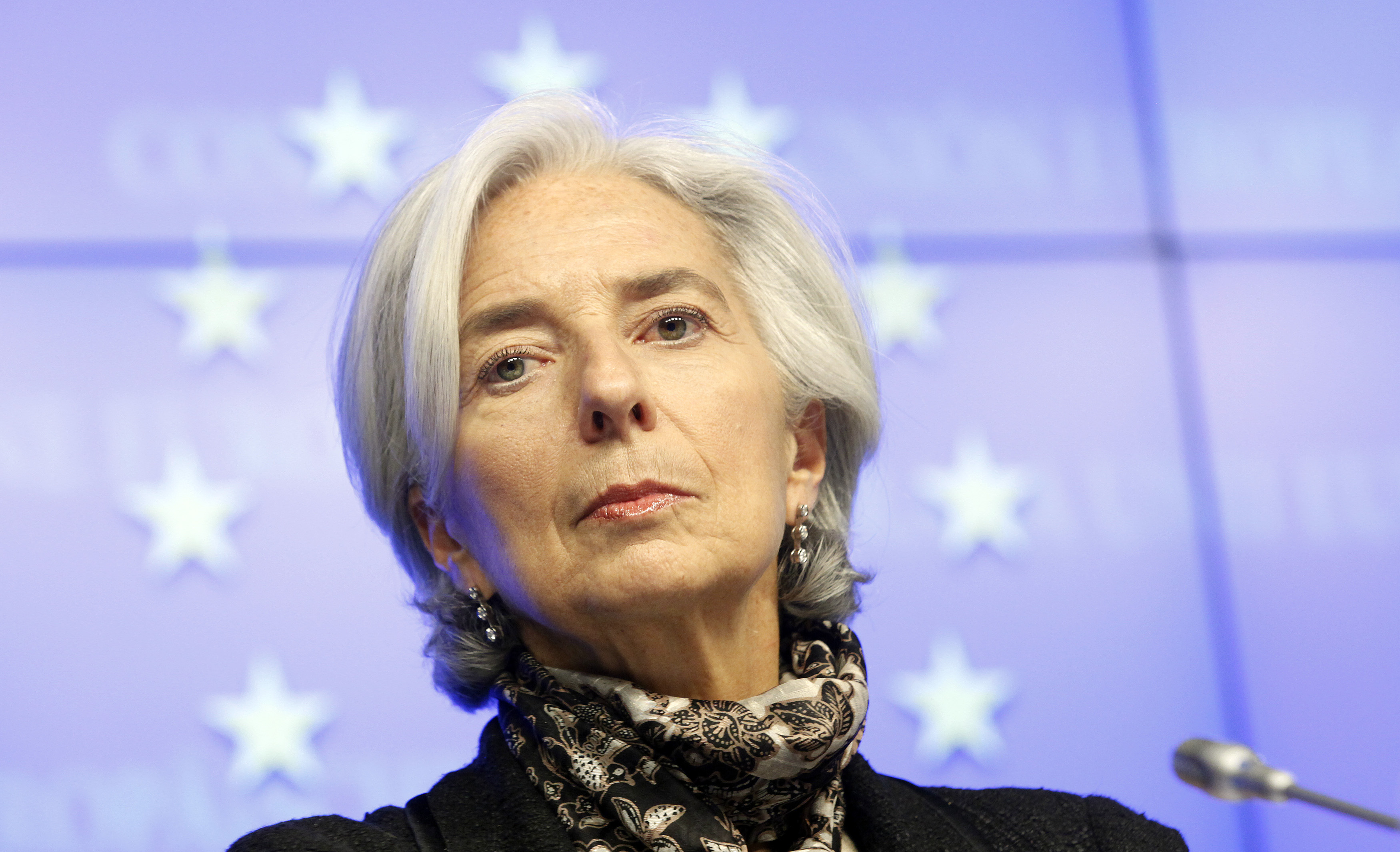
IMF executive director Lagarde attends a news conference after a Eurogroup meeting in Brussels
Where does neoliberalism find its conscience? Apparently, in rural Niger.
The toughest question IMF president Christine Lagarde faced in yet another fawning interview with the Guardian (there’s been a series of these now, and it’s simply inexcusable for a paper which considers itself to be of the Left) was a kind of softened version of “How do you sleep at night?” As the interviewer Decca Aitkenhead put it: “when [Lagarde] studies the Greek balance sheet and demands measures she knows may mean women won’t have access to a midwife when they give birth, and patients won’t get life-saving drugs, and the elderly will die alone for lack of care – does she block all of that out and just look at the sums?”
To which, Lagarde responds:
No, I think more of the little kids from a school in a little village in Niger who get teaching two hours a day, sharing one chair for three of them, and who are very keen to get an education. I have them in my mind all the time. Because I think they need even more help than the people in Athens.” She breaks off for a pointedly meaningful pause, before leaning forward.
“Do you know what? As far as Athens is concerned, I also think about all those people who are trying to escape tax all the time. All these people in Greece who are trying to escape tax.”
At the critical moment when the technocrat is invited to consider whether or not she gives any kind of a shit about the people who are getting screwed by her “austerity” agenda, Africa is introduced. The cynicism of the comparison is breathtaking: three Nigerien children are thrust suddenly onto the scene of Greek misery and relied upon to act as a kind of irresistible moral buffer, soaking up whatever empathy we might have for those who have been hurt most throughout the Eurozone’s tortuous collapse.
Lagarde performs a carefully calibrated sham of being racked with fellow-feeling in Niger. She does this in order to humanise herself, cheapen the suffering in Greece, and justify the sadistic and gleeful way in which she and the IMF have deepened the plight of that country. Real suffering is for Africa, insists Lagarde, and so European poverty can never be authentic: no European can be poor enough. (She is specific on Niger but one suspects this is simply because the food crisis in the Sahel is the current focal point of international humanitarian campaigning on the continent.)
This is not Madeleine Albright’s infamous immoral calculus that considered the deaths of 500,000 Iraqi children under sanctions to be “worth it”. Lagarde will not even admit to human suffering in the Eurozone as a cost of her manic assault on state institutions across the continent, instead offering the Niger comparison, which in spite of its absolute irrelevance somehow manages to engulf and erase the lived consequences of neoliberalism run amok in Europe.
Yet I believe Lagarde when she insists: “I have them [the Nigerien children] in my mind all the time. . . . I also think about all these people in Greece who are trying to escape tax.”
The Eurozone crisis lurches on, and at least one of the main protagonists is preoccupied through it all by a hackneyed scene of deserving Nigerien children. And what a toxic way this is for Lagarde to imagine the Greeks. Never elected by them but nonetheless exercising a measure of control over them, she can conceive of them in two ways only: as not poor enough on the one hand, and as dishonest and selfish on the other. But she’s worrying about the Nigeriens, so that’s all fine.