
Hope and optimism howled at full volume
A people’s history of Zimbabwe’s first mbira punk band, Chikwata 263, who wanted a soundtrack for the country’s post-post colonial blues.
Search Result(s) for: “apartheid”
A people’s history of Zimbabwe’s first mbira punk band, Chikwata 263, who wanted a soundtrack for the country’s post-post colonial blues.

The first book collection dedicated to contemporary Black South African feminist perspectives has seen the light. One of the editors breaks down the content.
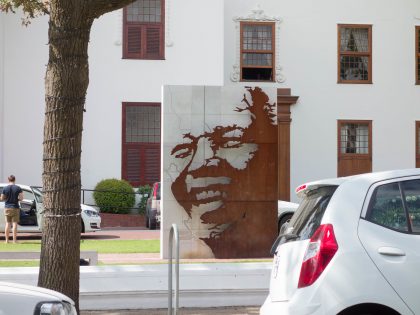
The University of Stellenbosch in South Africa treats racism as an issue that must be soft-soaped to avoid alienating white people.
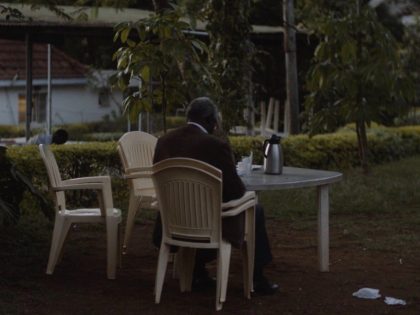
The lesson from political economist Rok Ajulu’s academic work and activism: it’s not enough to change the “tenants,” but fight to change both the “state” and all of its houses.
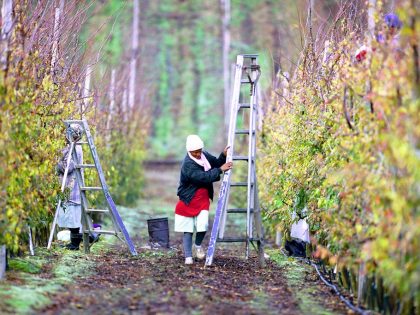
Zoë Wicomb thinks she knows why black South African readers appreciate Damon Galgut’s Booker Prize-winning novel 'The Promise' (2021) whilst many white readers were turned off by it.

Accountability — insofar as it ever existed within the South African Police Service — has been reduced to a merely theoretical concept. It is time this changed.

For the 10th anniversary of the Marikana massacre, we are planning a public event on August 20th to reflect on its legacies.

The imperative to tell the untold stories of Zimbabwean freedom fighters during that country’s liberation war, especially their engagement with spirituality.
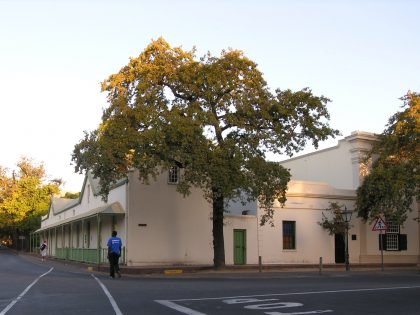
The future of Stellenbosch University does not depend on whether white people there can transcend individual stereotypes and prejudice. It depends on whether they can articulate anti-racism as a genuine political position.

Documenting an urban housing crisis and how tens of thousands of informal workers and unemployed people struggle to reshape Johannesburg.
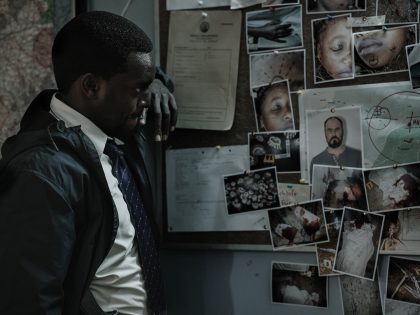
A bleak new television drama, ‘Donkerbos,’ explores secrets in small town South Africa, but fails to offer alternatives to the tropes of good vs evil.

In the 1980s, the South African arts collective Vakalisa Art Associates reclaimed time as a tool of social control through their subversive calendars.

Against Mahikeng’s failure to honor and preserve his legacy, a new Setswana biography examines Plaatje’s years in this South African town, once a regional capital.
While editing a collection of the writings of South African feminist Lauretta Ngcobo, Barbara Boswell found inspiration in texts that reflected Ngcobo’s sense that writing is an exercise of freedom.
Andre De Ruyter, the former CEO of Eskom, has presented himself as a simple hero trying to save South Africa’s struggling power utility against corrupt forces. But this racially charged narrative is ultimately self-serving.
In the 1960s, two African nationalist magazines shared a name — but declassified files reveal that they were on opposite sides of a literary Cold War.
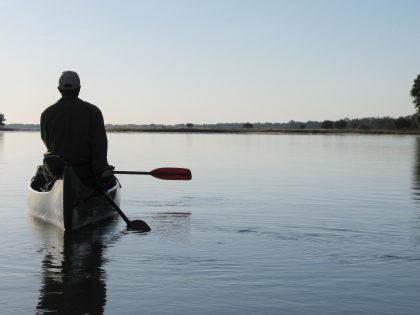
Kayo Chingonyi's latest poetry collection is a powerful meditation on the cycle of infection, death, and mourning wrought by HIV.
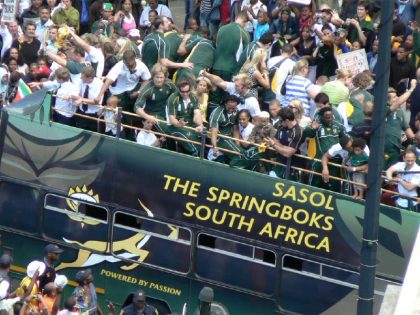
A docuseries about the Springbok rugby team invites us to examine the enduring legacy of Rainbowism in South Africa.
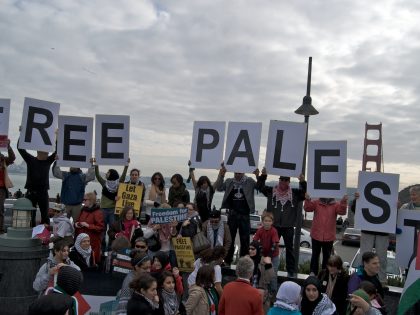
American universities are trying to silence anyone who speaks up against Israel’s occupation and bombardment of Gaza.
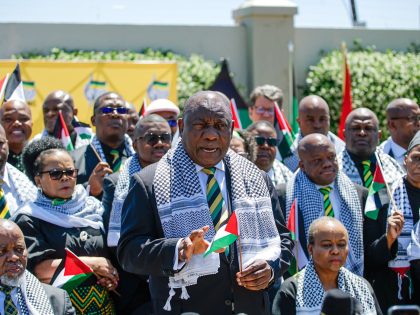
Although the South African government is one of the most vocal supporters of the Palestinian cause, its actions tell a different story.