The meaning of Omar Artan
The World Cup was meant to be the culmination of Omar Artan’s remarkable rise. His exclusion from it revealed something equally striking: the magnitude of the admiration he had earned at home and globally.
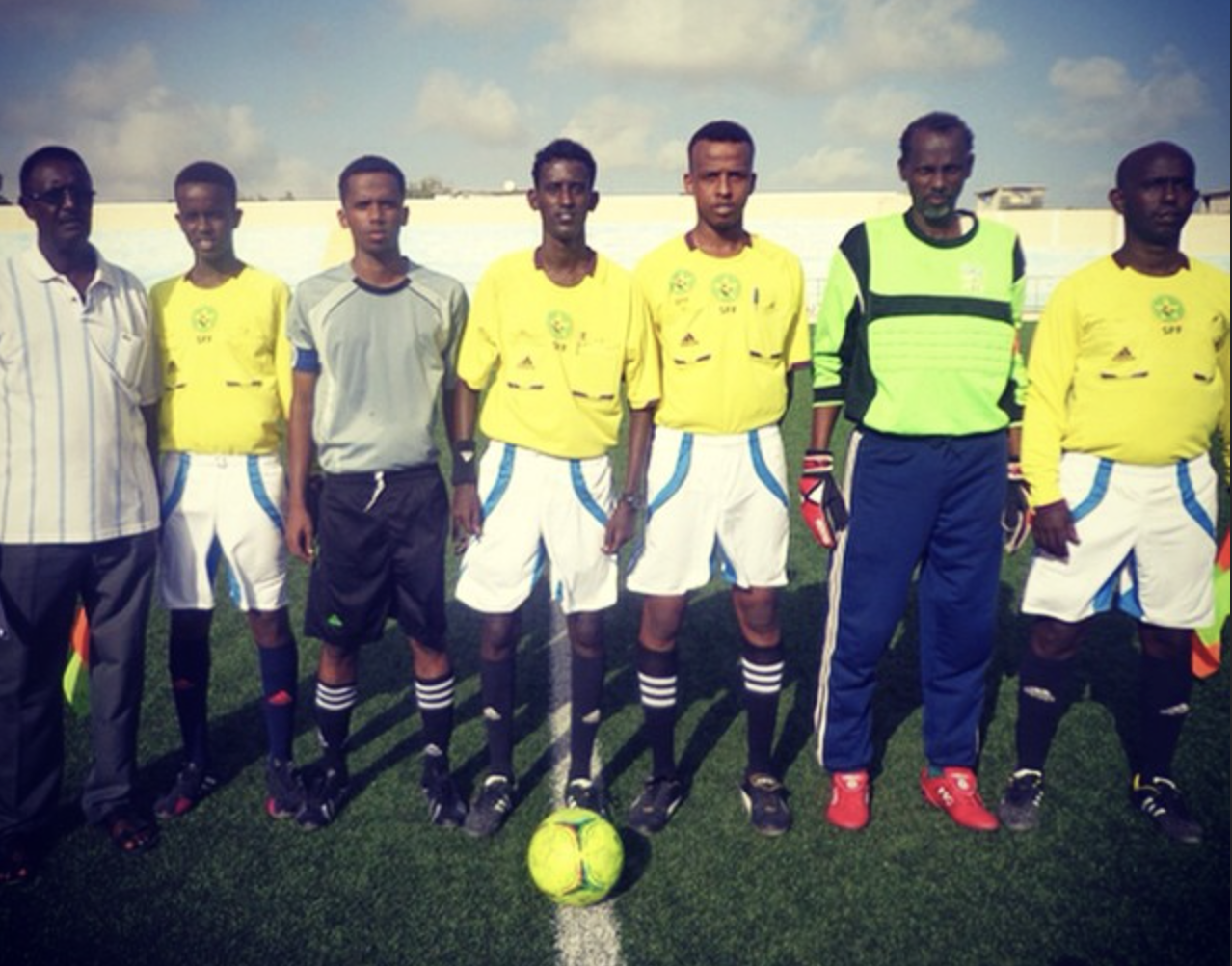
Source: Omar Artan via Instagram.
Omar Artan was already a hero before he came back to Somalia this week after being denied entry to the United States for the World Cup. Long before the controversy, he had become a household name in the country. As one former sports official told me, a warm welcome was guaranteed whenever he eventually returned to Mogadishu. But the decision by US immigration authorities to turn him away transformed the meaning of his homecoming.
Somali journalists had spent the morning waiting for his flight from Istanbul to land. On the tarmac, a delegation of senior government officials waited patiently alongside us, flags in hand and many already cheering. Anticipating that he might return disappointed and disheartened, preparations had been made to roll out the red carpet and turn what could have been seen as a setback into a triumph. Participating in the World Cup, he said in a rare 2018 interview, had always been his dream. “I have the desire and the confidence, and with the help of Allah, I will one day officiate at the biggest tournaments and elevate Somalia on the global stage,” he said. Artan was set to become the first Somali referee to officiate at a World Cup. He had made clear what that opportunity meant to him personally, but he also understood what it would mean for Somalia, and, more broadly, for Africa. There was something really sad, but somehow expected, about the news as it gradually emerged that he had not made it. Artan has been stoic in most of his public appearances, but in a candid Snapchat post on Saturday, he revealed the personal toll it had taken. “What I always remember is that the night of my birthday, June 6, was the night my dreams were shattered,” he said.
Many who follow US politics knew the situation would remain uncertain until he was actually in the US and we saw images of Artan training alongside his fellow referees in Miami. New York mayor Zohran Mamdani, whose father once nearly took Somali citizenship, has recently warned Trump against sending immigration enforcement agents to the city. Trump had spent much of his second term repeatedly launching verbal tirades about the Somali-American community and about Somalia. His latest comments this week revisited familiar themes he has raised before: “They don’t have constitutions in Somalia,” “they don’t have police,” “all they have is people running around, shooting at each other.” It didn’t come as a surprise, then, that when the US produced its reasoning for blocking Artan, it felt bogus. They alleged that he had links to people who were suspected of being terrorists. Nothing in his profile suggests that this is, or could be, the case. Several security officials I spoke to while trying to make sense of what could give rise to such an allegation explained that it would be virtually impossible for someone as prominent as Artan in Mogadishu to remain in good standing while simultaneously fraternizing with members of terrorist groups. One told me that we shouldn’t always assume the Americans know best. Moallim Fiqi, Somalia’s defense minister, completely dismissed the claims, telling a Somali reporter that the decision to turn Artan away was “a matter of embarrassment for the United States.”
The episode has struck many as bizarre, drawing criticism from a wide range of figures—from former Arsenal striker Ian Wright to Colombian President Gustavo Petro.
I’m told by people close to him that Artan has taken heart from the widespread support. Upon his return, he was warmly received, with audiences granted by Somalia’s Prime Minister Hamza Abdi Barre and President Hassan Sheikh Mohamud. He has been frequently stopped in the street by adoring fans, welcomed in a stadium filled with waving flags, and even received cash gifts from members of the business community as a gesture of goodwill. “As young people, we really felt his pain. We all also have dreams. He made such a huge effort to reach the stage he reached and was eventually let down,” Abdulqadir Ali Abokor, a Mogadishu-based student, told me when I was reporting his return for Reuters. Maher Mezahi, an Algerian football journalist, wrote on this site that Artan was one of countless people who were barred from the opportunity to directly or indirectly represent their countries on the global stage at the World Cup, from countries like Iran and Iraq with which Washington has complex and often bad relations. “How long will FIFA let Trump’s United States of America spoil a celebration that is not theirs to spoil? How long will we let one man ruin the world’s game?” he asked.
Given his background, Artan in particular faced a risk of entry difficulties, something the Somali government had anticipated when it issued him a diplomatic passport. He was heading to the US at a time when American Somalis were experiencing one of the most contentious phases in their relationship with the country—even taking into account the post-9/11 period, when the war on terror came home and the full weight of the American security state was brought to bear on them. In many ways what was happening to the American Somali community was a continuation of that violence.
His native Somalia was placed under a travel ban, making travel to the US difficult—if not impossible—for many Somalis, despite the country’s long-established diaspora community there. Earlier this year, Trump ordered a large-scale and deadly Immigration and Customs Enforcement (ICE) surge into Minnesota, home to the United States’ largest Somali community, ignoring data that shows the overwhelming majority of Somali-Americans are US citizens. Trump also terminated Temporary Protected Status (TPS) for Somalis—a humanitarian program that protects nationals from countries facing conflict from being deported when their country isn’t safe—even as the State Department website warns travelers: “Do not travel to Somalia for any reason.”
The backdrop to this is a dramatic expansion of the US air war in Somalia, where the Trump administration authorized more strikes in its first two years in power than all previous presidents combined. Trump has been in power for around 510 days and, during that time, there have been 190 airstrikes according to data from the New America Foundation, a think tank that tracks US military activity—roughly one strike every three days. In his entire first term, he authorized 219 strikes. While Somali officials have welcomed expanded US military support, the civilian toll has been largely ignored. In September 2025, a clan elder was killed in a US airstrike near Badhan, a town in northern Somalia—a strike AFRICOM has acknowledged but not addressed further. In Jamame, in southern Somalia, at least 11 civilians were reported killed in a separate strike. In both cases, the US issued boilerplate statements claiming it had struck terrorists, statements that tarnish the reputations of the victims and obfuscate the underlying truth. “The Somali people are no strangers to the doublespeak of the US government,” Somali American writer Jamila Osman said. “American intervention in East Africa has long been a game of smoke and mirrors, predating the so-called ‘war on terror.’”
In that sense, it is easy to see Artan as just another victim of Trump’s punitive approach toward Somalis in and outside the US. But the story is deeper than just Trump. Artan was born in Mogadishu in 1992, as the Somali civil war was intensifying. He came of age during its most turbulent years, across two distinct phases of that war in which the United States played a significant role. The US intervention in the early 1990s, while framed in humanitarian terms, effectively positioned it as one of the belligerents in Mogadishu as it attempted to restore order following Somalia’s state collapse. When it went after one of the city’s most prominent warlords—himself a deeply controversial figure—it triggered days of fighting in the capital, in which some estimates suggest nearly a thousand Somalis were killed.
In the later phase of the civil war, the US focus was counterterrorism, turning Somalia into a theater for its war on terror and supporting local warlords in ways that contributed to renewed instability in the capital after a brief period of relative order under the Islamic Courts Union (ICU). Even Nuruddin Farah, the acclaimed Somali writer and no fan of religion in politics, was forced to admit that he “admired” what the ICU had accomplished in the battle-scarred Somali capital. “Indeed, they had done the impossible,” he said at the time, as Mogadishu had been reeling from more than 16 years of fighting in 2007. “In a series of fierce battles from March to June last year, they had routed the warlords and pacified Mogadishu. For the first time in many years, the city enjoyed peace.”
The US later provided material support for an Ethiopian intervention in Mogadishu, which Human Rights Watch described as a “terrifying campaign of violence.” Thousands of people were killed and displaced as Ethiopian troops tore through the Somali capital. The removal of the ICU ultimately contributed to the emergence of al-Shabaab, an armed group in Somalia that seeks to overthrow the government and is affiliated with al-Qaeda, widely regarded as one of Africa’s most lethal and operationally capable armed groups. Even Somali officials acknowledge that the group would not have emerged without that intervention.
Artan would have been a child during the first phase of violence and a teenager during the second. Jamal Shiil, an official who worked in Somalia’s youth and sports ministry, told me it was an era in which young Somalis were leaving Somalia in droves to attempt the journey to Europe by sea. Some TikTokers share their journeys, filming themselves packed onto small dinghies in the Mediterranean. Many would lose their lives or be imprisoned en route in shady prisons in places like Libya or Yemen. Abdirahman, 27, a young Bajaj driver I recently met in central Mogadishu, described the Sisyphean task of trying to make a living while on the breadline. “Eventually, you feel like you really have nothing to lose by risking it all,” he said. “You die another death here.” Speaking to Al Jazeera, Artan also recalled Somalia as a country plagued by insecurity. “There were times when I was going to training, and there were a lot of explosions on the road, and I had to change course to reach the stadium,” he said. “You have to continue, and you have to fight if you want to go to a place like the World Cup.”
By not mentioning the US in his account of rising against the odds, he was perhaps being circumspect and diplomatic. But it has played its part in those challenges that he had to navigate to become Somalia’s top referee, then Africa’s leading official, and ultimately secure a place at the World Cup. In some ways, it was penalizing Artan for the dysfunction in Somalia it helped create. For the US to later deny him entry is just staying true to form.
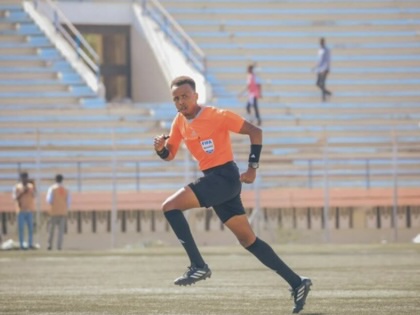
The most striking irony in this story, however, is that Artan is a referee. He has achieved excellence in a role that runs counter to many of the most pernicious stereotypes about Somalia following the onset of the civil war there in the early 1990s. Artan is known for enforcing rules, his fairness, and his ability to manage complex, high-pressure situations. He has made a name for himself as a professional and trusted adjudicator. The man who built a career on the application of rules was denied a fair call by the very country whose president says his people don’t have any.
Trump’s caricature of Somalia—stretching back to the early 2020s, when he had his sights set on prominent Somali-American politician Ilhan Omar—depicted it as a place with “no government, no safety, no police, no nothing, just anarchy.” More recently, he says people there live in a world without rules and kill each other on sight. And it isn’t just Trump who has advanced this kind of context-free, harmful messaging about Somalia. The New Yorker, in 2009, described a Somalia still struggling with a brutal civil war as “The Most Failed State.” Black Hawk Down, the film about the US intervention in Somalia in the 1990s, was described by a New York Times film critic as depicting Somalis as a “pack of snarling, dark-skinned beasts” in a movie that, he argued, “intended or not, reeks of glumly staged racism.”
Somali writers and artists have engaged more deeply and meaningfully with this difficult period in the country’s history, which has often shaped external perceptions of Somalia around themes of piracy, terrorism, anarchy, and general misery. Mogadishu-born musician K’naan used the contrast between pre- and post-war Somalia as a technique to avoid the tendency to pathologize Somalia’s problems in his song My Old Home:
The coastal line was the place of seduction. The coral reef makes you daze in reflection. The women walked with grace and perfection. And we just knew we were warriors too. Nothing morbid, it’s true. We were glorious Boom!
When the civil war arrived, he continued, it hit like a “punch in the womb,” and had a “cancerous fume.” In another song, Hardcore, he wrestled directly with the chaos that has become Somalia’s trademark. “We begin our day by the way of the gun. Rocket-propelled grenades blow you away if you front,” he says. In another arresting verse: “You can’t go half a block without a road block. You don’t pay at the roadblock, you get your throat shot.” In her lyrical novel, The Orchard of Lost Souls, the British-Somali novelist Nadifa Mohammed spoke of a Mogadishu with “white-turbaned mosques, baskets of anchovies as bright as mercury, jazz and shuffling feet, bird-boned servant girls with slow smiles, the blind white of your homes against the sapphire blue of the ocean,” as she explored the impact of the Somali civil war through the lives of three young women. One of the most resonant explorations of what has been lost is a recent Guardian documentary on Somalia in the 1970s and 1980s—a period often described as the country’s “disco era,” when afros and flared trousers were in vogue. These accounts, frequently overlooked in writing focused on the tragedies that followed the 1990s, add far more texture than the simplified talking points sometimes repeated by figures like Trump.
And that is why Artan’s presence at the World Cup—and his expected success on that stage—would have stood as a direct rebuke to some of the most persistent narratives about Somalis pushed by Trump and others like him.
But for many Somalis who have followed his career, the wider framing matters less than the achievement itself. Artan’s participation at the World Cup—building on his rise at tournaments like the Africa Cup of Nations, where he cemented his reputation as a top-tier referee—offered a rare moment for a figure from a country long absent from most global sporting events to firmly establish its place on the world stage. He often dedicated his achievements to his country. “For me it is an honour to be the first Somali to go there,” he told Al Jazeera. I remember people gathering to watch his matches during the AFCON, even for the most routine fixtures, just to watch him preside over games. Sometimes he wasn’t even the referee, just a linesman, but people still turned up. One of the most iconic moments came in a Mauritania vs. Algeria fixture, when he appeared to grab Algerian player Youcef Belaili by the neck. Mohamed Salad, a Somali sports journalist, told me recently that Artan’s World Cup would have been one of the “proudest moments in the history of Somali sports,” second only to Abdi Bile’s 1987 gold medal in the 1500 meters at the World Championships. Football is by some stretch Somalia’s most popular sport, and Artan was the country’s key representative there. He wasn’t going to redeem Somalia from its troubled history, but on his shoulders rested the hopes of a nation that wanted to be seen again and to reclaim its place in the world.
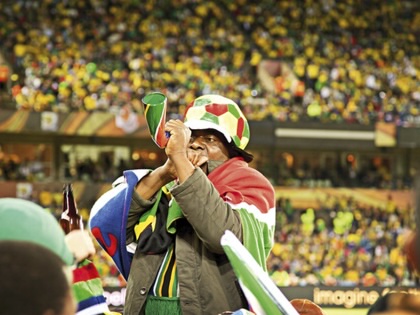
There has also been a quieter, broader presence of Somali footballing talent representing other countries. Taha Ali, whose clips on X and Instagram have excited Somali audiences, represents Sweden, while Akram Afif plays for Qatar. Whether Somalis featured directly in the tournaments or not, they still showed they could exert influence and make their presence felt. K’naan left an enduring mark with “Wavin’ Flag,” a song that became one of the most powerful anthems associated with any World Cup. The cast of Somali sporting stars has been steadily expanding too, from Ramla Ali to Abdi Nageeye and Bashir Abdi. The latter two shared a memorable Olympic marathon finish, where Nageeye edged Abdi at the line despite representing different countries. These stories are, of course, a far cry from the last time Somali sports reached a global audience when an athlete who shouldn’t have competed gave Somalia infamy for registering the slowest ever 100m sprint. The journey to the top will naturally involve many detours.
Many of those who opposed Trump’s decision argued that Artan’s absence would not only go against the spirit of the tournament but would also be a loss for the World Cup itself, depriving it of one of the game’s greatest talents. UEFA quickly snapped him up and included him in the team to referee the PSG and Aston Villa Super Cup final. He is also only 34, and as many in Mogadishu have pointed out to me, perhaps we can “chill,” as FIFA president Gianni Infantino suggested, since he will likely have another chance. He also now has global name recognition and a significant amount of goodwill, even as the US begins the process of attempting to tarnish his name through what is widely seen as a dubious attempt to associate him with terrorism.
When Artan returned to Mogadishu on Thursday, he initially looked exhausted. I felt some sympathy seeing him in a room crowded with reporters, all hungry for a strong line to carry back to their editors—mics, phones, and anything else pushed towards him in search of a quote. When he finally spoke, however, he was defiant and poised. “I promise you, God willing, that I will attend the next one,” he said. “I want the Somali public to take comfort in this and remain confident.” He did not want them to take away the message that hard work and doing everything right would not be rewarded.
He was later invited to a local match at Stadium Mogadishu, where he was to be the guest of honor. An official at the Somali Football Federation said the aim was to make him feel appreciated—and it clearly succeeded. Artan was carried on the shoulders of supporters in front of thousands of fans, many of whom came holding his image. Photos of the moment circulated around the world, a sea of sky-blue flags filling the stadium. “I thank you all. You have changed my heart,” he said. “I will always remember this. It is a special honor for me that you came for me from across Mogadishu and the country.” What had begun as a consolation had come to feel more like a coronation. He was more than Somalia’s golden ticket to the biggest stage in sport. He had become a symbol of a deeper problem with this World Cup, one that writers and pundits around the world had begun to pick up on.
When Maher Mezahi asked whether you could have a “World Cup without the world,” he meant it as an indictment of this tournament. That local match offered something like a reply. The thousands who packed Stadium Mogadishu had not come for a World Cup qualifier; they had turned out for a routine local fixture, and to show their support for Artan, joining thousands more across the globe—from an English football icon to a Colombian president, from business owners pressing cash into his hands to federations lining up to claim him. None of it needed America’s permission, and none of it was dimmed by America’s refusal. The US can stage the tournament, but it cannot stage the thing that makes the tournament matter—that lives in a stadium like this one, and in the millions who love the game from places it rarely and sometimes cannot make room for. Trump’s America turned away one referee and called it vetting. What it could not do was keep the world out of a celebration that was never its to spoil. The world was already here, carrying Artan on its shoulders through the crowd.