No stress
Cabo Verde’s national team is at the World Cup for the first time in their history. To understand why they might surprise everyone, you need to understand morabeza.
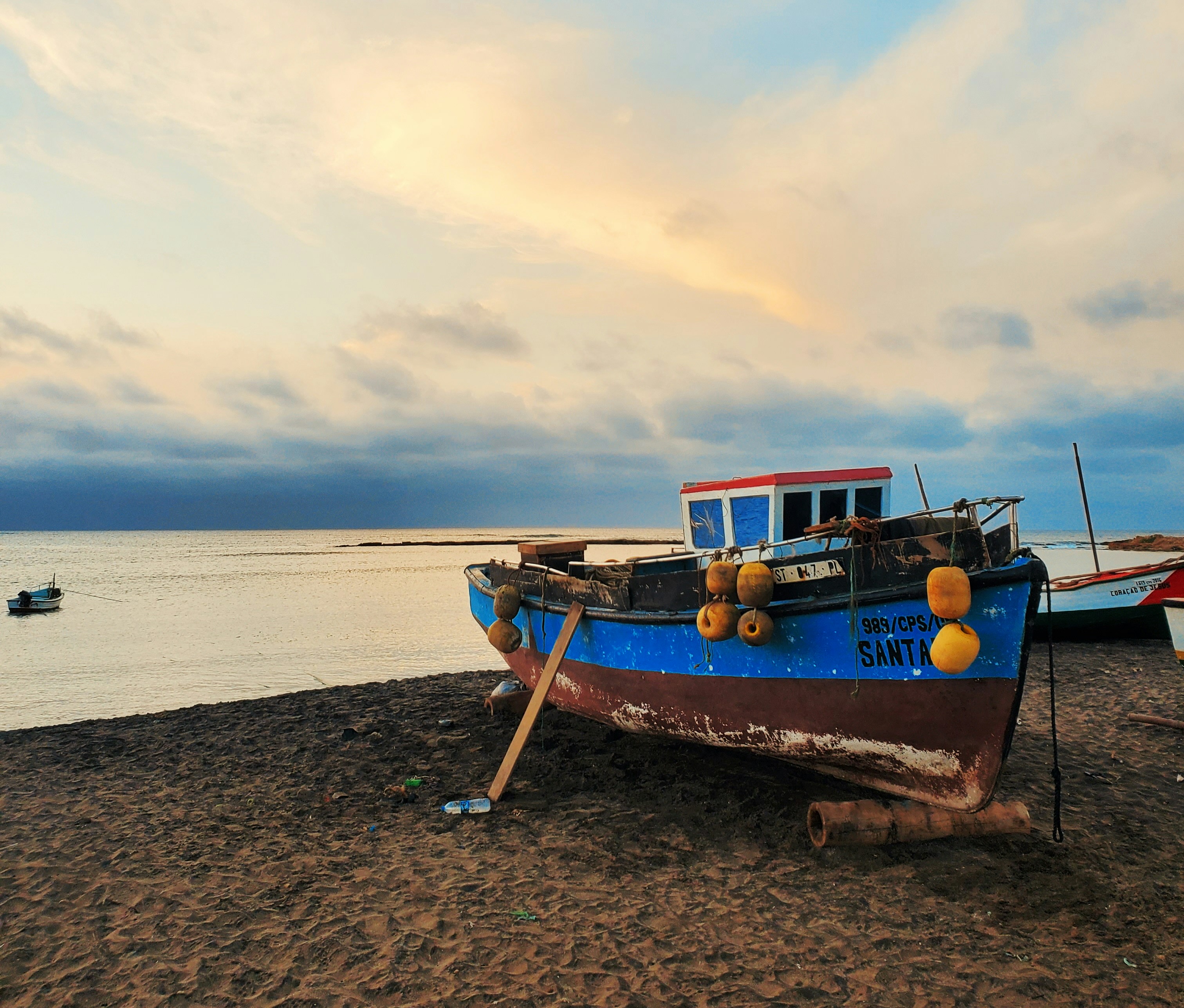
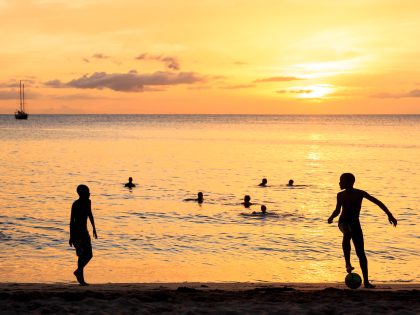
Photo by Victor Svistunov on Unsplash.
It is Sunday, October 12, 2025, in Sucupira Market.
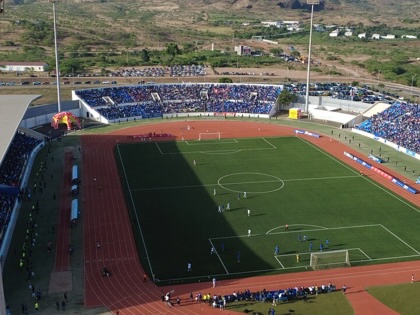
Sitting in the shadow of the Estádio da Várzea and the plateau of Praia, temporary stalls are encroaching onto the street, full of merchants selling everything from fruit to electronics.
Eventually, two nondescript minibuses pull up to the market, and the Cabo Verde national team disembarks. They will be playing the most important match of their lives in 24 hours, for a chance to play at the World Cup.
But at the moment, they are relaxed and enjoying themselves. Some greet a number of the women at the stalls and take photos with some youngsters. Others chat with the passersby who join them as they walk down the street over the next hour.
Hours earlier in the Hotel Perola, the players spent their morning with family. Nuno da Costa could be spotted speaking with an elderly relative in the lobby. Vice-captain Vozinha was giving tickets to a kid who had made him a poster.
There is an air of some friends at a spa on holiday rather than a group of athletes on the verge of the biggest moment of their career. But this is Cabo Verde, the national slogan “No Stress” is ubiquitous and inescapable.
From the murals of the nation’s great poets on the Rampa dos Poetas, to the football shirts donned by every other person emblazoned with the number 10 and the name “No Stress,” Cabo Verde is a nation that takes relaxation seriously.
For Roberto “Pico” Lopes, that philosophy carries onto the football pitch.
“We have a saying, ‘No Stress.’ That’s actually the national motto, morabeza. It’s the national sort of slogan,” the Irish-born defender told Africa Is a Country ahead of the crunch match against Eswatini.
“It’s probably something I had to adapt to because obviously back home I’m the sort that on the day before a game, just need me alone, I just want to be in my own headspace,” he said.
“Here it’s almost the opposite. They just need people’s energy around. They need to be sort of occupied. They need to be relaxed. That’s what helps, being around the family and friends.”
Morabeza, the Cabo Verdean concept of hospitality, warmth, and “no stress,” pervades every aspect of culture, including football. You might even say it’s the secret to their success.
But morabeza is more than a quaint island lifestyle, devoid of problems. It is quite the opposite. It is a sense of hospitality and obligation forged across centuries of enslavement followed by the famines of the early 1900s caused by the Portuguese abandonment of the islands once slavery was abolished.
“Growing up I saw morabeza as something that was in-house, how we treated each other,” explains Cabo Verdean academic Terza Lima-Neves. “If your neighbor came by and it’s lunchtime, you have an obligation to invite your neighbor in for lunch. Whether it be lunch, or tea time, you have that obligation, even if they don’t stay, even if you don’t have food.”
Morabeza is not a passive concept. It demands action and is reciprocal. That reciprocity is writ large in the Blue Sharks.
In the aftermath of their 3–0 victory over Eswatini at the national stadium, the team immediately traveled to the Estádio da Várzea, the spiritual home of Cabo Verde where the first flag of an independent nation was raised in 1975. There the team was met by thousands of fans and a stage erected for the nation’s biggest party.
There was a spiritual communion on the pitch as players intermingled with fans. Vozinha spent much of the evening greeting anyone and everyone, thanking them for their support, while Livramento’s brother Jerr and his Dutch hip-hop group Broederliefde performed on stage for free.
That obligation to Cabo Verde is what also drove the team to go to the busiest market in the country the day before a match, just to greet the community. With no players in the team based on the islands, international breaks are dominated by meetings with families, friends, and the Cabo Verdean community.
The World Cup is no exception. Instead of making camp somewhere in Europe or the US, the Blue Sharks have been on a tour of Cabo Verde. Over four days, the team visited the islands of São Vicente, Sal, Fogo, and Santiago, while Federation President Mario Semedo had to apologize for the team’s inability to visit the five other inhabited islands.
The team traveled to Portugal before going to Boston, where the largest community of Cabo Verdeans outside the islands live. But even Boston was not enough. The team visited various towns in New England, Rhode Island, and Connecticut, where they played their final pre-tournament friendly in East Hartford in front of a raucous “home” crowd.
Where other national teams would consider these journeys an unnecessary hassle, for the Blue Sharks they are an essential part of the preparations.
“There’s a responsibility [to the diaspora],” says Terza. “It would be strange if the team did not land in New England first to greet the diaspora’s biggest population. We’ve acted inherently Cabo Verdean and put morabeza 100 percent on display, when you see the number of people who showed up everywhere.”
But what the team reaps, it sows. The coherent identity reinforced by these rituals is what makes Cabo Verde so successful. Despite being one of the most diverse squads at the World Cup—with players born in Ireland, the Netherlands, France, Portugal, and the US—it is arguably one of the most cohesive sides at the tournament. While other teams are in a constant state of flux, the Cabo Verdean team is completely settled, with every player understanding their role and the starting XI almost writing itself.
From the beaches of Brazil to the tactical structure of Portugal, through to the total football of the Netherlands, football is just another area of culture in Cabo Verde where disparate ideas are mixed to create something unique. This team is defensively structured, playing a 4–3–3 in a near carbon copy of something you would expect from José Mourinho. But unlike Portuguese football, there is an emphasis on expression and Jogo Bonito from Brazil, the country that until this year every Cabo Verdean supported at the World Cup.
In the last few years, the influx of Dutch-born players—all coming from the same community of Cabo Verdeans in Rotterdam—has brought with them a desire to play a more possession-based type of football. While Cabo Verde will play defensively and reactively, do not expect them to just park the bus. This team wants to play out from the back before finding one of their many talented wide forwards.
That cohesive footballing identity is holistic and enforced by social practices like head coach Bubista’s insistence that the only language spoken in training and team meetings is Kriolu. Players who previously never spoke Kriolu are forced to learn it and connect with being Cabo Verdean.
“I think it’s important,” Pico explained. “I’m here not to just play football, but be part of something bigger, to try and unite players and people together. I think we do that really well.”
That identity centered around relaxation and connection has left its mark on the pitch and in some way explains the Blue Sharks’ remarkable ability to deal with pressure. Every major tournament that Cabo Verde has competed in, they have exceeded expectations. In the four previous Africa Cup of Nations tournaments they have qualified for, they have only lost one group game and gone toe-to-toe with Morocco, South Africa, Egypt, and Cameroon without losing.
If there is any nation that can cope with the pressure of playing at the World Cup for the first time in their history, it’s Cabo Verde.
Now, for the first time in history, the whole world will be exposed to the morabeza at the heart of Cabo Verde. And thanks to the large diaspora in the US, despite Trump’s best efforts, Cabo Verdeans will bring the color to the World Cup.
“We are proud in this moment, and we’re going to show that pride unapologetically, in our way,” says Terza, who will be at the Blue Sharks’ opening game against Spain. “Let us show you what it looks to be in the World Cup as Cabo Verdeans.”