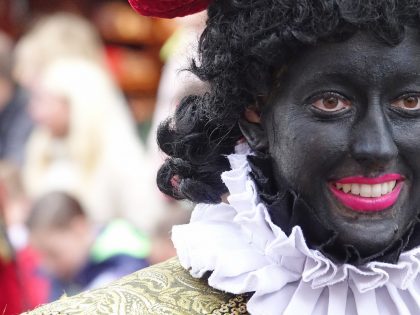
Belgium’s blackface problem
Racism in Belgium is endemic, and not taken seriously. Few people talk about it and even fewer are listening.
Image by Slilin, via Flickr CC.
The discussions on Zwarte Piet in the Netherlands have been well documented in foreign and national media. However, it is less known that this blackface figure is also present across the Netherlands’ borders, in Belgium, most notably in the region of Flanders. There are many reasons for the lack of debate in Belgium: the celebrations of Saint Nicholas Day are distinct in each country, and both the Belgians and the Dutch pride themselves on their cultural differences and debates as well as the ways in which their political systems are structured. However, when one acknowledges that Black Pete is just one of a myriad of symptoms demonstrating a discriminatory society, it raises red flags about how Belgium deals with racism.
In Belgium, the past few months have been littered with racism scandals: endemic racism was recently exposed within the Antwerp police corps, a national newspaper depicted Barack and Michelle Obama as chimpanzees, and then there’s Theo Francken the recently appointed minister of migration and asylum. Francken, from the right-wing Flemish-nationalist party the NV-A (the New Flemish Alliance), which dominated the last election, called into question the economic validity of the migration of African migration on his Facebook page. Immigrant groups are now calling for a national stay away on 19 December to protest his remarks. After an initial outcry, the debate about his remarks quickly died down.
What is interesting in these cases is how quickly and superficially they pass. When a leading and otherwise respectable newspaper pictures the president of the United States as a monkey, a short outburst and a quick apology cannot suffice. When that same newspaper a few months later allows one of its major football commentators to spout ignorant so-called “facts” as to why an “African team” can’t make it to the finals (I quote: “because they can’t focus on the goal for more than six weeks at a time”) it happens again, minus the apologies. In 2010 when the DRC celebrated 50 years of independence the most prominent figure on Belgian television was Jef Geeraerts, an ex-colonial administrator and writer known for anti-women and neo-colonist views.
Why are these matters laid to rest so quickly? Belgium has not had a real debate about its colonial past and most of this history is not part of the country’s collective memory. It is not properly taught to children nor adequately represented in the media.
Until recently migration from sub-Saharan countries to Belgium was mostly sporadic and short term. Since the late 1980’s larger numbers of people, predominantly from the DRC began to settle. Migrant communities have been hesitant to respond to flagrant discrimination and remain divided among themselves. As a consequence, in broader national debate, dealing with racism—especially the less overt kind—is not seen as important.
Another very important reason why you can’t mention the R-word is the development of Belgian politics. In the early nineties the popularity of the right wing and overtly racist party Vlaams Blok (VB) soured. At the time the word ‘racist’ became synonym for referring to someone who “votes VB.”
People didn’t have to look in the mirror anymore: as long as you were against VB you didn’t have to think twice about your own views or behaviour. The VB over time has all but disappeared (although many people from the party joined the NV-A) but racism has not disappeared with it.
This has left us with a difficult inheritance to deal with. Our overwhelmingly white and male political system and media have left us without a forum and discourse in which we can speak about racism. Political correctness has become a swear word and claims of racism are easily swept away as irrelevant or “not fun.” In this context debating and changing a phenomenon like Zwarte Piet will never be a priority.