Shameless Self Promotion


Two Africa is a Country contributors–Neelika Jayawardane and Kathryn Mathers–have pieces in the latest issue of Transition, the Harvard creative writing magazine. That’s the cover above with the theme “Blending Borders.” Neelika’s article “Everybody’s got their Indian,” (you need a subscription) is on racial politics in postapartheid South Africa. Though she’s been meaning to write about this topic for a while, I know this visit to South Africa let to the piece. Kathryn’s has a similarly provocative title, “Mr Kristof, I Presume.” (Hers you can read in full. The link takes you a PDF of the article.) Here, before you click away, is the first page of Kathryn’s article: [Read more...]

The Hall of Shame


Before Boima rides us out this year with West Africa’s best dance tunes, we couldn’t resist including a post with some of the lowlights of 2011.

[Read more...]

Pizza aid

By Elliot Ross

What happens when humanitarian agencies ditch the tried-and-trusted fundraising method of splashing disaster porn across screens and news pages? What kind of images can possibly fill in for the altogether enthralling scene of non-white bodies wracked with overwhelming pain, images which express nothing but pure need? With Action Against Hunger’s new ad campaign, we’re beginning to find out what an alternative might look like.
As good students of Don Draper, we all know that advertising is based on one thing: happiness. According to Don this entails at least three things: smelling the interior of a new car, freedom from fear, and a billboard on the side of the road that screams with reassurance that whatever you’re doing is okay.

Which is all very well, provided an ad follows the underlying logic of advertising — lying to people to make us want something we don’t really need.

But with humanitarian advertising something strange happens. It would appear that when humanitarian groups solicit money from consumers of mass media an altogether different transaction is being proposed, namely one in which an advertiser tells the truth and compels people to hand over surplus cash so that the real and urgent needs of others can be met. At least, that’s something like how it should go.

Trouble is, the old consumer mentality dies very hard, and the two modes of advertising are all jumbled up. There aren’t two different kinds of advertising space, one for commercial ads and another for humanitarian appeals.

(This is one reason why self-evidently anti-humanitarian companies like BP, ExxonMobil, Shell, Chevron and others have lately gone to such conspicuous lengths to try to convince everybody that they’re actually much more like groups such as Greenpeace, or Medecins Sans Frontières, or the Disasters Emergency Committee, than they are like the sort of oil-spilling, icecap-melting, Iraq-invasion-lobbying, Saro-Wiwa-murdering transnational shysters that we might otherwise have quite innocently supposed them to be.)

In any case, the suspicion has long lurked that gawping at pictures of starving children in Africa might have somehow crossed over into the Don Draper realm of advertising, and become a source of happiness for the kindly Western reader. (And this mix-up, it must be stressed, has nothing whatsoever to do with the noble tradition of racism in Western culture extending back to Hegel and beyond.)

In fundraising campaigns from the Biafran war onwards it became clear that the most effective way of raising money for starving (almost always African) populations was also the way that luxuriated in the vulnerability of the hungry, that enjoyed not only Western power to save but Western power per se. And it now seems that more and more people are coming to the conclusion that weaving images of some of the world’s most vulnerable people into our ever brasher, crasser mediascape is not ok.

So what to make of Action Against Hunger’s latest efforts to depart from all this? What is the face of hunger advertising that has decided not to show a face? [Read more...]

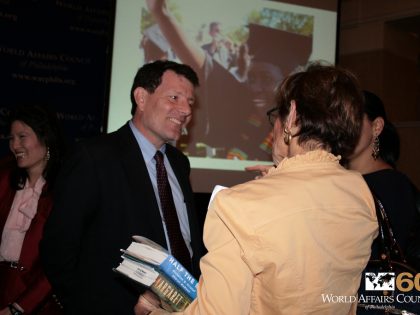
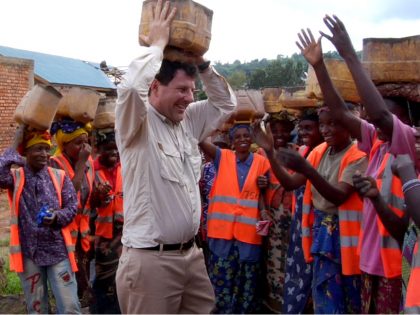
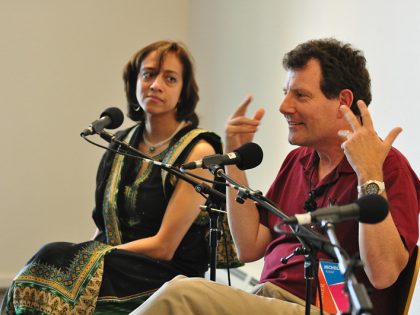
You need Nicholas Kristof

By Dan Moshenberg

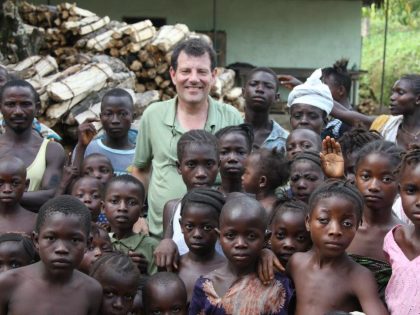
O my friends, there is no friend! If you’re an African girl in trouble, there are only two things you can rely on. Your courage … and Nicholas Kristof. At least, that’s what Kristof would have us believe.

The story Kristof tells is the story he’s told before. This time he’s in Sierra Leone. A 15-year-old girl named Fulamatu is raped by her neighbor. This happens repeatedly, and Fulamatu remains in terrified and terrorized silence. She loses weight, becomes sick. Finally, when two girls report that the pastor had tried to rape them, Fulamatu’s parents put two and two together, and asked their daughter, who reports the whole series of events. They take her to the doctor, where she is found to have gonorrhea. Fulamatu lays charges against the pastor, who flees.

That’s where Kristof comes in.

[Read more...]

Nicholas Kristof Saves Another Woman

By Dan Moshenberg

He’s ba-a-a-ack! After a decade or so of “saving” South East Asian sex workers from “slavery”, sometimes by actually purchasing them, Nicholas Kristof has found Africa. Kenya, to be specific, and there too, sex workers, or in his words “prostitutes”, await.

Kristof tells the story of Jane Ngoiri, a 38-year-old single mother of two, former slum dweller, now “prostitute-turned-businesswoman.” With the help of a group called Jamii Bora, formed initially by 50 “street beggars”, Ngoiri developed skills, learned to save, grew.

Then “catastrophe struck”. Ngoiri’s daughter was in an accident. Medical expenses were crushing. She had to take her son out of school. Fortunately, Kristof was there! He and his peeps collected money, and without having to resort to “street begging” or “prostitution”, and Ngoiri’s son is now back in school.

Kristof’s takeaway. Life for the poor in Kenya is terribly “fragile”.

But what is Kenya?

[Read more...]

Time To Vote

Today marks 85 days until the scheduled southern Sudan referendum for independence, the significance of which cannot be overstated. Just ask George Clooney, new special adviser on Sudan to presidents and policymakers alike.

The two-time Sexiest Man Alive notwithstanding, the next 85 days will be crucial. And while no one can predict what they will look like—yes, that also means you, Kristof—we are all certain of this: the people of southern Sudan are ready.

Junub Sudan, time to vote.

Stuff White People Do*

He’s back.

If you’re new to the discussion, here’s a brief recap: Kristof recently answered some of his reader’s questions, including one submitted by Texas in Africa (TIA) in which she asked why his columns about Africa seem to portray “black Africans as victims” and “white foreigners as their saviors.” His answer left a little lot to be desired (as Sean noted here), so he is back with another response, titled “Westerners on White Horses…”

Now, for some people this is great—at least he hasn’t gone all Alex Perry on us, right? Well, some people is not me. And, let’s be honest, who still reads TIME? Anyway, on to Kristof’s latest response.

[Read more...]

Nicholas Kristof prefers “white saviors”

Nicholas Kristof is at it again. Last week he announced that ‘over the next several days’ he will ‘… be responding to questions submitted via YouTube from readers.’

The first question: ‘Today’s question asks Nick why many of his columns about Africa seem to portray “black Africans as victims” and “white foreigners as their saviors.”

[Read more...]

Kristof promotes the missionary position

Via @Siddhartha Mitter: ”… The Great White Savior really outdid himself with this one. A blame-the-poor classic with particularly overt Calvinist moral messaging, even less appreciation than usual for colonial legacy, public finance and global economics, and that condescending Kristof brand of Savior Feminism Lite that verges on misandry.”

What Siddhartha is talking about; Nicholas Kristof’s latest column. Here’s the intro:

There’s an ugly secret of global poverty, one rarely acknowledged by aid groups or U.N. reports. It’s a blunt truth that is politically incorrect, heartbreaking, frustrating and ubiquitous:   It’s that if the poorest families spent as much money educating their children as they do on wine, cigarettes and prostitutes, their children’s prospects would be transformed. Much suffering is caused not only by low incomes, but also by shortsighted private spending decisions by heads of households.

[Read more...]

Nicholas Kristof wants it both ways

New York Times columnist Nicholas Kristof has an op-ed in the paper today about the political crisis in Zimbabwe that is full of the usual clichés with him as daring journalist hero. He had to disguise himself as a tourist, among other things. This is of course despite the fact that–harassment from elements within the Zimbabwean regime aside–most journalists, including that of CNN and Al Jazeera or correspondents based in neighboring South Africa, have been going in and out of Zimbabwe and reporting from there without any difficulty.

Though Kristof dispenses with the idea that the major victims of Robert Mugabe and ZANU-PF’s pogroms are white, he spends much of the column highlighting the fact that local blacks felt things were better under white, racist rule.

[Read more...]

Follow

Get every new post delivered to your Inbox.

Join 1,917 other followers