Not waiting to be narrated
Guinea-Bissau’s political elites have dragged an entire nation into the abyss of uncertainty. Yet Bissau-Guineans remain the sole agents of their own destiny.
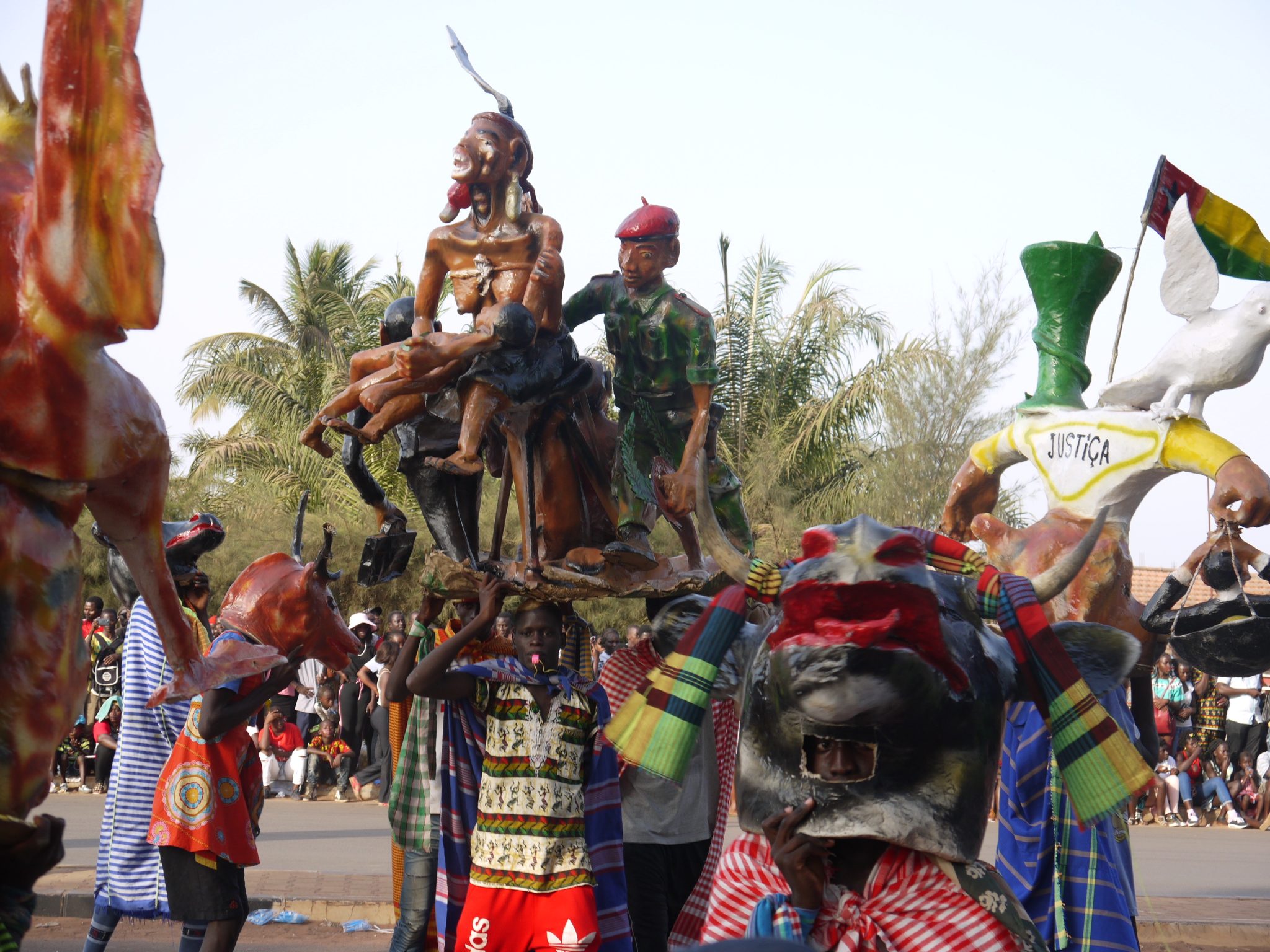
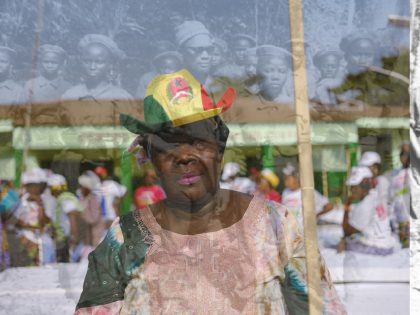
Carnival participants in Guinea-Bissau carry elaborate masks and sculptures, including a figure bearing the word Justiça (justice). Photo: © Cláudia Santos.
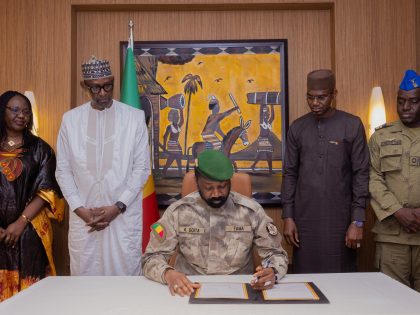
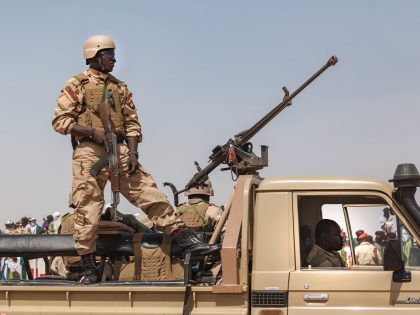
Guinea-Bissau is engulfed in a political and human rights crisis, and its end is hard to foresee. Politics is discussed behind closed doors, if discussed at all. Walls have grown ears, so that even djumbais, the Kriol word for gatherings where people come together to talk, reflect, and even deliberate, are no longer what they used to be. From the urban to the rural, political elites have dragged an entire nation into the abyss of uncertainty and neglect. Guinea-Bissau is plagued by political instability and repeated coups, with governments rarely surviving a full, lawful mandate. The latest of such episodes took place in November 2025, when the military seized total control three days after the elections. Since then, what remained of democracy has been stripped of its meaning, with private radio stations shut down, protests banned, and dissent silenced.
A report by Guinea-Bissau’s League for Human Rights for the period 2024–2025 raises serious concerns over arbitrary detentions and persecution, suppression of freedom of expression, and delays in processing judicial cases. Despite improvements following the 2012 coup, Freedom House also recognizes that political rights and civil liberties are being eroded. It was in this climate of impunity and insecurity that, early this year, the transitional military-civilian government led by Horta Inta-A Na Man scheduled presidential and legislative elections for December 6, 2026.
Throughout this year, the opposition and many Bissau-Guineans viewed the December elections with great skepticism. A succession of events put in motion by the junta made that suspicion more certain by the day: a constitutional referendum expanding presidential powers, political party activity suspended, opposition and key human rights figures detained, and the ousted president barred from returning to the country. As Amani Africa, an independent think tank based in Addis Ababa, warned in May, political repression, a shrinking political space, and restrictions on freedom of expression would make it difficult to hold the elections. Only on November 26 did the junta officially postpone the vote until 2028, admitting that the country does not have the technical, material, and financial conditions to hold the elections.
When I first set foot in Guinea-Bissau in 2019, a year of presidential elections, I remember sitting in an overcrowded transport, looking out of the window in dismay as an ambulance drove past with megaphones blasting political slogans. Then a woman sitting next to me abruptly raised her voice: “How dare they do political campaigns using an ambulance?” In a country where people die without ever knowing why, the ambulance symbolizes the kind of rights that have ceased to exist.
Tragically for Bissau-Guineans, stories like these tend to be extracted to embellish discourses that classify the country as weak, without ever attempting a distinction between country and nation. But is it possible that a multi-ethnic country with a rich cultural history and home to Amílcar Cabral becomes reduced to its politics? Many seeds have been planted in the course of the history of Guinea-Bissau that allow us to argue against a nation of passive victims. Cinema, music, poetry, art, activism, formal and informal encounters, and many acts of solidarity serve as testament to a nation that not only refuses to be defined by its politics but is actively finding ways to resist it.
For Cabral, liberation was more than armed struggle. True independence was also psychological and called for a deep reconnection with African heritage and values. It was also about cultural, economic, and political resistance, all of which remain relevant today. The colonial and postcolonial political conjunctures have consigned an entire nation to a state of survival. Yet, in all the years I have spent in Guinea-Bissau, I have witnessed how, day and night, Bissau-Guineans remain the sole agents of their own destiny and that of their children.
Everywhere, women carry the world on their shoulders, keeping their households together in the true sense of the word “resilience.” In the streets of Bissau, where trees are dismissed from their function to give life to the black asphalt, children keep up with one another on their way to a school that sometimes ceases to exist or was never truly there. Cars older than new pile up on potholed roads like cashew nuts waiting to be shipped to India. This is how life unfolds in a city where vendors paint the streets with the colors of their fruits and vegetables—all of it contrasting with the heaviness of their hearts and the tiredness of their bodies.
Unlike the outsider imagination that, as Frantz Fanon reminds us, renders the colonized into passive subjects, Bissau-Guineans are actively shaping an alternative reality within the political mess they find themselves in. That reality is constantly being (re)designed in acts of resistance and solidarity against a present Cabral would see as a betrayal of liberation. Acts that make a difference when democracy is a mirage, health and education are barely a right, oceans are being plundered, prices continue to soar, unemployment is normalized, and either droughts or floods are about to disrupt.
Whether at the heart of the city or in the remotest rural areas, I encounter Bissau-Guineans setting up associations, forming cooperatives, or coming together to farm or extract forest resources, contributing to a common community fund that responds to immediate needs. From paying teachers and keeping public schools open to repairing infrastructure left behind by an international organization that never thought about its longevity, these initiatives sustain life and re-establish fundamental rights, refusing political abandonment.
Then, why is it that passivity tends to prevail in narratives about a nation that cannot afford to despair? Perhaps we have been telling ourselves a story from a greater distance, from the capitals of empires, without ever attempting proximity to those who are not waiting to be narrated but heard and understood.