The political economy of romance
eLDee’s latest single reignited an old debate about women, money, and dating in Nigeria. But no one really chooses these gendered arrangements shaped by economic insecurity and unequal access to opportunity.
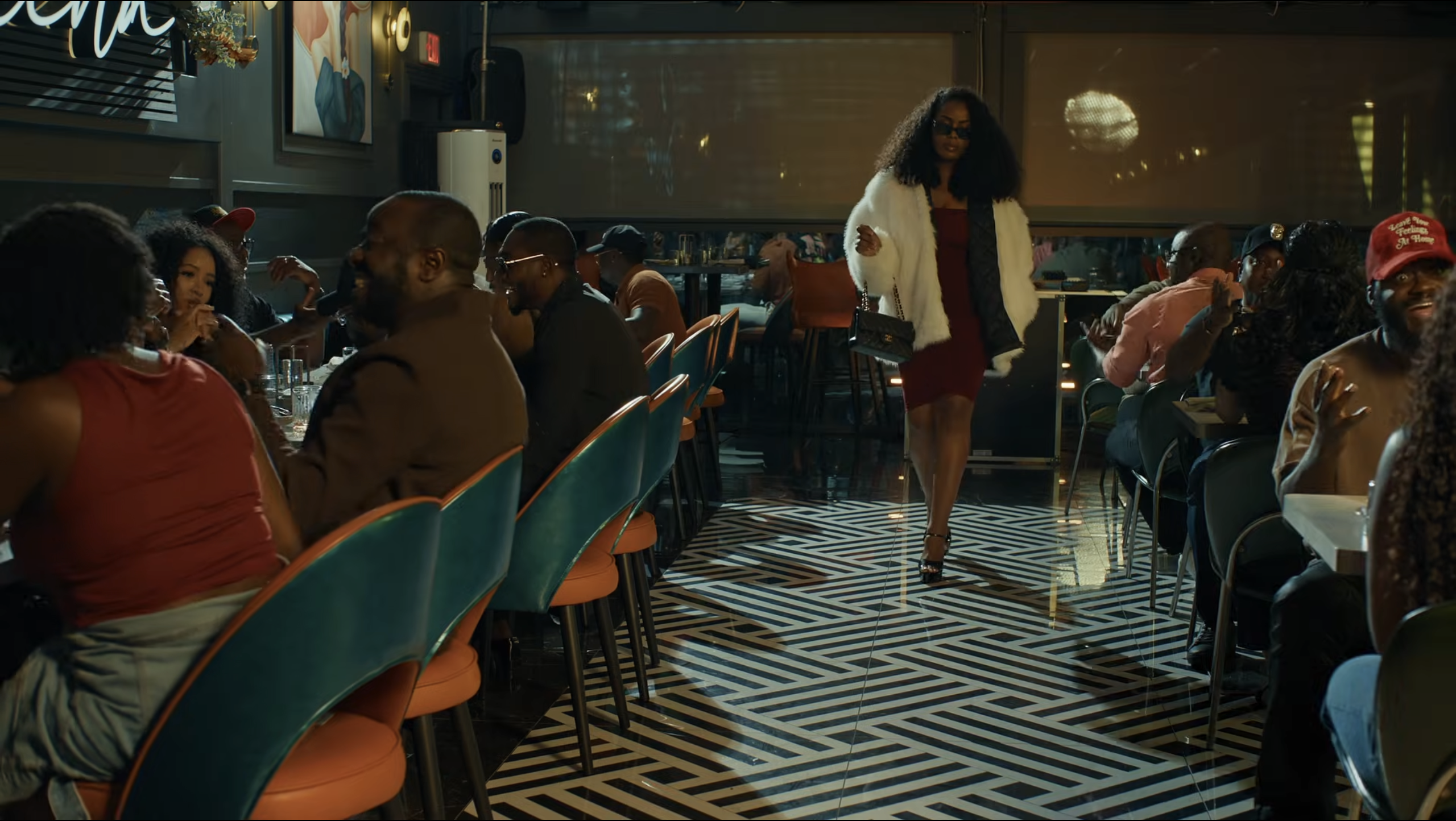
A woman enters a restaurant in a scene from eLDee’s 2026 music video for “I Wish You Well.” Source: eLDee The Don via YouTube.
If there was any doubt that “billing” has become central to Nigerian conversations about dating, money, and gender, eLDee the Don’s return to music has supplied a new soundtrack.
On July 25, 2026, Olanrewaju Dabiri, better known as eLDee the Don, returned from a lengthy recording hiatus with “I Wish You Well.” The rapper, singer, producer, and record executive has long used popular music to comment on Nigerian social life. This time, his subject is not electoral politics or poor governance, but the expectation that a man who expresses romantic interest should also finance a woman’s needs, wants, and lifestyle.
eLDee occupies an important place in the history of Nigerian popular music. Through the Trybesmen and the broader Da Trybe movement, he helped shape Nigerian hip-hop in the late 1990s and 2000s. Songs including “Plenty Nonsense,” “I Go Yarn,” “Bosi Gbangba,” “Big Boy,” and “One Day” combined entertainment with sharp observations about social aspiration, politics, and everyday life.
“I Wish You Well” continues that tradition with humor. Assisted by comedian Lasisi Elenu, eLDee narrates an encounter with a woman he has barely met. She first asks for a loan, claiming that her car has been towed and that rent is due. The requests soon expand to travel, designer goods, and other markers of luxury consumption.
eLDee recognizes the script and declines the role assigned to him: “I ain’t the one. I wish you well.”
The joke is clear. But the song also opens a wider conversation about the changing relationship between romance, consumption, and gender in Nigeria.
In contemporary Nigerian slang, “billing” refers to requesting or expecting money, gifts, or material support from another person, often in a romantic context. Its meaning is broader than simply asking for help. It describes a mode of romantic negotiation in which attraction, access, consumption, and financial obligation become closely intertwined.
Social media has made these expectations more visible. On TikTok, X, Instagram, and Facebook, private relationship disputes are regularly converted into public debates: who paid for a date, who bought a phone, who funded a holiday, and what a woman may reasonably expect from a man seeking her attention.
The issue is not that women ask men for money, nor that material support within relationships is inherently wrong. Partners have always supported one another in different ways. The more consequential question is what happens when financial provision becomes the primary proof of romantic seriousness, masculine worth, or feminine desirability.
Afrobeats provides a valuable record of these shifting expectations. Nigerian popular music has long celebrated male wealth, generosity, and conspicuous spending. The ideal successful man is often imagined as someone who can spend freely: at clubs, in restaurants, on fashion, travel, cars, and romantic partners. Women, in turn, are frequently positioned as recipients, validators, or beneficiaries of this prosperity.
The arrangement may be pleasurable and consensual. But it can also turn romance into a marketplace, where intimacy is measured through transactions, and consumption becomes evidence of affection.
That bidding contest already has a name.
“For better, for OPay” is a useful play on marriage vows and Nigeria’s digital-payment culture. It captures a growing anxiety that romantic commitment is increasingly tested not only through affection, compatibility, or care, but through the ability to transfer money quickly and repeatedly.
This does not mean that requests for money are always manipulative, or that women from economically disadvantaged backgrounds are somehow naturally more transactional. Such explanations turn structural pressure into an assumed personal defect. Economic hardship does not produce a particular kind of woman.
But Nigeria’s difficult political economy does shape the practical stakes of romance. The World Bank has repeatedly identified poverty, unemployment, and weak access to productive work as major challenges in Nigeria. Rising living costs have also placed considerable pressure on households. Nigeria’s National Bureau of Statistics publishes regular inflation data that show the cost of food and basic goods remains a major public concern.
In these conditions, intimate relationships may become part of the informal systems through which people manage everyday life. Rent, transport, food, education, health care, and family obligations all enter the emotional economy of dating.
For some women, particularly those without stable income, family wealth, or secure employment, a relationship with a financially capable man may be understood partly as a source of material security. This is not unique to women, nor is it new. Scholarship on African intimacies has shown that love, care, obligation, and exchange have often been connected rather than opposed.
For example, research on love and exchange in Africa cautions against treating material support as evidence that intimacy is necessarily false or mercenary. Related studies show that material exchanges can carry meanings of care, status, obligation, and aspiration, alongside unequal power relations. These relationships must therefore be interpreted in their social context rather than reduced to individual greed.
What has changed is the visibility of these exchanges, the vocabulary through which they are debated, and the speed with which social media turns private arrangements into public performances.
The same pressures affect men. Where masculinity is measured by the ability to provide, men with precarious incomes may feel compelled to display a prosperity they do not possess. They may borrow, overspend, or enter competition with other men for romantic attention and social status.
What appears as a private disagreement over dating expectations can thus become a bidding contest shaped by inequality, consumer aspiration, and digital visibility.
This is why eLDee’s intervention matters. “I Wish You Well” is not most productively read as a simple complaint about “gold diggers.” It questions a gendered romantic economy in which men are expected to provide and women are expected to consume.
Billing may be defended as individual choice: Women are free to request what they want, and men are free to decline. But this framing does not sufficiently account for the cultural conditions that make these exchanges appear normal, even inevitable.
The phone, restaurant meal, holiday, designer bag, or apartment is no longer merely a possession or experience. In Nigeria’s social media economy, it may also function as evidence of social value. To be seen receiving such things can generate cultural capital. To provide them can become a performance of masculine success.
The result is a paradox. Men are encouraged to establish their worth through spending, while women are encouraged to demonstrate theirs through attracting men who can spend. What may appear as female advantage can therefore coexist with a restrictive model of masculinity, one that ties male identity to financial capacity.
Both men and women can be constrained by this script.
That script plays out loudest online.
The online prominence of figures such as Saidaboj, whose provocative statements about dating and money have generated intense debate, shows how easily billing becomes a moral argument about women’s greed or men’s vulnerability. But this framing is too narrow.
Billing is better understood as part of a wider political economy of romance, one shaped by economic insecurity, unequal access to opportunity, consumer aspiration, gender norms, digital visibility, and the everyday costs of care. It is not simply a story of women exploiting men, nor is it merely a harmless expression of dating preference.
It is a gender bargain that both sexes have inherited, performed, and, at times, reinforced.
That is what makes “I Wish You Well” culturally significant. Its message is not that men should never spend money on women, or that material care has no place in intimate relationships. Rather, it asks whether romance must begin with an invoice.
Afrobeats does more than reflect social life. It gives listeners a language through which to engage with it. The most important question raised by eLDee’s song is therefore not whether billing is right or wrong, but what kinds of relationships become possible when people refuse the script that makes money the first measure of desire.