Frames of reference
At the 61st Venice Biennale, the late Koyo Kouoh’s decolonial vision shaped a landmark exhibition, even as questions of representation, solidarity, and cultural authority continued to haunt the African pavilions.
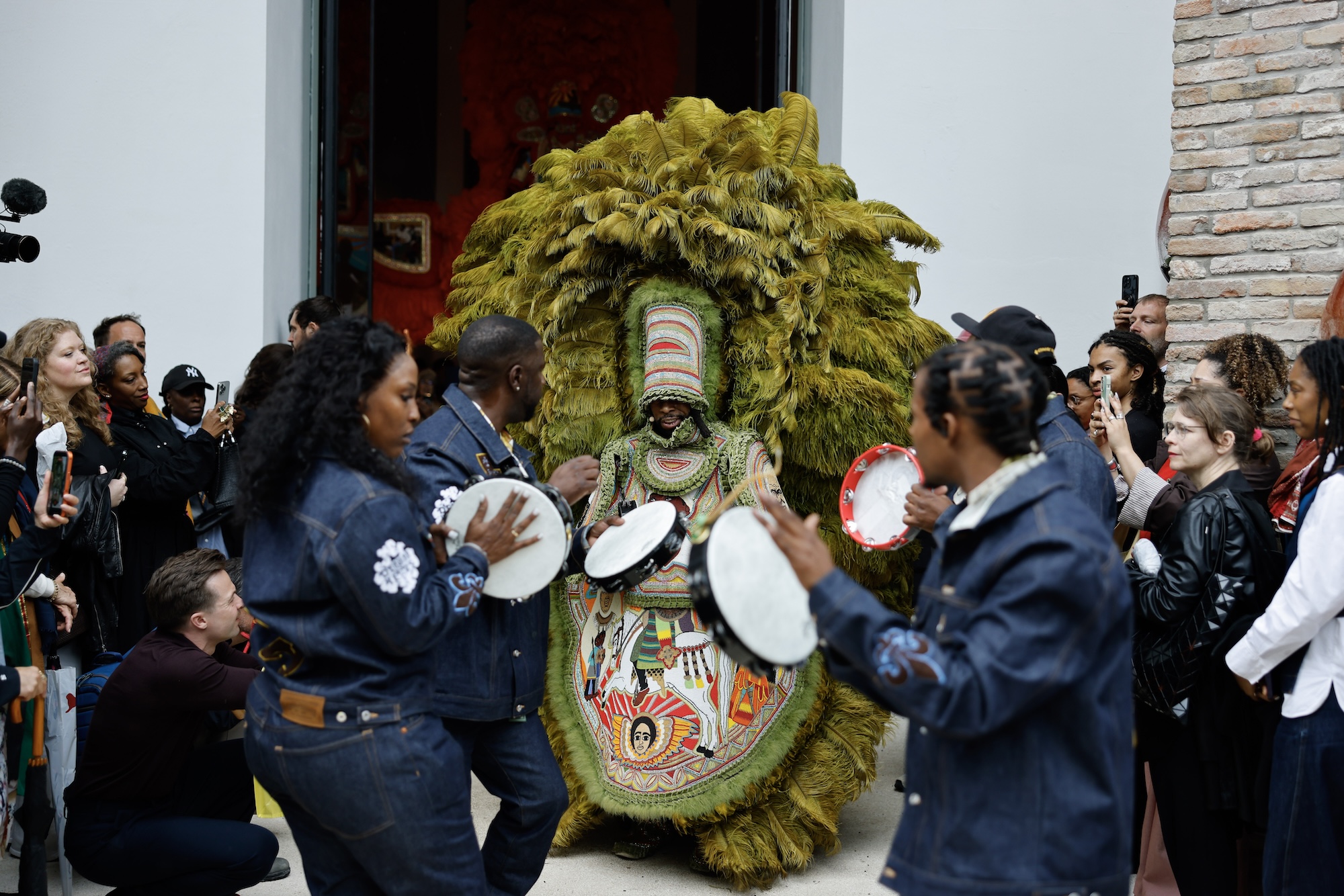
Big Chief Demond Melancon, in his beaded carnival costume, Jah Takeover (2020), during the opening performance, Blessing the Ancestors, at the 61st edition of the Venice Biennale. Photo Courtesy of La Biennale di Venezia.
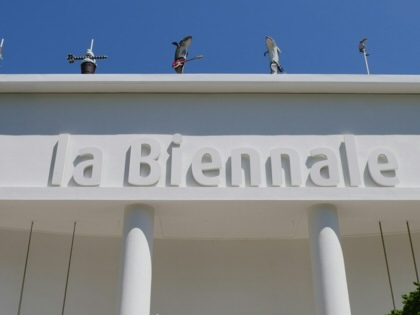
The 61st Venice Biennale arrived carrying real historical weight. Founded in 1895, the exhibition has long operated as a barometer of who the international art world considers worth centering and who it considers peripheral. That the 2026 edition was shaped, in its deepest curatorial instincts, by Koyo Kouoh, a Cameroonian institution-builder who spent decades fighting for the recognition of art from Africa and the broader Global South, before her death last year, is not a minor footnote. Her exhibition, titled “in minor keys,” brought together 111 artists across vast geographies and practices and placed decolonial, Black, and feminist artistic sensibilities not at the margins of the program but at its center.
The Biennale was not without controversy. Nine days before the opening, the jury responsible for awarding the Golden Lion resigned en masse, stating it would not evaluate artists from countries whose leaders are under International Criminal Court investigation—a pointed reference to Netanyahu and Putin, though neither was named. At the Giardini, I passed a sizable protest bearing Ukrainian and Kurdish flags. Inside several pavilions—Chile’s, Slovenia’s—activists had placed placards in solidarity with Palestine. The specter of art-washing hung over proceedings: The concern that states implicated in war crimes might launder their reputations through cultural participation.
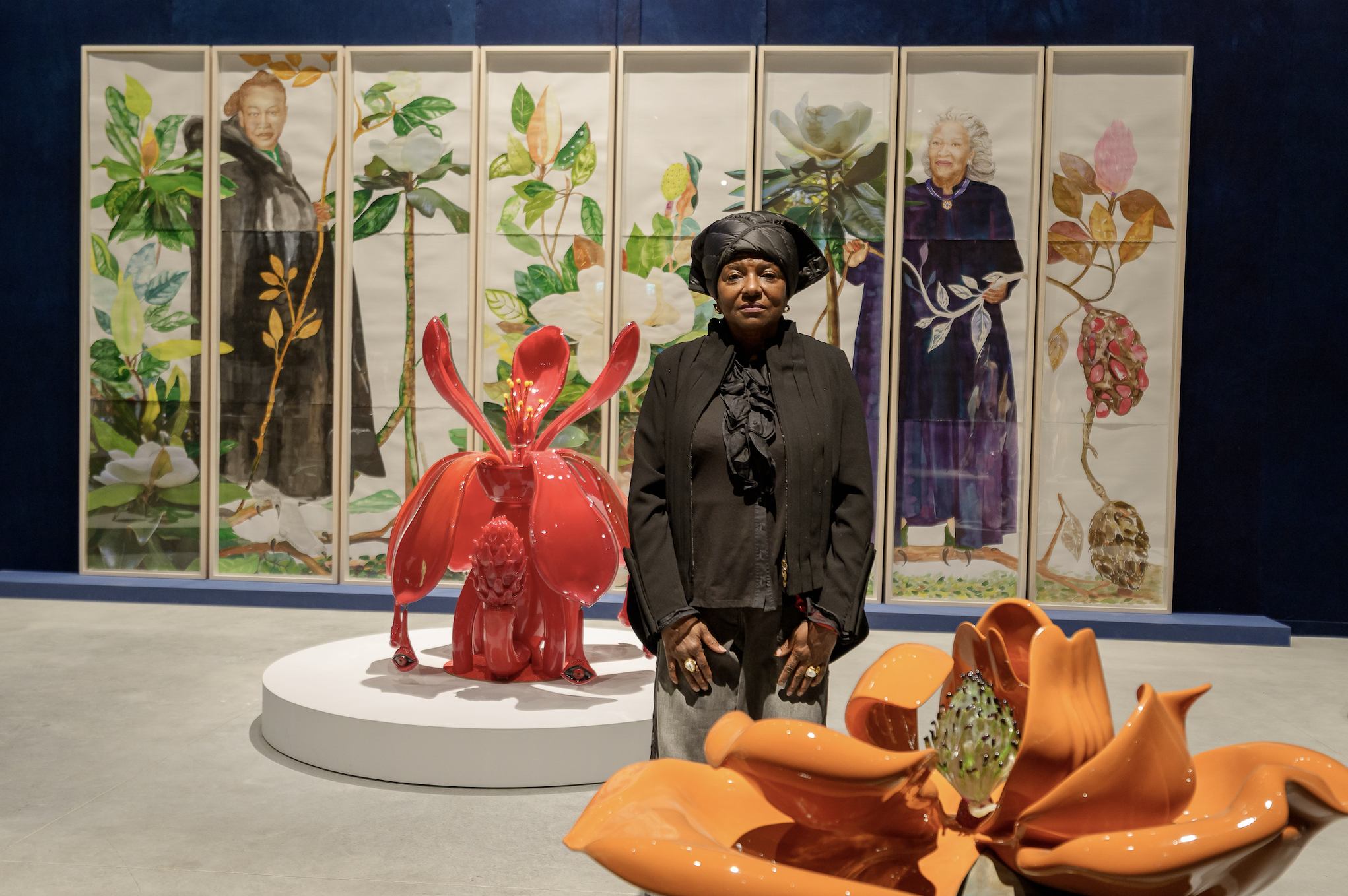
I had encountered Kouoh’s curatorial practice three years earlier, at Zeitz MOCAA in Cape Town, where “When We See Us” brought together over 120 artists from the continent and its diaspora in a monumental survey of Black figuration and self-portrayal. One of its organizing themes was “joy and revelry”—what Kouoh described as “the political power of Black happiness.” That spirit was present from the moment you entered the main exhibition at the Giardini, where two larger-than-life Mardi Gras costumes by New Orleans beadmaker Big Chief Demond Melancon greeted visitors. Melancon hand-sews glass beads into striking mosaics of historical moments and Black icons—the chartreuse-colored costume at the entrance depicted Emperor Haile Selassie and Empress Menen Asfaw. He inaugurated the Biennale opening with a ritual honoring the ancestors. Carnival, as a form, sits at the intersection of African masquerade, Native American dress, and the Black American experience; it carried, in miniature, the diasporic scope Kouoh sought to hold across the whole exhibition.
Fourteen countries represented Africa at the 61st edition. Equatorial Guinea, Guinea, Sierra Leone, and Somalia made their Biennale debuts this year; South Africa, the first African country to participate, has been present since 1950. Egypt holds the distinction of a permanent pavilion in the Giardini; the rest rent spaces across the city. Over the opening weekend, I visited eight African pavilions, in addition to 26 others and the main exhibition—on foot and by vaporetto. A pattern emerged across those visits: The closer the curator’s formation and orientation to the country they were representing, the richer and more specific the work felt. The inverse was equally consistent.
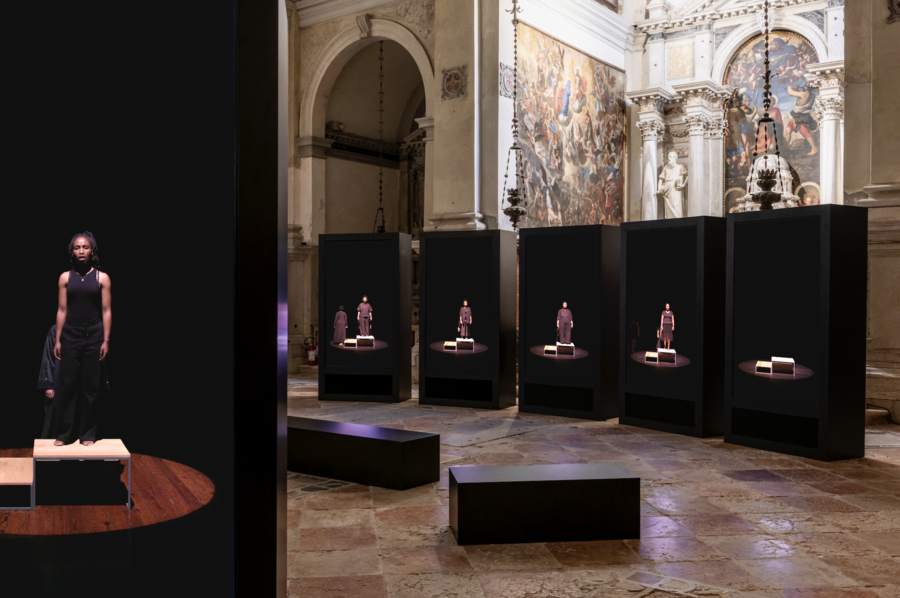
The South African pavilion stands empty. Culture minister Gayton McKenzie overrode curator Ingrid Masondo’s decision to commission performance artist Gabrielle Goliath, whose video installation Elegy—a seven-voice choir commemorating displaced and killed Palestinians—was deemed too politically sensitive. The work has been relocated off-site, to the baroque church of Chiesa di Sant’Antonin, where the acoustics do it considerable justice. The choir’s voices move through the space with a particular weight, capturing something about South African solidarity with Palestine that is both historically grounded and, given the Israeli policy of hafrada—which Amnesty International has classified as apartheid—pointedly legible. That this solidarity is being expressed at a moment when antimigrant xenophobia is resurging within South Africa makes Elegy’s call for international solidarity harder, not easier, to dismiss.
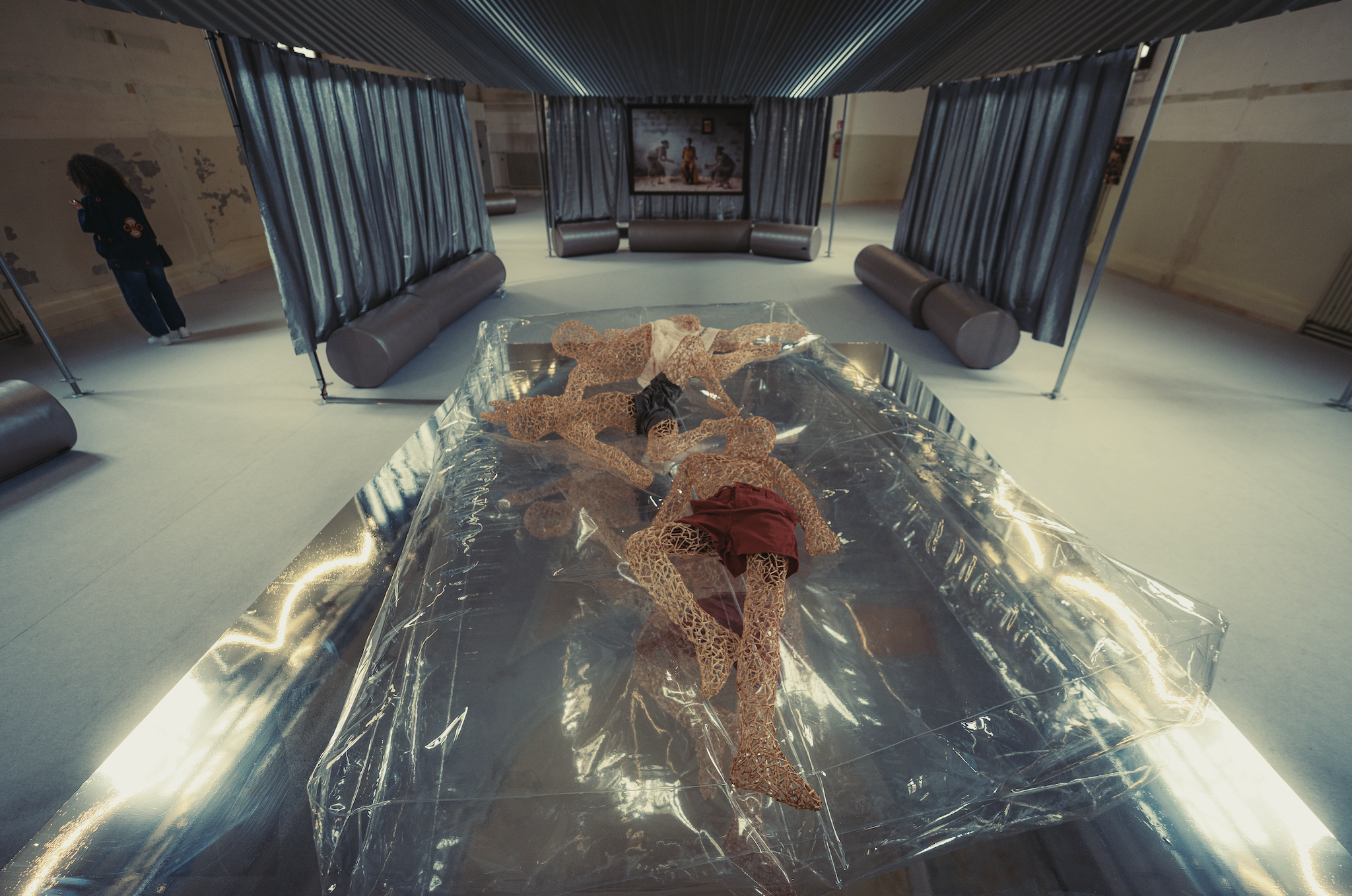
The Congolese pavilion, Simba Moto (Seize the Fire), was developed collaboratively by the Moko collective, led by philosopher Nadia Yala Kisukidi alongside Jean Kamba, Johnny Leya, and artist Aimé Mpane. Mpane’s contribution, Le Souffle (2026), is a breathing float with reclining figures made of matchsticks, a symbol of displacement rendered in an industrial gray framework that feels apt for a country whose mineral wealth has powered modern technology while its people have borne the cost. Arlette Bashizi provides documentary photographs of mine works that circulate the exhibition as a counterpoint. The pavilion also makes room for a different register of Congolese identity: Sammy Baloji’s tapestry Seeing Katharina (2026) speaks to the elaborate self-figuration through which Congolese culture has always exceeded the terms imposed on it.
Equatorial Guinea’s inclusion was, on paper, an opportunity. The country rarely features in serious arts coverage, and a Biennale platform could have been an occasion to introduce less-visible artists connected to the land. Instead, the pavilion showcases work from Nigeria, Senegal, and even artists from European countries not lacking in representation elsewhere in Venice. Fernando Nguema Madja, a self-taught ceramic artist of Equatorial Guinean background whose work, like El Diablo (2007), is on display, offers a glimpse of what a more locally grounded exhibition might have looked like. The Spanish sculptor Modest René, who lived and died in Equatorial Guinea, is at least anchored to the country’s history. But the overall curatorial logic is difficult to defend: Equatorial Guinea’s pavilion effectively functions as a side entrance for artists from stronger institutional bases. Cross-border collaboration at the Biennale can be meaningful, but it requires a coherent conceptual thread. That thread is absent here.
The Somali pavilion offers a better balance. A three-story building hosts what appears, at first glance, to be a fully realized domestic interior: two damask couches, a flat-screen television, garlands, bookshelves stacked with family photographs. It is a convincing mise-en-scène—until you recognize it as the frame for a poem by Warsan Shire on the refugee experience. The contrast between the intimacy of the room and the brutality of what Shire’s words carry is the work. Racism in refuge is one kind of violence; civil war in the homeland is another.
I visited the pavilion without knowing that the Somali collective Warbixinta Cidda had already gone public with a detailed critique of its curatorial process—published, as it happens, on this site. Their objections are substantive: The Somali advisory board consists entirely of men, and the process aligned itself too closely with Western curatorial authority, missing an opportunity to platform a wider range of Somali curators. These are not abstract concerns. The Biennale is one of the few occasions when a country’s artistic self-representation reaches a genuinely international audience. To cede curatorial control—to outside institutions, to dominant cultural centres, to advisory boards unrepresentative of the communities in question—is to reproduce, at the level of culture, the same extractive dynamic the work itself often critiques. Kouoh understood this. Her legacy is not simply the beauty of “in minor keys” but the insistence that the question of who controls the frame is never merely procedural.