Celebrating from a divided country
Bafana Bafana’s World Cup exploits has South Africans chanting “No DNA, just RSA!” But against a rising tide of xenophobia, what South Africa are we actually rooting for?
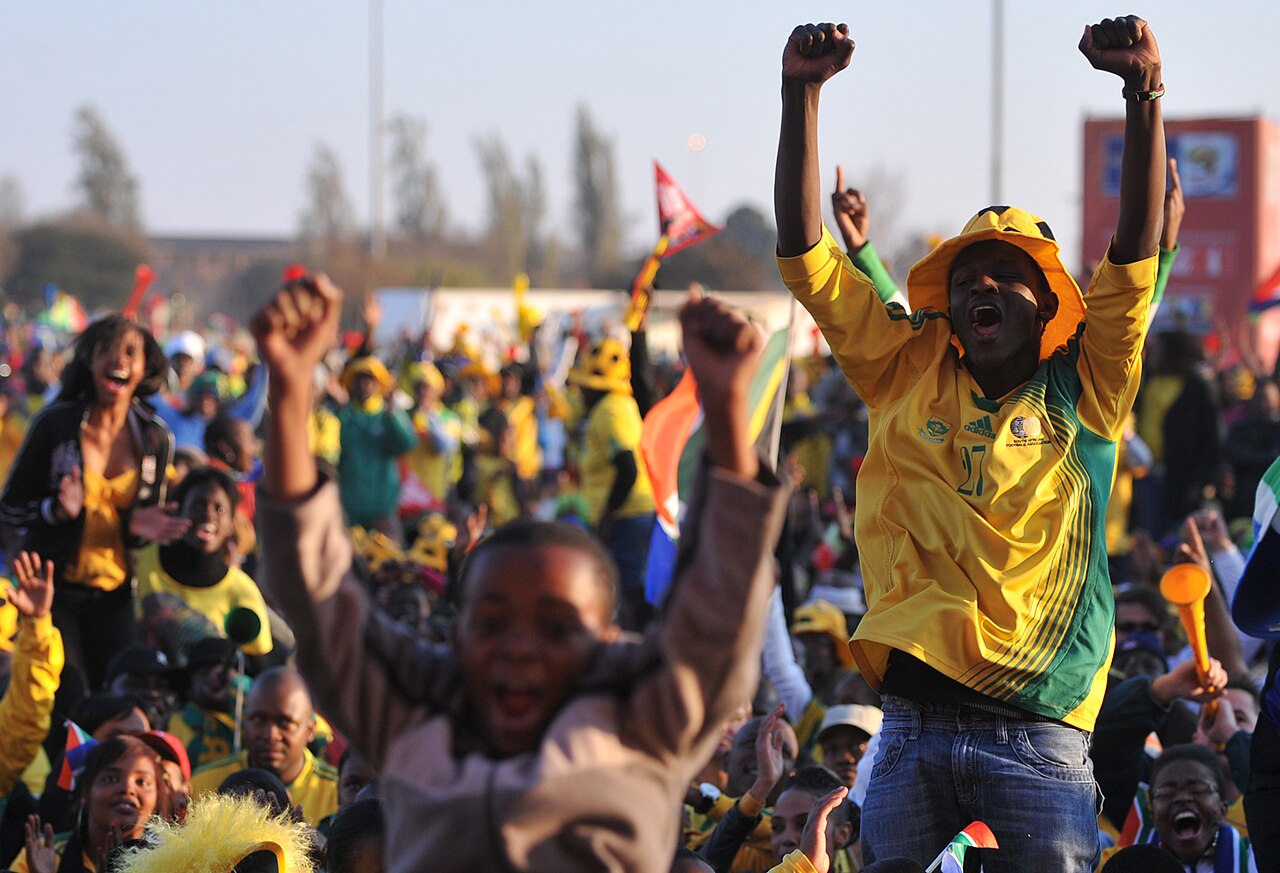
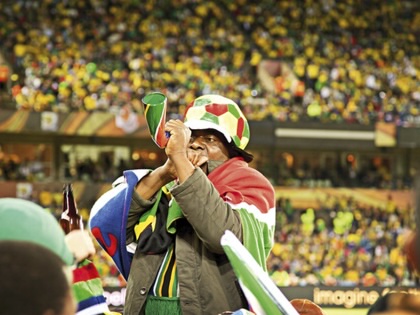
Fans celebrate Bafana Bafana’s opening goal in the 2010 FIFA World Cup. Source: Marcello Casal Jr/Wikimedia Commons.
In South Africa, we have granted sports the power to unite and divide us. Bafana Bafana’s historic win against South Korea has once again inspired the nation to chant “No DNA, just RSA!”—ostensibly asserting that citizenship, not ancestry, defines belonging in South Africa—a chant popular during major international tournament campaigns. As we leave the group stages for unknown territory, we are once again partaking in a “soft nationalism,” but this time it takes place amidst the context of hard nationalism. The same voices celebrating are also chanting that “foreigners must go.”
The prefix “South” adds a lot of baggage to “Africa.” This is a country that enacted a specific kind of colonialism, one that saw the nation as its own and not a colony of a larger empire. The apartheid government did not serve the interests of a foreign power; they were the foreign power, claiming the country as a homeland. Our history has given us a distinct national character, each “race” keenly adopting “South Africa,” but it means something different to every person who dons it. At the present moment, this means that a large part of the country is calling for the forced removal of foreigners in the name of the South African identity. There is a genuine concern that the poor Black South African has, that their lives are destined for destitution, that health care, jobs, and economic comfort are not “meant for them.” They can see it in crumbling institutions, in their own lives, and in their inability to get a leg up in the most unequal country in the world.
Thirty years of neoliberalism have not been kind to large parts of the country. This has led to a serious resurgence of right-wing politics. From political agents who wish to remove Black Economic Empowerment (BEE), the post-apartheid policy framework aimed at redressing racial inequalities in business ownership and employment (which, if we are being honest, has not done its job), in favor of “free market” determinism, which would be an effective death sentence to progressive employment. To the renewed Afrophobia of March on March, an anti-migrant vigilante movement that has organized protests calling for the removal of undocumented foreigners from South Africa.
Blaming foreigners while evading genuine and difficult questions about the government, and capitalism and its failures, is easier, and it comes with the bonus of feeling like “you are a part of something bigger.” The power of giving a voice, even a misguided one, to the voiceless cannot be overstated here. For 30 years, South Africa has been great at sloganeering, and over that 30-year period, fewer and fewer people feel like those slogans meant something. March on March has given those who feel silent something to say, something to do, a tangible action—and that is a lot more than broken promises.
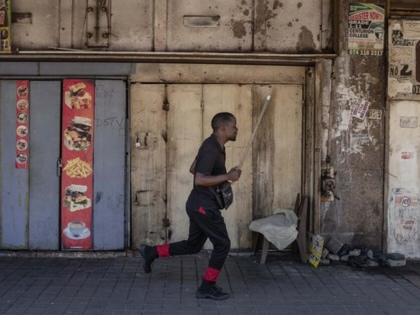
The face of Afrophobia as it sits now is the Zulu Man—a carefully crafted image of a proud South African fighting to “take back his country.” The Zulu ethno-linguistic group is the largest in South Africa; some anti-migrant organizing has drawn heavily on Zulu nationalist imagery and hostel-dweller networks in KwaZulu-Natal and Johannesburg. Tell me what you think the white supremacists, who still largely control the economy, are thinking when they see traditional attire being used to orchestrate violence against the marginalized. We have seen this play before in pre-1994 South Africa, where one group of marginalized peoples was mobilized against the other; it paints a convenient image: “See, they can’t even get along, how do we expect them to govern?” I do not condemn the Zulu man whose life is spent on the outskirts of society, in single-sex migrant worker hostels (built under apartheid to house Black workers near cities; many remain occupied and have historically been sites of political mobilization). He has genuine concerns for a better life. To suggest that Afrophobia is a “Zulu problem” is Afrophobic; to suggest that the carefully chosen poster men for March on March are somehow the be-all and end-all of Zulu identity is also Afrophobic. To ignore the influence of Zulu nationalism is also misguided. It is difficult territory: to rightfully address the ethno-nationalist dreams of some people who happen to be Zulu, while not falling into the thinking that Zulu people are “the bad ones.” To reiterate the point, this is the marginalized being mobilized against the marginalized, and those in power sit back and smile as they are left unscathed.
Back to soccer. As we unite under the banner of South Africa, what South Africa are we supporting? Are we uniting under a new nation that sees itself as separate from Africa, more South than African? When we hosted the 2010 World Cup, we were “the first African country” to do so. Now we are flirting with being the first Southern African country to cut itself off ideologically from the larger African story. We are reifying colonial borders and reproducing the logic of white supremacy. When a Bafana Bafana win is nation-building, we have to remain vigilant about the nation it is building towards.