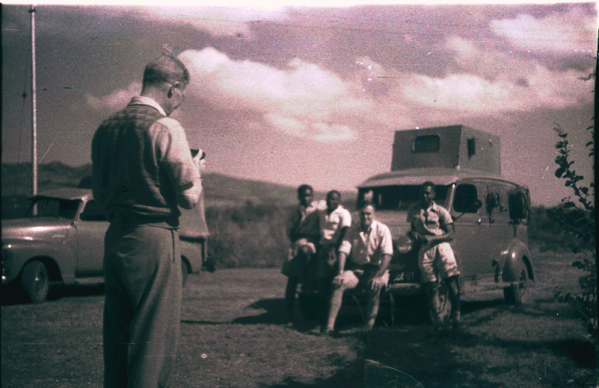
Afropop has a great audio program on Hugh Tracey, who recorded over 250 albums of “traditional” African music around Southern Africa between the 1920s and 1950s. That’s about 20,000 “field recordings” (that’s what the experts call these live recordings) of songs or instrumentals.  Tracey and his team also meticulously catalogued these recordings.  Though Tracey was a “product of his time,” i.e. British colonialism, and had a short association with Gallo Music (a company that rarely did right by black musicians), you can’t underestimate Tracey’s contribution to African music.  In the program, producer Wills Glasspiegel travels to Grahamstown (where the Hugh Tracey Archive is situated), Johannesburg (to talk to musicologist David  Copland and BLK JKS drummer, Tshepang Ramoba) as well as Malawi (where Glasspiegel recruits musician Esau Mwamwaya to make some field recordings).

Definitely worth a listen here.

Further Reading

Slow death by food

Illegal gold mining is poisoning Ghana’s soil and rivers, seeping into its crops and seafood, and turning the national food system into a long-term public health crisis.

A sick health system

The suspension of three doctors following the death of Chimamanda Ngozi Adichie’s son has renewed scrutiny of a health-care system plagued by impunity, underfunding, and a mass exodus of medical professionals.

Afrobeats after Fela

Wizkid’s dispute with Seun Kuti and the release of his latest EP with Asake highlight the widening gap between Afrobeats’ commercial triumph and Fela Kuti’s political inheritance

Progress is exhausting

Pedro Pinho’s latest film follows a Portuguese engineer in Guinea-Bissau, exposing how empire survives through bureaucracy, intimacy, and the language of “development.”

The rubble of empire

Built by Italian Fascists in 1928, Mogadishu Cathedral was meant to symbolize “peaceful conquest.” Today its ruins force Somalis to confront the uneasy afterlife of colonial power and religious authority.

Atayese

Honored in Yorubaland as “one who repairs the world,” Jesse Jackson’s life bridged civil rights, pan-Africanism, empire, and contradiction—leaving behind a legacy as expansive as it was imperfect.

Bread or Messi?

Angola’s golden jubilee culminated in a multimillion-dollar match against Argentina. The price tag—and the secrecy around it—divided a nation already grappling with inequality.