The Social Justice, Gender and Health Reading Group, The Center for Place, Culture and Politics, and The Center for the Humanities present:

Remembering E.H. Carr and the Case for a New History in South Africa

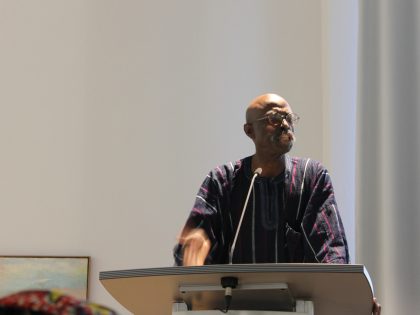
Zackie Achmat

Tuesday May 4th, 6:30pm, Room 6402
Venue: CUNY Graduate Center, 365 Fifth Avenue, New York, NY 10016.

Open Society Fellow, Nobel Peace Prize Nominee Zackie Achmat is an AIDS activist who has garnered international acclaim for his leading role in the struggle for access to AIDS treatment in South Africa. After having been active in the anti-apartheid movement, Achmat was a founding member of the Treatment Action Campaign, the most influential social movement focusing on the AIDS epidemic in South Africa. In this lecture, Achmat will examine the work of the critical historian E.H. Carr in re-thinking South Africa’s history and the possibilities for its future. Achmat was nominated for the Nobel Peace Prize in 2003 for his leadership role in bringing about an orthodox public health response to the AIDS epidemic in South Africa.

This lecture is part of the 2009/10 speaker series entitled:

AXES OF INEQUALITY:
RACE, GENDER, SEXUALITY, AIDS, AND CIVIL SOCIETY IN SOUTHERN AFRICA

Please RSVP to: [email protected] to confirm attendance.
Further Reading

Slow death by food

Illegal gold mining is poisoning Ghana’s soil and rivers, seeping into its crops and seafood, and turning the national food system into a long-term public health crisis.

A sick health system

The suspension of three doctors following the death of Chimamanda Ngozi Adichie’s son has renewed scrutiny of a health-care system plagued by impunity, underfunding, and a mass exodus of medical professionals.

Afrobeats after Fela

Wizkid’s dispute with Seun Kuti and the release of his latest EP with Asake highlight the widening gap between Afrobeats’ commercial triumph and Fela Kuti’s political inheritance

Progress is exhausting

Pedro Pinho’s latest film follows a Portuguese engineer in Guinea-Bissau, exposing how empire survives through bureaucracy, intimacy, and the language of “development.”

The rubble of empire

Built by Italian Fascists in 1928, Mogadishu Cathedral was meant to symbolize “peaceful conquest.” Today its ruins force Somalis to confront the uneasy afterlife of colonial power and religious authority.

Atayese

Honored in Yorubaland as “one who repairs the world,” Jesse Jackson’s life bridged civil rights, pan-Africanism, empire, and contradiction—leaving behind a legacy as expansive as it was imperfect.

Bread or Messi?

Angola’s golden jubilee culminated in a multimillion-dollar match against Argentina. The price tag—and the secrecy around it—divided a nation already grappling with inequality.