
The memory keepers
A new documentary follows two women’s mission to decolonize Nairobi’s libraries, revealing how good intentions collide with bureaucracy, donor politics, and the ghosts of colonialism.
A new documentary follows two women’s mission to decolonize Nairobi’s libraries, revealing how good intentions collide with bureaucracy, donor politics, and the ghosts of colonialism.

The director of the Oscar-nominated film 'Soundtrack to a Coup d’Etat' reflects on imperial violence, corporate warfare, and how cinema can disrupt the official record — and help us remember differently.
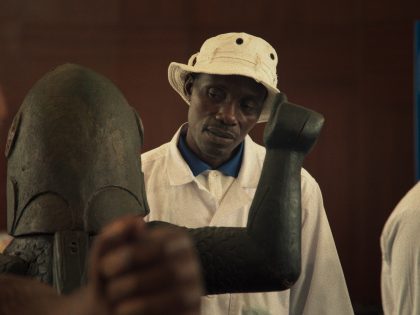
In 'Dahomey,' Mati Diop reimagines restitution, using surrealist cinema to revive looted African artifacts and amplify youth-led calls for decolonization.
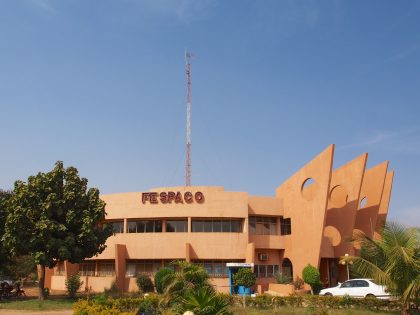
Forty years ago, African filmmakers and revolutionaries united to reclaim cinema as a weapon for liberation and cultural sovereignty across the continent.
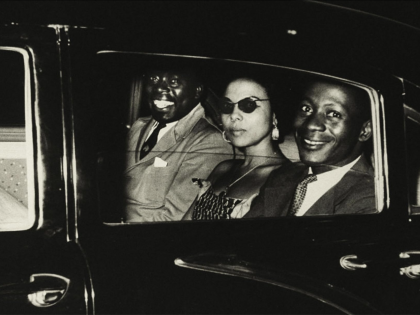
A sweeping, jazz-scored exploration of Cold War intrigue and African liberation, Johan Gimonprez’s 'Soundtrack to a Coup d’Etat' lays bare the cultural and political battlegrounds where empires, artists, and freedom fighters clashed.

African postcolonial cinema serves as a mirror, revealing the limits of escape — whether through migration or personal defiance — and exposing the tensions between dreams and reality.
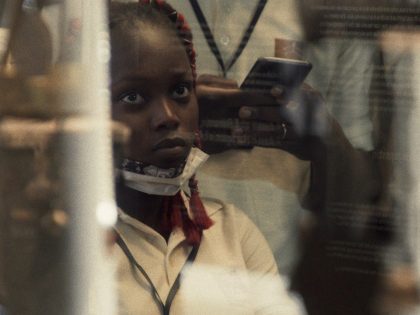
Mati Diop’s 'Dahomey' isn’t solely concerned with the subject of repatriating Beninese artifacts, but with returning the debate to the Beninese themselves.
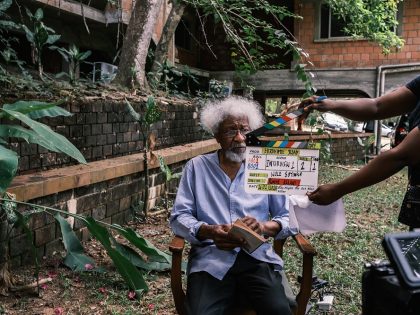
An eye-opening documentary on African literary titan Wole Soyinka wants us to laud his “politics” without ever having Soyinka himself talk about them.

In a new film, former UN-Secretary General Dag Hammarskjöld is portrayed as a defender of a fledgling postcolonial state. But his role in the Congo Crisis is more complicated.

Bolanle Austen-Peters' new biopic on Funmilayo Ransome-Kuti often feels too simple and safe.
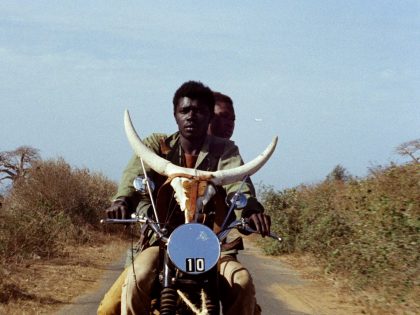
As Africa’s first filmmakers made their unique steps in Africanizing cinema, few were as bold as Djibril Diop Mambéty who employed cinema to service his dreams.

At the 31st New York African Film Festival, young filmmakers set the stage with adventurous and varied experiments in African cinema.
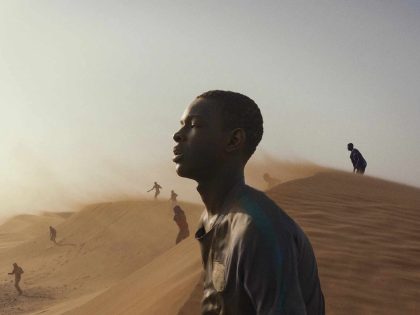
By centering the African migrant perspective, a new film challenges Western images that cast hundreds of thousands of individuals into the generic role of desperation.
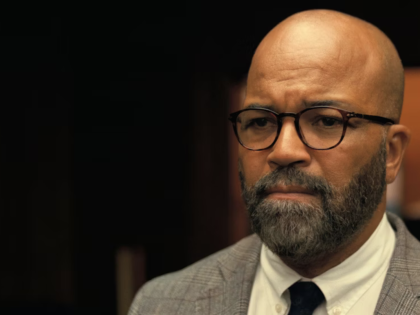
The film adaptation of Percival Everett's novel ‘Erasure’ leaves little room to explore Black middle-class complicity in commodifying the traumas of Black working-class lives.

To see Kaouther Ben Hania’s latest film as condoning the West’s orientalism is to to ignore the agency of the women in it.

Why are stories about African suffering so persistent?
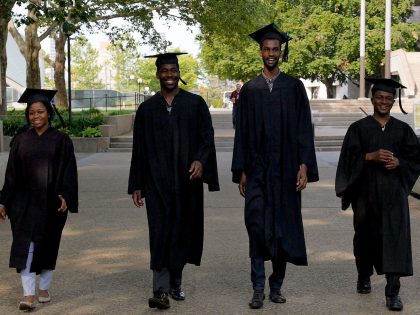
A new film follows the lives of four African students at MIT, where youthful idealism gets tested by the realities of American racism and inequality.

The little-known history of Iranian cinema uncovers its overlooked history of slavery and anti-blackness.

A new film about American civil rights icon Bayard Rustin overlooks his later conservative turn, evident in his attitudes to anticolonial resistance in Africa.

It would seem that Hollywood has discovered Africa again. But how does all the new American content about Africa’s past compare to a previous generation of African-made movies on the same topic?