A border spectacle
When thousands of young Moroccans stormed Ceuta last week, it was not an invasion, but the latest in a five-year pattern of coercive migration diplomacy on a border with five centuries of colonial history behind it.
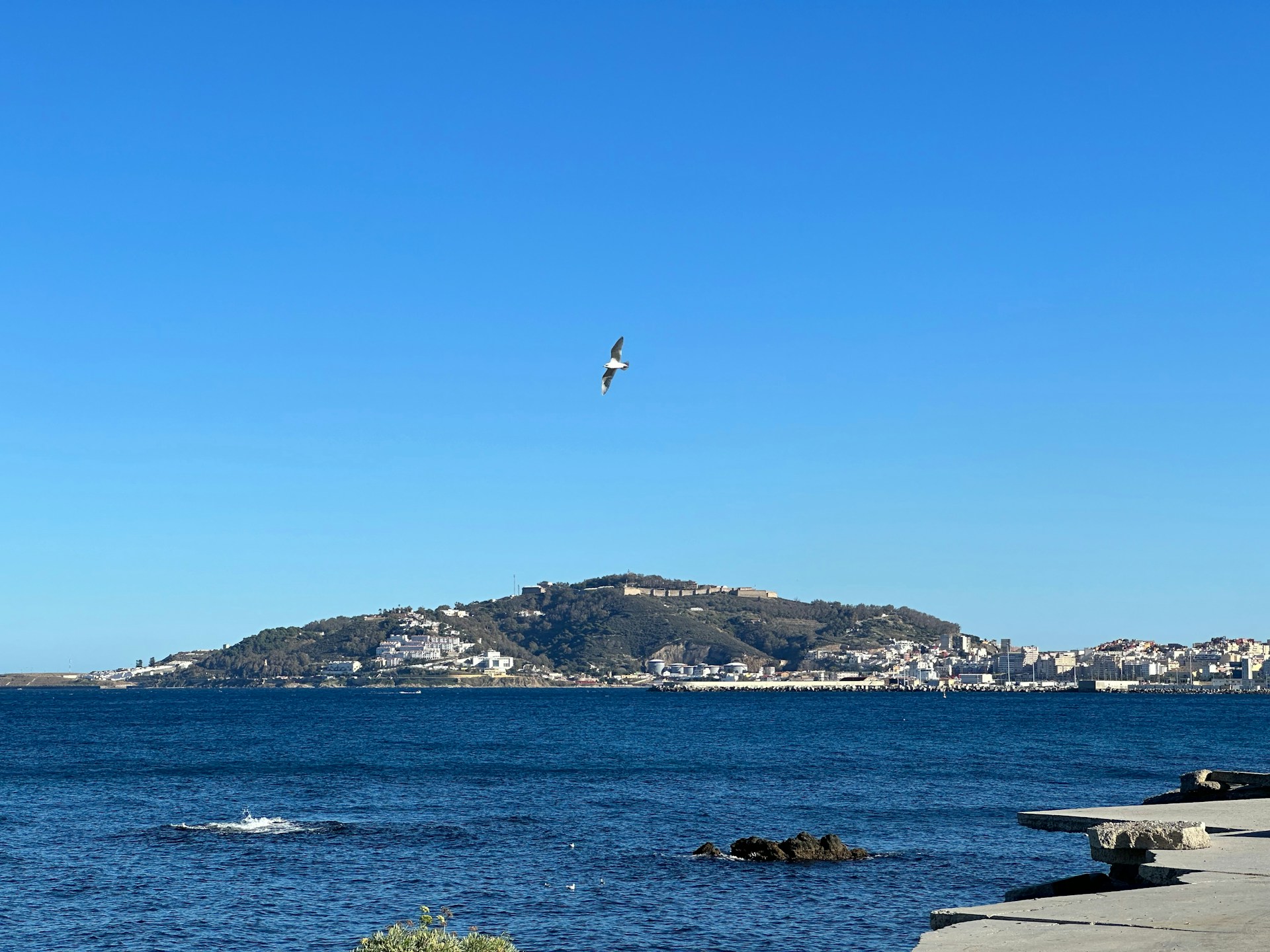
Photo by David Valverde on Unsplash.
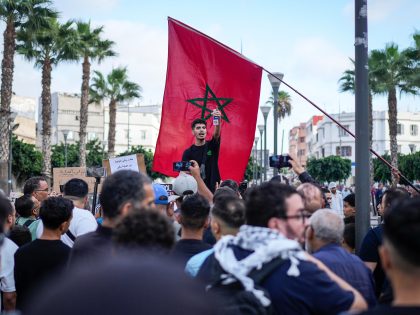
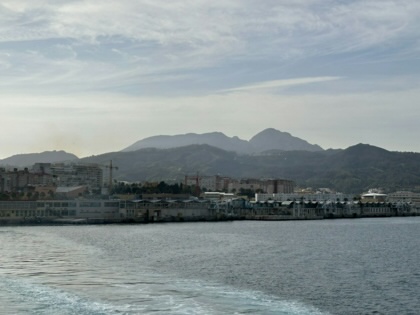
What happened last Thursday in Ceuta was a border spectacle of surprising scale and scope. Tens of thousands of mainly young fellow Moroccans stormed the gates while others braved the water to enter the enclave. All the elements of the spectacle were there: from images of boisterous youngsters jockeying for entry, to a diplomatic slanging match, to border patrols scrambling to push migrants back to Morocco.
It sounds like a geopolitical déjà vu—almost the same border antics: scene, actors, protagonists, and victims staged in May 2021. In fact, what happened in Ceuta is the third episode of the border spectacle: the first staged in May 2021, the second in September 2024, and here we are watching the third—and perhaps not the last—episode, marking a shift in Morocco’s migration diplomacy to a more coercive approach.
There is no conspiracy theory behind the Ceuta border spectacle; there is only a geopolitical buildup to understand Morocco’s coercive migration diplomacy. The latter has shifted migration governance from policies, practices, and discourses to the direct use of its youth and other racialized African migrants in diplomatic sparring.
Here is the buildup: On December 10, 2020, the Trump administration recognized Morocco’s sovereignty over Western Sahara. This historic moment led Morocco to garner further diplomatic recognition, especially from its traditional allies—not least Spain as a former colonizer. In January 2021, a diplomatic logjam between Morocco and Germany started to simmer following the latter’s criticism of Donald Trump’s proclamation to recognize Moroccan sovereignty over Western Sahara. This diplomatic friction with Germany prompted Morocco to push the European Union.
Meanwhile, the possibility of meeting Morocco’s expectations, whether by the EU or its member states, proved far-fetched. The diplomatic spat between Morocco and Spain reached its nadir when the latter hosted Brahim Ghali, the leader of the Polisario Front, in April 2021 to seek medical treatment. In a tit-for-tat response, Morocco unleashed over 8,000 migrants, including around 3,000 minors. Santiago Abascal, the leader of the anti-migrant far-right Vox party in Spain, denounced the arrivals, stating Morocco was “launching minors like battering rams” against the Spanish borders.
Now, the same scenario is unfolding after Pedro Sánchez visited Algeria to parley with President Abdelmajid Tebboune over natural gas and Western Sahara.
In Europe, the border spectacle sparked a moral panic that feared the invasion of the southern flanks of Europe, raking up right-wing opprobrium over Sánchez’s progressive yet lax migration policies. Far from being an invasion, the border spectacle staged produced anti-migration fodder for far-right politicians.
The border spectacle has resurfaced the centuries-old colonization of Ceuta and Melilla.
The international public that redeems Sánchez as the proponent of the Palestinian cause and progressive migration reforms is bewildered by Ceuta’s tiny geography at the outer fringe of the African continent, wondering how Spain, and for that matter Europe, will be invaded while in Africa. Some historical context is urgent here to disentangle these “only land borders between Africa and EUrope.”
Depending on one’s geopolitical stance, Ceuta and Melilla are at once enclaves and exclaves. From the colonial standpoint of Spain and the European Union, they are seen as exclaves, embodying the external sovereign extension of Spain and, more recently, Europe. In most academic literature, however, the two cities are enclaves standing as the last remnants of European colonization on the African continent. For Moroccans, the two cities are occupied territories, whose recovery remains an unfinished national project of decolonization.
The dispute over Ceuta and Melilla has shaped a long history of sporadic tensions in the relationship between Morocco and Spain. Its historical roots extend back to the Reconquista (c. 718–1492), culminating in the fall of Al-Andalus, and ended with the expulsion of the Moors, between 718 and 1492, from the Iberian Peninsula to North Africa.
Spain extended its sovereignty beyond the Peninsula to vie for external territorial sovereignty in North Africa, seizing Melilla in 1497 and Ceuta—initially conquered by Portugal in 1415 and then ceded to Spain—in 1668. The two towns served as external bulwarks for the clash between the Ummah of Islam and Christendom. Well into the wake of decolonization, Morocco has never ceased reclaiming the two enclaves, invoking the principle of territorial integrity laid down in the Charter of the United Nations.
In 1991, Morocco and Spain signed a Treaty of Friendship, Good Neighborliness and Cooperation. Yet, in 1995, to complete the political formation of its national sovereignty, Spain granted Ceuta and Melilla the status of Ciudades Autónomas (Autonomous Cities). This move was criticized by Morocco as a breach of the treaty and an insidious attempt to annex the two territories to its national dominion. To parry such criticism, at the end of 1996, Spain formally constructed barriers fencing Ceuta and Melilla, which was justified by Spain—by the appearance of West African migrants as a “new problem” at the external borders of Europe. In September 1997, the then Prime Minister of Morocco, Abdellatif Filali, reiterated this claim at the UN General Assembly, that “Moroccan towns under Spanish occupation” should follow the same resolution pursued by Hong Kong and Macao.
Spain’s accession to the Schengen Treaty in 1995 promptly activated the Europeanization of Ceuta and Melilla. In this sense, the borderwork in the two towns is no longer a national matter but a European one, which requires the joint efforts of the EU, Spain, and Morocco to combat irregular migration. The subsequent fortification of the two towns, the Euro-African frontier, is a prototype of “Fortress Europe” and border externalization. What follows the birth of this fortification of Ceuta and Melilla is a reenactment of colonial violence against racialized migrants.
The border spectacle of Ceuta bears witness to the longue durée of colonial violence and borders as its obdurate, historical residue. It also bespeaks the banality of colonial durabilities over such territorial splinters in the shadow of decolonization. This colonial history has, in turn, shaped how Europe views the mobility of Africans, deploying deficit and imperial frameworks of a ‘crisis,’ ‘problem,’ and ‘threat.’
On October 11, 1995, Policía Nacional repressed a group of black African migrants in Ceuta who were contained and refused relocation to mainland Spain. The event marked a turning point, staging the first ‘border spectacle’ of the Euro-African borders. What followed was unending processes of “bordering and re-bordering” the Moroccan-Spanish borders. In October 2005, exactly ten years later, 15 black African migrants fell dead at the fences around Ceuta and Melilla. Nationwide raids and arrests of migrants in forest camps around the two enclaves were carried out by the Moroccan authorities, dumping over 2,000 black African migrants in the remote desert borderland with Algeria. Almost another decade later, on February 6, 2014, another breaking point of migrant death claimed the lives of another 15 migrants in the Tarajal Massacre. Guardia Civil opened fire on black African migrants as they waded their way into Ceuta along Tarajal Beach. A new lawsuit was later filed against Spain by a Cameroonian survivor. On February 6 of every year, “commemorActions” and sit-ins are held all around the world denouncing migrant death and disappearance.
The most recent breaking point is the Melilla Massacre, which is, in large part, the subject matter and ethnographic groundwork of my thesis. The Melilla Massacre is a historic spectacle of migrant death, claiming the lives of at least 27 black migrants from East Africa. Dozens went missing, others were incarcerated, and survivors were dumped at the Algerian border or dispersed to different urban fringes within Morocco.
Tracing the genealogies of the EU’s border externalization within the longue durée of the colonial matrix allows us to see what happened in Ceuta beyond presentist accounts of migration diplomacy: it allows us to see through the enduring continuum of social death and containment that saps the resourceful subjectivities of Moroccan and African youth at large.
Far less concerned with deciphering the geopolitical palaver of the Ceuta crossings, Moroccan journalists, artists, activists, and intellectuals are resurfacing discussion over the broken social contract between the state and its citizens. The socio-economic malaise plaguing Moroccan youth is a legacy of systemic disinterest in the realities of Moroccans. It favors glamorous investments—as in stadiums for the 2030 World Cup—giving short shrift to basic public services such as health and education. Such legitimate demands were the slogans of the GenZ 212 protests, a grassroots movement born online and driven by young Moroccans, including some of those who stormed the Ceuta border. Many of the protesters were detained, while many chose the ‘backway’ to reach Europe on unseaworthy boats.
From the Moroccan border, the border spectacle of Ceuta is symbolic of an escape from a carceral, postcolonial deathworld—not an invasion or a Moroccan border regime that managed to outfox its Spanish counterpart. Beyond depictions of delinquency, Moroccan youth have proved to be agents of social, economic, and political change, escaping a political juggernaut that grinds down their youth and resourceful subjectivities.
Caminando Fronteras, a Spanish NGO that began counting border fatalities along the Atlantic route in 2015, counted 141 migrant deaths as of August 4. Many more are still missing. Embattled families of mafqudin (missing migrants) are in vertigo, still waiting at the border in hopes of finding their missing relatives. Border Resistance, a collective of migration activists, is monitoring the border violations in Ceuta: the illegal pushbacks, beatings, starvation, and search and identification for the mafqudin among young Moroccans, Sudanese, and Yemeni asylum seekers.
Crossing the borders involves a cultural rite of social death and, upon safe crossing, rebirth. It’s the kind of social death that one escapes from home to seek a new life beyond borders. In the passage, migrants exchange physical death for a new life beyond the Moroccan borders.
For Moroccan migrants, risking their lives along dangerous routes was an escape from the mandibles of social death. The risk promised rebirth and regeneration to individual and communal lives.
Many more Moroccans will continue to reach Ceuta and Europe, undeterred by the unending securitization of borders and the violent deaths and disappearances.