AFCON and the politics of Africanhood
In Morocco, football has become a site for the slow re-Africanization of the country’s national identity.
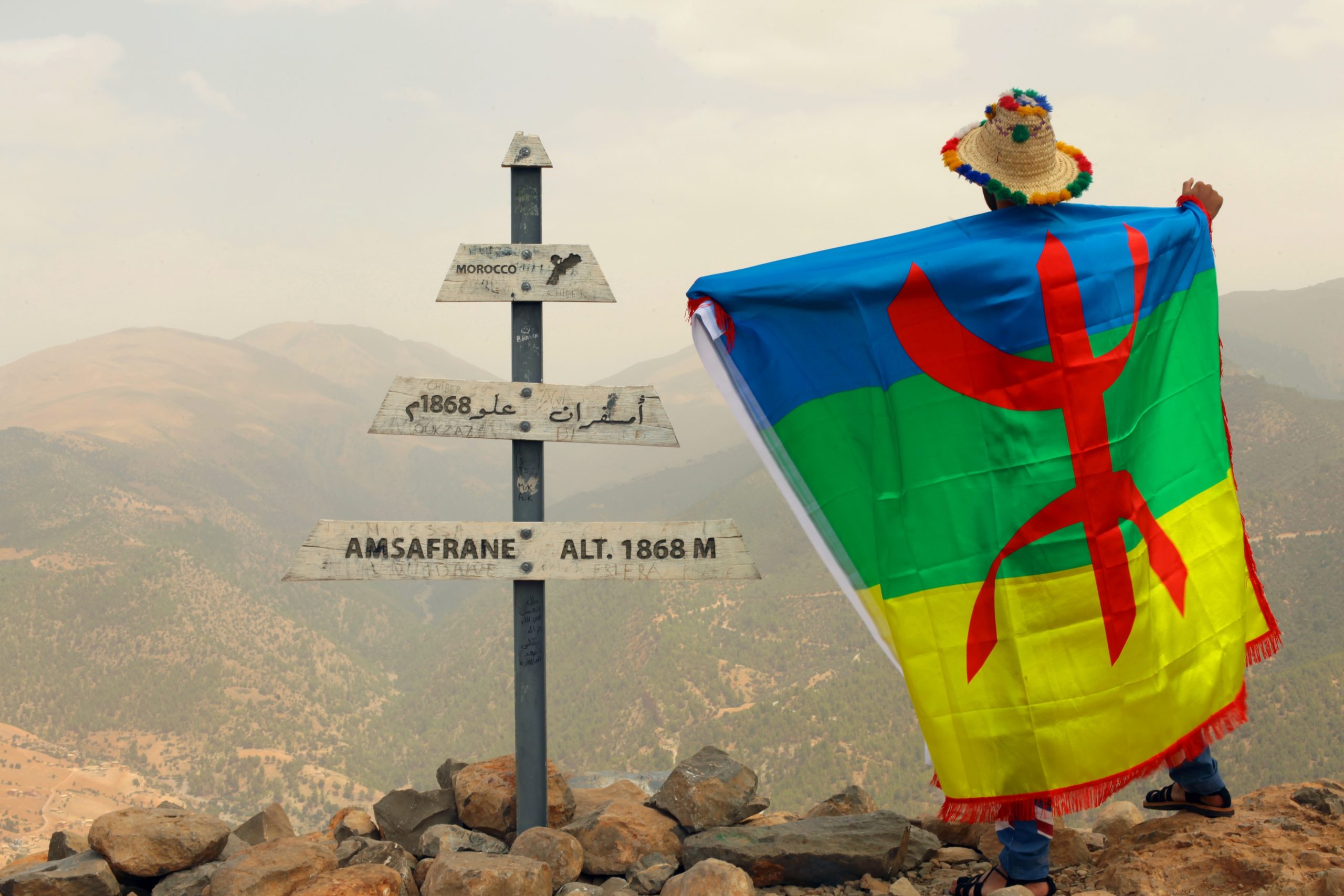
Amsafrane summit in Azilal, Morocco. Image credit Terry137 via Shutterstock © 2020.
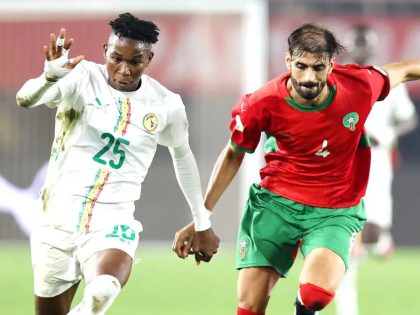
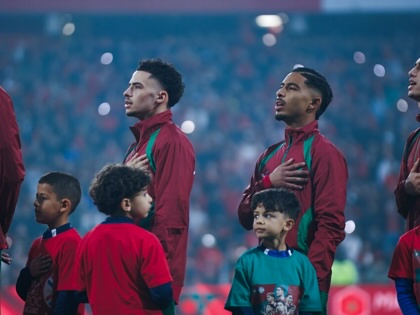
Morocco is witnessing an unprecedented footballing renaissance. Its officials’ decades-long strategic endeavor to promote football has paid off by enabling both its men and women teams to outperform their competitors in recent years. After playing the semi-final game of the World Cup in 2022, winning the 2025 FIFA U-20 World Cup in Chile, and winning the Arab Cup in Qatar in December 2025, the country is currently hosting the African Cup of Nations until January 18, 2026. The AFCON’s opening ceremony—which, in the words of journalist Amina Ibnou Cheikh, “confirmed to the world that Morocco shares with Africa the roots of its earliest human and cultural heritage”—presented a plenary corrective to prevalent notions of Moroccan history and identity by anchoring the country in Africa. The many criticisms of the state’s over-investment in sports that have accompanied the championship should not overshadow the equally important analysis of the way Morocco’s participation in these planetary events has continuously re-Africanized and re-Amazighized its identity.
Accordingly, the country’s organization of this year’s AFCON is a rare opportunity to examine how the intersection of Negritude and Amazighitude constructs a new sense of Africanhood forged through football, migration, and métissage. Instead of the more abstract Pan-Africanism and trans-border Africanness, I use Africanhood, which evokes a sense of porous and multidirectional neighborliness, to reflect on the ways in which Negritude and Amazighitude have seeped into each other in the last four decades.
No other continental event parallels the AFCON’s power as a stage to unfurl Africanhood. This cup, which was organized for the first time in Sudan in 1957, is not just an ordinary championship during which the best African teams play against each other to determine the Continent’s champion. In fact, the AFCON has been a crucial (formerly) biennial ritual through which Africa is cyclically recentered in the consciousness of generations of its children. African audiences, while watching football games that last for a month, learn names of places from Yaoundé to Dar es Salaam and from Tripoli to Bangui. I grew up in a small village in the south of Morocco, but names, such as Roger Milla, Moussa Ndao, Rashidi Yekini, Eston Mulenga, and many others, filled my ears, populated my imaginary, and materialized in my peers’ football games in the dirt field, where we played between the mountains. Because my mother is black, the performance of these players gave me pride and opened up my world to understand that there were many more high-achieving black people in the world than there were in my tiny village. My memories of the AFCON were immersed in sub-Saharan African rhythm, technique, physical endurance, and a determination to pursue the ball until the last breath in the game. Now, I realize that even as I sat in front a black-and-white television set to watch the AFCON games in the south of Morocco in the 1990s, I participated, unconsciously, in an important performance that shaped my awareness of my place in a larger Africanhood whose theoretical terms I had not yet had a chance to learn.
Published in 1978, La Poésie de l’action is a book of conversations between President Léopold Cédar Senghor and Tunisian writer and journalist Mohamed Aziza. Senghor explains Negritude as a tool to reclaim space for black African thought and experience. For him, Negritude is “objectively, the totality of the values of the civilization of the black world,” but he also draws a distinction between his understanding and Césaire’s. Negritude, for Césaire, is a “certain will and a way of living these values.” Much has been said about the shortcomings of Senghor’s Negritude, but reading Aziza’s La Poésie de l’action reveals that there was more to him than meets the eye. Engaging with Senghor’s thought from my Amazigh positionality, I reemerged from reading La Poésie de l’action feeling more sympathetic to a project whose pioneers harnessed their racial identity to earn their people a spot under the sun in an era of total colonial darkness. It might look easy today, but placing ourselves in the shoes of Senghor, Césaire, and Damas, and attempting to navigate their context would reveal that Negritude was an extraordinary feat. It taught black intellectuals, artists, and ordinary people the value of their lives and inspired them to undertake endeavors to reach their full potential. Unfortunately, Senghor had nothing to say about the Amazigh Cultural Movement (ACM) and how its advocacy related to Negritude.
The ACM was launched in 1966. That is twelve years before the publication of La Poésie de l’action. Its birth was a result of the post-independence states’ denial of Amazigh people’s cultural and linguistic rights. Not only were the indigenous Amazigh language and culture marginalized, but states in Morocco, Algeria, Libya, Tunisia, and Mauritania, following the vogue of Arab nationalism, put in place systematic de-Amazighization policies in order to Arabize their populations and extirpate Imazighen from their ancestral homeland. As a consequence of these misguided policies, which are reminiscent of the United States’ “internal colonialism” vis-à-vis the Indigenous and racialized people, Amazighitude (Timmūzghā) emerged as the critical consciousness of Imazighen (sing. Amazigh) vis-à-vis their cultural, linguistic, and civic dispossession within Tamazgha. A neologism, Tamazgha, which overlaps with the historical Bilād al-barbar, extends from the Canary Islands to West Egypt and from the Mediterranean to sub-Saharan Africa. Amazighitude has since its inception catalyzed novel, albeit still untapped, thought-provoking ideas about space, language, citizenship, and Africanhood. Most important, Amazighitude meets Negritude in its strive to rehabilitate a portion of Africans who have a civilization of their own but who were stripped of the means to not only express it, but to even continue its transmission into the future.
Senghor is an important linchpin for the intersection of Negritude and Amazighitude in the AFCON. He was not only a mill of ideas and concepts, but also a poet-president; a man who mastered the verb, but also wielded the power to make the verb be. His double function endowed him with the connections that facilitated the encounter between Negritude and Amazighitude. In his preface to Moroccan politician Mahjoubi Aherdan’s 1990 book Iguider ou le mythe de l’aigle, Senghor emphasized that this tale was distinguished by its “rootedness in the living values of Berberitude: of the eternal Africa, which is the cradle of humanity.” Berberitude was mostly like Senghor’s name for the resonances between Aherdan’s work and Negritude. In a remarkable observation, Senghor told Aziza that after World War II he passed from a “Negritude-ghetto” to “Negritude as enrootment (enracinement) and openness,” and it is within this stage that we can locate his gestures towards “métissage” as well as cultural, and even genetic, cross-fertilization as a horizon for humanity. Metissage can only happen when people share or live in the same space, and the rise of mixed marriage between Moroccans and other Africans living amongst them confirms this rule.
Senghor may have been wrong about many things, but, thanks to migration, his notion of métissage has been borne out by the reality of Moroccan society today. Over 110,000 African immigrants live in Morocco. Unlike what comes to mind, not all these migrants are undocumented, and thousands of them have not undertaken the perilous journey through the Sahara to enter the country. Thousands are students, and hundreds more are educators, interns, physicians, litterateurs, businesspeople, and musicians while others are patients of Moroccans doctors and life partners of Moroccan citizens. Speaking more concretely, there is something to be said about Imazighen’s proverbial xenophilia (love of foreigners or strangers) as a foundation for the ongoing metissage that is one of the markers of Africanhood through daily contact between different Africans in Moroccan neighborhoods. In fact, both Amazighitude and Negritude embrace and enable métissage as a path to transcend communal boundaries towards a potential becoming
The importance of Amazighitude as a metissage-enabling force can be noticed in the sea change in Moroccans’ attitude vis-à-vis other Africans in the country. An eye opener, Amazighitude is not a tool to obfuscate consciousness in polysemic verbiage or in search of what makes an authentic Amazigh experience. Rather it is an agentive awareness of and the ensuing endeavor to end oppression, racialization, and minoritization. This conscientious manifestation of Amazighitude was embodied by Ahmed Dgherni, an Amazigh lawyer and founder of the short-lived Amazigh Democratic Party. Instead of solely recognizing the millennial economic, cultural, and demographic extensions that have always tied the different parts of Tamazgha to each other, Dgherni made a compelling case for a different kind of citizenship in which Africanness and Tamazghanness serve as a basis for belonging. Thus Dgherni refused “to consider Africans, particularly those who hail from Tamazgha, as foreigners in Morocco.” Unlike Senghorean metissage, however, Amazighitude, as it is articulated by Dgherni, instantiates Tamazgha as a space for concrete mobility, discovery, collaboration, and human relationships that have been disabled by state borders.
Similarly to Negritude, which has functioned as a connector between people of African descent across the globe, Amazighitude is Imazighen’s critical gateway to other oppressed and Indigenous peoples who have been subjected to myriad forms of violence. Instead of being a point of arrival, Amazighitude should be perceived as a site of uninhibited liberation from the cultural and ideological alienation that prevents Imazighen from acquiring consciousness of their belonging to a mass of African peoples whose Negritude and their Amazighitude are the two faces of the same coin. Liberation in this context means the capacity to reimagine the world from the position of those who experienced dispossession and oppression, which will enable straddling hyphens and soldering the gaps for the emergence of Amazigritude (a combination Amazighitude and Negritude) as a substrate for the geographical and human connectivities that undergird Africanhood.
Despite the resonances between the two words, Amazighitude and Negritude have significant differences. The former is race-averse, whereas the latter, at least in its early twentieth century version, emerged in a context in which it was crucial to articulate its racial dimensions. Only by reading the subtleties of Senghor’s discussions of difference and wedding them to the discourses of the proponents of Amazighitude about an ecumenical Tamazgha can we perceive how these two projects coalesce and converge in manners that have not yet been examined. Hence, the importance of recognizing the AFCON’s festivities, which in addition to competing teams, bring together bodies, confront perceptions, and enact Africanhood on a land that struggled for a long time to acknowledge its Amazighitude.
As Moroccans debate whether football is the most efficient place for their state to invest their limited resources, the broader trans-continental and transnational debates that the AFCON facilitates should not be overlooked. Rather than looking solely inward, it is also essential to discern how Amazighitude has participated in Morocco’s shift from a “root-[all-exclusive]identity” to one that is open to the world; from an era when blackness and Amazighity were actively erased to one in which they have become a locus of societal consciousness.
Judging by the unfolding reality of Africanhood, Amazigritude is our future. We are beyond Tamazgha as a dream and Negritude as a cultural manifesto to empower blackness. What Moroccan cities, neighborhoods, and even villages experience on a daily basis is a demographic, culinary, economic, and linguistic métissage. The AFCON will come to an end in a month, but the Amazigritude it highlights is crucial for the futurity of an all-accepting Morocco.