Fields of dependency
As the US-Israel war on Iran disrupts fertilizer supply, Africa’s reliance on imported inputs exposes the deeper political economy driving food insecurity.
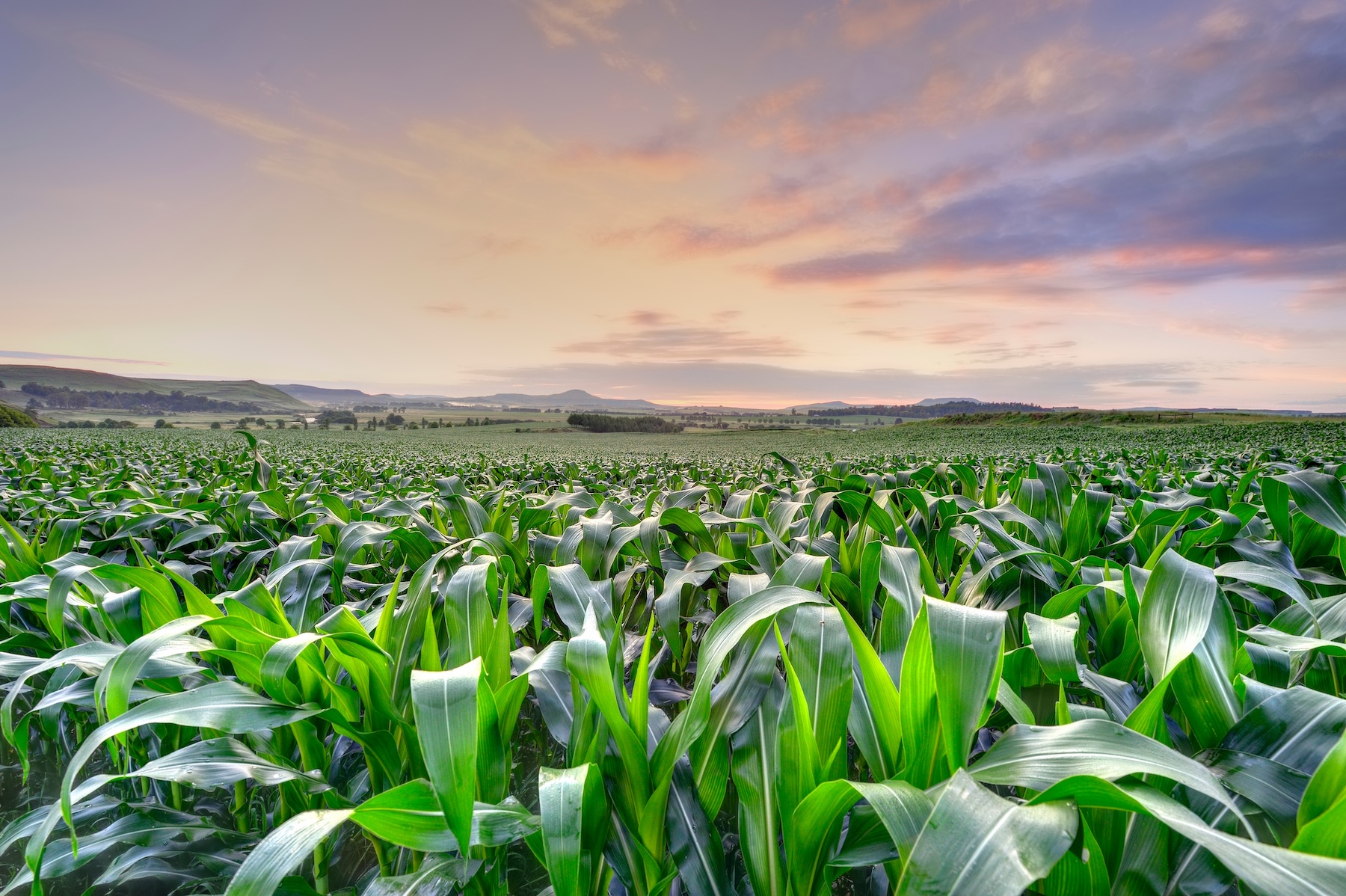
Maize plants in Underberg, South Africa. Image © Wolf Avni via Shutterstock.
American writer Barbara Tuchman remarked that “war is the unfolding of miscalculations.” As part of those calculations, the value of each of the lives lost to war should not be measured any differently, and yet in reality the lives and deaths of some in the world continue to be counted out of those calculations. While the unjustified and arguably illegal strike on Iran in a joint US–Israeli operation has sprawled out, drawing in neighboring nations into a regional war, the harm to human life ripples throughout the rest of the world. Indeed, this war’s motivations seem opaque even to the strongmen drawn into them. Some of the lives on the periphery? Those on the African continent who, despite not being a direct party to the conflict, face the growing danger of deepened food insecurity the longer the war goes on.
Africa’s dependence on the Gulf region for its supply of synthetic fertilizer means that we could soon be witnessing a sharp rise in the price of food. Africa contains more than 60 percent of the world’s arable land, but in spite of this hunger remains a pressing injustice, with levels sitting at over 20 percent according to UN reports. It has become clear that it is not the productivity of the agricultural industry that is the issue, but that man-made forces are at play, driving the price of food up and inhibiting access for the majority. Many of Africa’s economies remain structured around extractive export-oriented agricultural production, this being a legacy of colonial extraction on the continent. Today, the input costs related to agricultural production form a part of this man-made calamity, such as the cost of imported fertilizers.
Synthetic fertilizers are created through the harnessing of natural gases, and the import of said fertilizers becomes a costly endeavor in the face of market volatility that is a product of regional conflict. Africa primarily depends on the synthetic fertilizer produced in and transported from Gulf states such as Qatar, Saudi Arabia, Oman, and others. It also sources fertilizer from Russia, which is currently engaged in an illegal war with Ukraine. Consumption rates of synthetic fertilizer in South Africa, the largest economy on the continent, sit at just over 1.2 million tons per 6 million hectares, per year.
Commercial farming takes place in the context of private ownership with profits remaining concentrated amongst the national and transnational economic elite. Part of the issue lies in the current food systems paradigm, in which production is driven by profit incentive of the private ownership class, many of them huge conglomerates that hold concentrated control over key resources to food production, such as land and seed. Their profit motive has resulted in the intensification of inputs (synthetic fertilizer being one), the costs of which are passed on to consumers.
Leaders of the “Green Revolution,” such as tech billionaire Bill Gates, believe that the solution to Africa’s hunger crisis lies in emulating their own success. The formula for success? Deepening dependence on chemicals, genetically modified seeds that are heavily patented restricting their use, and monocultural methods, as well as encouraging the financialization of agriculture.
La Via Campesina, a global food sovereignty coalition movement, recognizes the harm posed to food sovereignty by such corporate interests on the current global food systems. They define food sovereignty as the right of all people to food “produced through ecologically sound and sustainable methods, and their right to define their own food and agriculture systems.” The solutions emanating from the Green Revolution fall short of satisfying the benchmark for food sovereignty, as by trapping African nations in cycles of debt and dependence, they exercise coercive control of agriculture on the continent. Global Bretton Woods legacy bodies such as the World Economic Forum (WEF) propose that measures such as (heavily conditional) loans and aid will act as a Band-Aid, but they only create a new frontier for the embedding of financialization in African agriculture and deepen the wound of food insecurity. The further concentration of resources and the profits reaped from food production remains a threat to food sovereignty, deepening economic disparities between the wealthy and the poor. This folly has served to prove that the key to more sustainable food systems cannot be imposed from above by the already wealthy and powerful, whose own interests cloud the need for accessible, affordable, locally produced foods.
Instead, food insecurity can best begin to be addressed by drawing on existing practices that are not reliant on unsustainable inputs like synthetic fertilizers and genetically modified seeds. A shift to agroecological practices is taking place, albeit haltingly. The agroecology movement offers an alternative to dominant food systems; it is the application of sustainable agroecosystems focused on restorative agricultural practices that draw on indigenous knowledge systems and scientific research.
This is not a utopian fantasy but a means to challenge what is being called a green revolution, which has revealed itself to be a new frontier in extractivism. Some examples of agroecological practices are the use of locally sourced seeds that allows farmers to source and sell their own seed as needed, intercropping and circular systems to encourage soil health and regeneration, and natural fertilizers, to name a few. But with well-funded national agribusiness, tech-turned agriculture entrepreneurs and multinational conglomerates all with vested interests to contend with, the struggle within African countries to move towards food sovereignty and food security remains under immense threat. While governments still prioritize export orientation and conventional commercial farming, the very people the governments are meant to serve will remain trapped in a global food system that has perpetuated food insecurity.
The ongoing not-so-distant war presents a moment to practice alternatives shown to be viable, to lobby governments to use their budgets to provide material support to these sustainable alternatives, increase environmental regulations that support agroecology, and not to turn their backs on the millions of people who will be harmed when the effects of war ripple onto their shores.