10 films to watch out for, N°5
http://www.youtube.com/watch?v=fOQDPR5cR7o
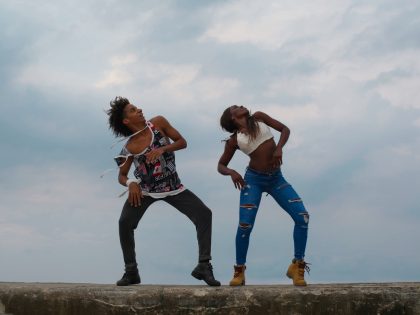
‘One Man’s Show’ is the latest film by Newton I. Aduaka (probably best known for his 2007 film ‘Ezra’) with Emile Abossolo Mbo as the comedian who has to confront his children and past relationships after hearing he has cancer. (Two more teasers: here and here.) Next, ‘Maj’noun’ by Tunisian director-cinematographer Hazem Berrabah is “an abstract love story” told through contemporary dance, somewhat inspired by the stories about Qays ibn al-Mulawwah and Layla Al-Aamiriya, and the relation between Louis Aragon and Elsa Triolet:
‘Morbayassa’ is director Cheick F Camara’s second long-play feature, starring singer Fatoumata Diawara (left). The film follows Bella, a Guinean woman who gets trapped in a prostitution network. Recorded in Dakar, Conakry and Paris, it is in its post-production phase. Here’s the crowdfunding page.
Solomon W. Jagwe (from Uganda) calls ‘Galiwango’ “a 3D Animated Gorilla Film” doubling as “a wildlife conservation effort with a goal of reaching out to the Youth”:
Another animation film (series for TV), ‘Domestic Disturbance’ is the work-in-production of Kenyan filmmaker Gatumia Gatumia (who trained in Canada):
‘Le Thé ou l’Électricité’ (“Tea or Electricity”) by Jérôme le Maire is a documentary set in the small, isolated village of Ifri, enclosed in the Moroccan High Atlas Mountains. For over three years, the director captured and traced the outlines and arrival of the electricity network in the village:
‘Another Night on Earth’ follows the lives of a selection of Cairo taxi drivers during the 2011 Egyptian uprisings:
‘Congos de Martinique’ is a film by Maud-Salomé Ekila portraying “Congolese” descendants of people who were shipped as slaves to the French Antilles (and Martinique in particular). No English subtitles yet:
‘African Negroes’ is a short South African documentary about a soccer team that was used as a front for political activities in the small Karoo town of Graaff-Reinet:
And ‘Into the Shadows’ aspires to give insight into Johannesburg’s inner-city life, focussing on migrants’ lives and talking to different stakeholders:
* Our previous new films round-ups: part 1, part 2, part 3 and part 4.