Who gets to dream the future?
Against the authoritarian futures envisioned by Silicon Valley’s elites, we must expand the scope of our collective imagination and reclaim the power to imagine otherwise.
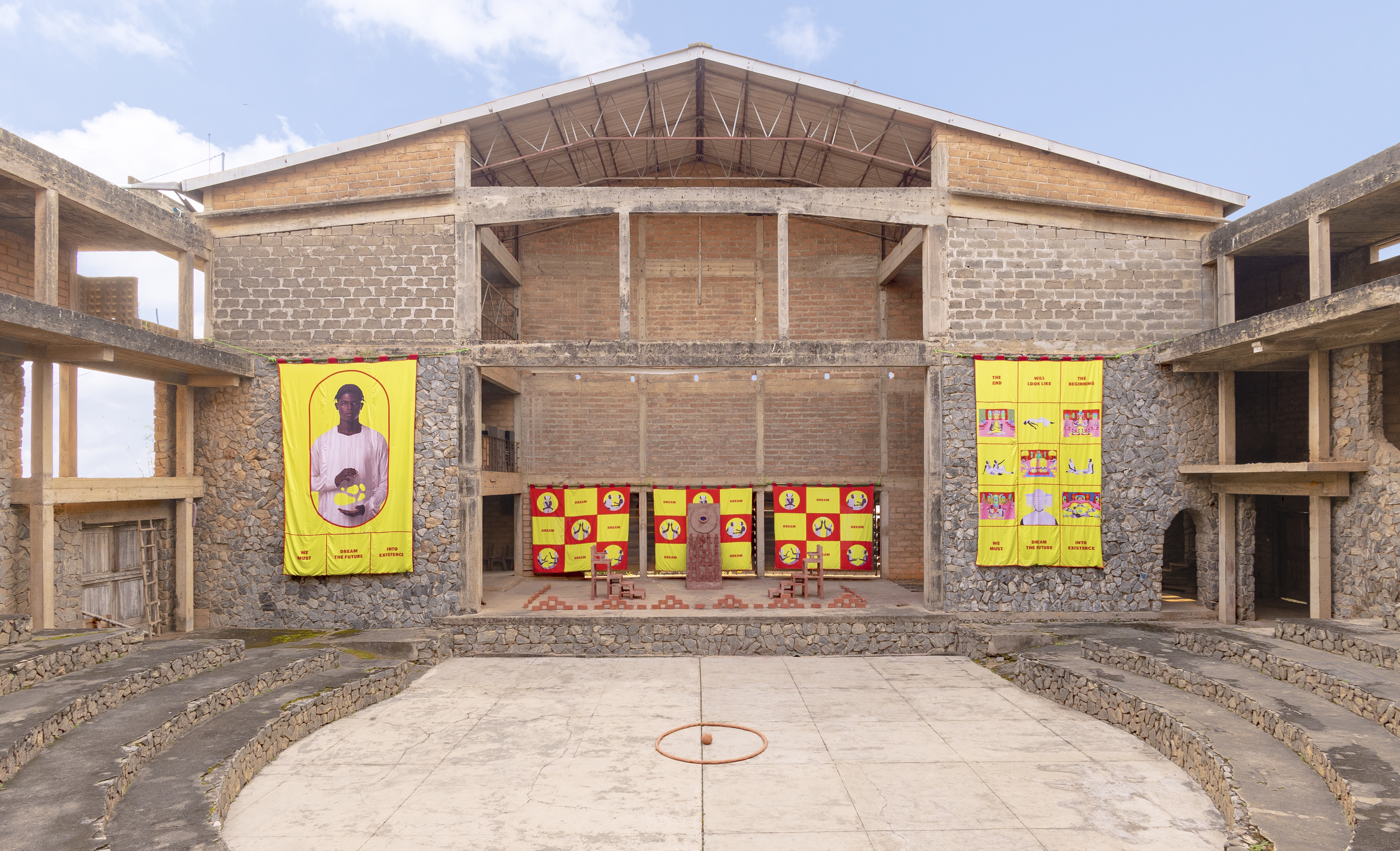
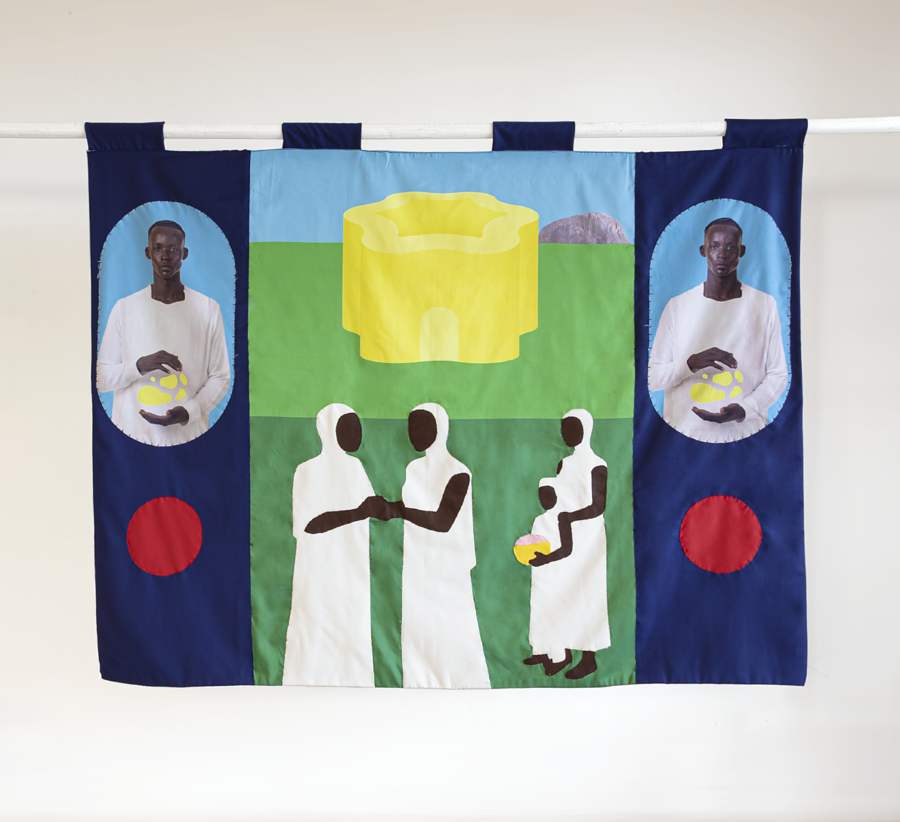
Pierre-Christophe Gam, The Primordial Mind (2026), installation view at New Culture Studios, Ibadan. All images courtesy of the author.
We are living in unprecedented times. The world as we know it is changing rapidly as progress in AI and biomedicine is promising to radically transform our lives. We hear talk of humans merging with machines; of the possibility in the near future of uploading our consciousness into the cloud; of editing our DNA to end all diseases and augment our physical abilities; of genetically modified human beings; of human clones and hybrids. We hear talk of lab-grown meat, bio-engineered food and seeds edited to be sterile, rendering us permanently dependent on their patent owners.
We hear talk of a digital grid of control superimposed on our lives; of a future without privacy, without private thoughts or actions, of social credit score systems constantly monitoring and managing behavior; of brain implants recording our thoughts and altering our perception of reality; of the end of government and the rise of AI-controlled city-states run by mega-corporations; and of the collapse of democratic rule in favor of a neo-feudal order shaped by a radical racist, ableist, eugenicist worldview.
All these dystopian scenarios are not merely the science-fiction-informed fantasies of the leading Silicon Valley tycoons. They are also real, circulating scenarios of the future promoted in mainstream media, podcasts, and elite discourse. Since the reelection of Donald Trump and his theatrical inauguration ceremony, surrounded by the owners of the worldʼs largest tech companies, a new ideology has gained ground. Presented as the core philosophy of Silicon Valley elites, the “dark enlightenment” is the name coined for a neo-reactionary project for society.
Think of it as an apocalyptic cult, a quasi-religious project of radical social destruction, committed to the abolition of the democratic values and ideals of inclusive governance and social equity of the post–Second World War era. It envisions a future world structured around rigid, top-down social hierarchies, central authority, and techno-authoritarian control. Peter Thiel, a cofounder of Palantir, is the movement’s best-known backer, and now, with J. D. Vance, his protégé, as vice president, and with Elon Musk, the self-styled transhumanist czar and the largest financial backer of far-right movements across the world, the realization of this vision has never felt more imminent.
Whatʼs perhaps most disturbing beyond the fascist ambitions of this nefarious project is the near silence surrounding it. We are all witnessing the rise of a radical, global movement, a project bent on the total reprogramming of our societies and the destruction of our social norms, and yet it seems as if no one is challenging it, or even acknowledging its presence. But who gave this small circle of socially maladjusted tech nerds the right to decide the collective future of humanity?
The answer is simple. No one.
But who gets to dream the future? Is the future self-arising, an unavoidable destination without possibility for rerouting or adjustment? The outcome of a natural movement, informed by the gradual evolution of sociopolitical and economic trends? I want to argue here that the future, like our present and our past, will be conceived and designed from our collective beliefs; it will be informed by the hopes and fears of people like you and me. Everything that exists in our world first started as an idea, as an invisible, immaterial thought in someoneʼs mind. Most of the things that we take for granted today, such as the cars we drive, the devices we use to communicate with one another, or the clothes we wear, first emerged as arbitrary propositions within the realm of our imagination, and it is only with time and repetition that they eventually became cultural norms and social standards to the point where it has now become difficult for most to imagine a life without them. In that same manner, what we call the future will emerge from our collective imagination. It will be informed by the stories we tell ourselves, about what we deem to be real, valuable, and possible. Imagination is the foundation upon which our entire reality rests. Beyond resisting the ongoing fascist onslaught, we need to expand the scope of our imagination. In order to set forward a different kind of future than the hellish project envisioned by the techno-fascist mafia, we must identify new colors, shapes, and contours within the confines of our imagination.
By the end of the century, Africa is projected to account for close to 40 percent of the worldʼs population, making it the fastest-growing region on Earth. With its immense youthful population, the continent will stand at the very center of humanityʼs trajectory and the future of the world will be in large part shaped by the imagination of its people. This is why we must turn our gaze to Africa, not only as a demographic force but as a reservoir of dreams, where the struggle to imagine otherwise carries the power to shape the destiny of the world. For centuries Africans on the continent and across the diaspora have dreamed of an African Renaissance. Envisioned by generations of political leaders, activists, scholars, and artists, the concept encapsulates a fervent aspiration for an era of regeneration, through which the continent will overcome the haunting wounds of slavery and colonization to build a new and original civilizational project, anchored in the rich cultural tapestry of its precolonial past.
To explore Africaʼs future, I created Toguna World, an ever-expanding art and research laboratory that brings together art, foresight, and spirituality to open a cross-cultural forum on tomorrow. It introduces the future-dreaming ritual, an original foresight methodology designed to help participants move beyond limiting beliefs imposed by society to imagine futures guided by their innermost desires. The ritual draws wisdom from Ifá, an ancient spiritual tradition from West Africa. Through a series of philosophical tales narrated by an oracle, “the babalawo,” participants are invited to contemplate how we will eat, play, dream, pray, and love within the context of an ideal future. By prioritizing the question “What do you want?” over “What can be done?” the ritual affirms our collective agency in shaping the world to come.
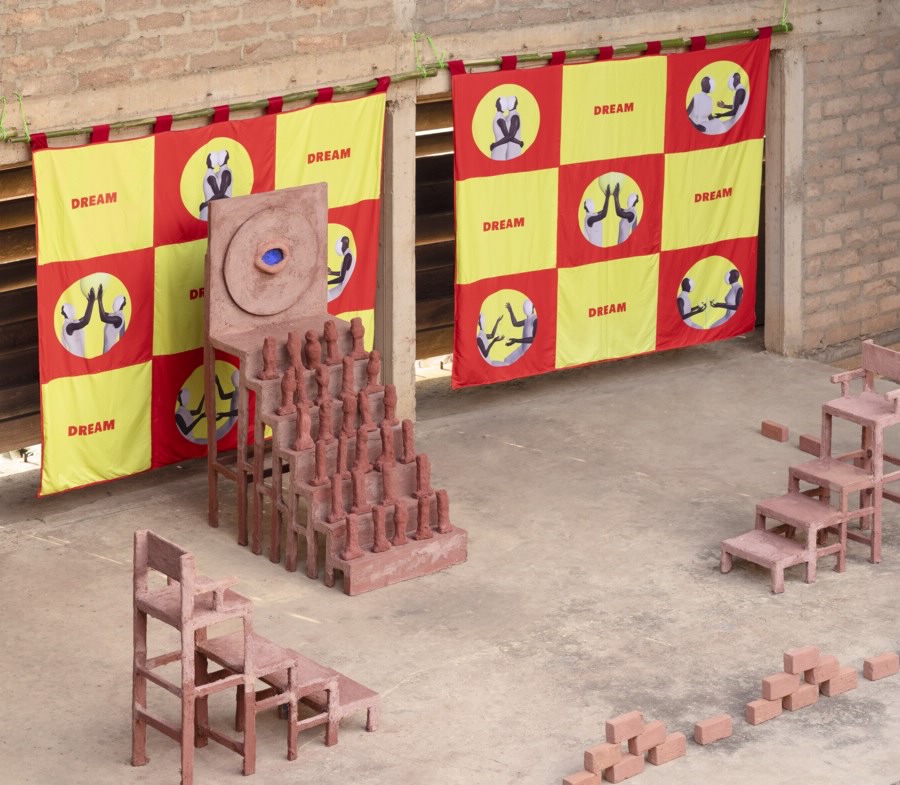
For the past two years, I endeavored to answer one question: What future does Africa dream of? Developed in partnership with Africans Rising, the largest network of civic organizations on the continent, as part of consecutive fellowships at MIT and the University of Pennsylvania, the investigation sought to engage African communities, wherever they are, about their dreams for the future. From Cairo to Abuja, Nairobi, and beyond, future-dreaming rituals were convened across Africa. Whether educators, artists, elders, youth leaders, environmental activists, or technologists, each participant shared their visions, hopes, and desires for the future. This weaving together of communities, academy, and grassroots action shaped the research into a living methodology.
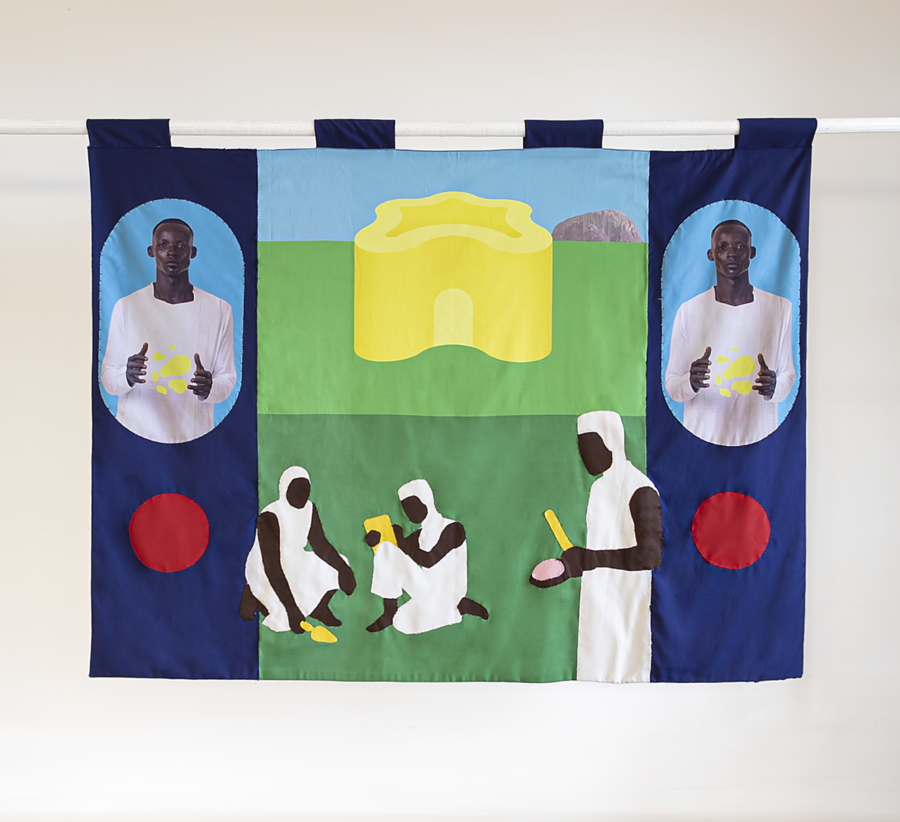
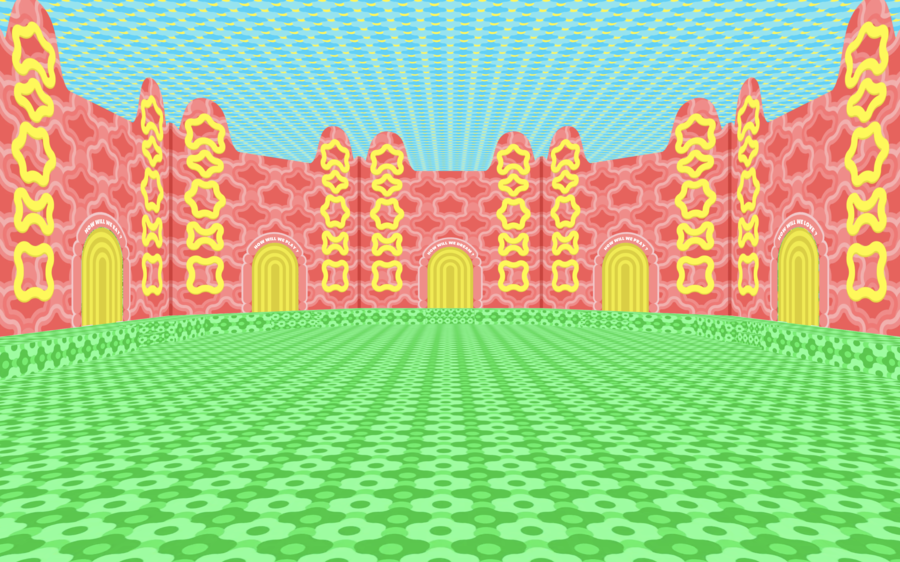
Informed by the dreams harvested from these rituals, The House We Dreamed (Abuja 2063) is a living archive of speculative futures. Conceived as a globally accessible WebVR experience, it provides an immersive glimpse into Africa’s tomorrow. Visitors begin their journey inside a traditional central courtyard featuring five mythical doors, each tied to the five questions of the future-dreaming ritual. Stepping through these doors reveals dedicated chambers showcasing panoramic collage-tapestries. Inspired by the ancient Abomey appliqué cloths used in the Dahomey Kingdom to archive community history, these digital tapestries are reimagined here to archive our future. Each scenario reveals the story of a new Africa, distilled from voices across the continent. They offer speculative tales grounded in the rhythms of daily life, seen through an intimate lens; dreams of how families might gather around a table, how cities might breathe with new vitality, how prayer and play might be transformed, and how love itself might be reimagined in a liberated future. Together, they invite us to feel these futures.
The House We Dreamed was unveiled globally on November 2, coinciding with the opening of Blueprint for a Renaissance, a site-specific installation and symposium hosted at the iconic New Culture Studios in Ibadan, Nigeria. From November 2 to 7, 2026, the landmark project of Demas Nwoko, one of the most revered pioneers of post-colonial West African architecture, was transformed into a site of active reclamation, a laboratory, and a ritual space to liberate the collective imagination. I convened scholars, researchers, and dreamers from the Institute of African Studies at the University of Ibadan to confront the urgent imperative: What future does Africa dream of? Across a site-specific installation, performances, lectures, and communal rituals, Blueprint for a Renaissance invited the public to dream alternative worlds into existence.
The installation has closed, but The House We Dreamed remains online. Neither claims certainty. Their ambition is to serve as both mirror and blueprint: a way to reflect on the dreams we carry, and a potential road map toward the African Renaissance. My hope is that they summon within us the courage to dream again, bigger and bolder.