Utopia is not a metaphor
Thomas More’s Utopia was not written as a metaphor for paradise, but for those trying to organize. What would an African equivalent look like?

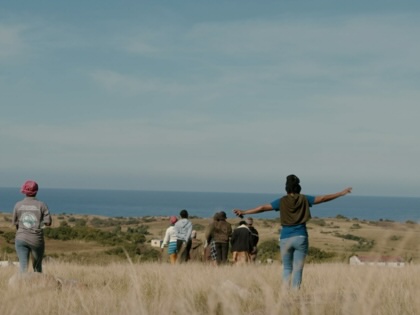
Photo by Marta Mboka Tveit (2026).
The recent popularity of the term “Afrotopia” inspired me to revisit Thomas More’s original Utopia (1516). Rereading the novel led me to rethink what we mean when we talk about ideology, future-casting, and visioning as praxis.
“Utopia” or “utopic” is today a widely used term across a variety of fields and contexts. People often use the term derogatorily, as a tired metaphor, carrying connotations of naiveté or veiled dystopian impulses. It gestures vaguely toward paradise, toward the promised land, but carries with it a whiff of the opposite. Don’t be naive, the contemporary connotation seems to say; don’t fall for the lies, don’t dream too big. Recently, daring scholarship has given the term a new, promised-land spin: for instance, in Felwine Sarr’s bold essay Afrotopia (2020), a poetic call for an African utopian philosophy of self-reinvention for the 21st century, and, more recently, in Joseph Agbakoba and Marita Rainsborough’s Beyond Decolonial African Philosophy (2025).
But reading Utopia, I was surprised by how concrete and policy-oriented the novel is. Its protagonist, Raphael Hythloday (sort of an early anthropologist), is in a debate with a fictionalized version of More himself and some others, and ends up talking about his visit to an island called Utopia, a visit that has profoundly changed him. Hythloday talks about how they organize life there, and how it’s going really well. In other words, the book is, thin veil of fiction aside, a set of policy recommendations. Utopia is an imagined place that has implemented these recommendations, which, as More understood them, result in a more egalitarian, life-supporting society. That’s all it is—no soaring, elusive nothing.
Thomas More (1478–1535) was a Renaissance man and deeply Catholic. An English lawyer, scholar, statesman, and writer, he entered royal service under King Henry VIII, eventually rising to the high office of Lord Chancellor in 1529. In 1516, when he wrote Utopia, he was living through the transition from the late medieval period to the early Renaissance, when society was rigidly hierarchical, dominated by the monarchy, the nobility, and the powerful Church. Corruption and the abuse of power were widespread among both political and religious leaders. More himself would pay for his convictions: in 1535 he was beheaded for refusing to accept Henry VIII as head of the Church in England.
Utopia, it turns out, was not written as a metaphor for paradise, or some other magical place to house lofty dreams and impossible longings. It was written for those trying to organize. Like “utopia,” “democracy” or “the democratic society” has conventionally become a vague, transcendental thing, an ideal to be striven for but never reached, perhaps even unreachable. Yet early Athenian democracy was grounded in concrete institutional reforms rather than abstract ideals. In the early sixth century BCE, Solon’s reforms, widely understood as a foundational precursor to democracy, addressed both economic and political inequalities through specific measures: the seisachtheia, which canceled debt bondage; the establishment of legal recourse for broader segments of the citizen body; and the organization of political participation according to wealth classes, as Aristotle records in the Constitution of the Athenians.
The Athenians, we are told, would sweep a rope dipped in red dye through the crowds in the marketplace to herd people into the public meetings. That’s not mystic, timpani-and-marble, city-on-the-hill, shining-Athena stuff. That’s sandal prints in mud, overturned fruit stands, snotty crying children, slippery bodies slapped together—overcrowded, stinky, sweaty, loud democracy.
Perhaps there is something useful to be reminded of here in the current moment, which is calling for a radical reimagination of social order. Neither Athenian democracy nor More’s Utopia was originally introduced as an ideal, a shining, vague star in the distance to reach toward. They were policy recommendations for the then and there, for a place and time, suited to fit a certain group. What would the equivalent place-and-time, tailor-fitted African societal epitomes look like?
Resetting the mechanisms of collective visioning requires, first of all, setting aside some of the major constraints of the present. Forget the debt for a minute. Leave the contract negotiation for tomorrow. Put that blaring traffic cone from across the Atlantic on mute. These powerful forces are always at play, always going to be there; it’s always urgent. But to truly re-vision what is wanted and needed from the inside, to build with intention, they must be temporarily suspended.
External power and pressure cannot be the only determining factors for shared vision, nor can “the way things are now” determine collective desires. Or else, what was all that marching and demonstrating and bloodshed for? Pragmatism and realism have their uses, but they can also get in the way of expansive, rooted visioning. They are most useful as tools for moving toward those visions from the distressing present, not for formulating them. So the question becomes: if external pressures and powers were not a factor, what would African societies be like, and, more importantly, what should they be like?
Second, resetting visioning may require new categories and taxonomies, and categories of categories. Kwasi Wiredu, Ngũgĩ wa Thiong’o, and other giants, as well as Sabelo Ndlovu-Gatsheni more recently, have written in depth about the colonization of mindscapes: how historical forces have shaped how people think, express themselves, perceive the world, perceive themselves, and imagine. The long process of resetting may require a further retreat from the schemas of the development industry and the dominant dichotomies one is used to thinking with: citizen/noncitizen, nation-state/statelessness (see Achille Mbembe on a borderless world), precolonial/postcolonial, rural/urban, energy-rich/energy-poor, East/West, socialism/liberalism, global/local—yes, perhaps even Marxism and class struggle. Gender categories may be rethought, along with sociomaterial relations, patronage, even good and evil, and the by-now-exhausted twins “modernity” and “tradition.”
The names and categories should be reimagined from within. As Ndlovu-Gatsheni puts it in Epistemic Freedom in Africa (2018), “seek ye epistemic freedom first.” This may necessitate a rebuilding, exactly, of the infrastructures of receiving and categorizing knowledge: new categories and stories for making worlds, for creating shared horizons and imaginaries, and ultimately, methods for making those visions into realities.
Some key questions rise to the surface. Both the Athenian and Utopian visions go beyond negative utilitarianism, beyond survival and minimizing suffering, striving instead for bespoke systems to suit the population in question in a specific space and time. (Whether the visions came true, whether they really were what they said they were, and whether they worked well for most people in that place and time are valid questions, but separate ones, for tomorrow. There is no monitoring and evaluation in visioning.) Like the Utopians or the Athenians, one might ask: what kind of infrastructures (in a broad sense), systems, and institutions will work to the greatest benefit of all for the particular group in question, in this particular space and time? If external pressures and powers did not exist, what would African societies be like, and what should they be like? What can African philosophy and philosophers contribute to setting the future trajectory of our species and the planet, and how?
Inspiration might be drawn from precolonial cosmologies and the like, but that is only inspiration, for the population in question is not a precolonial one. The answers might not look like Western-style liberal democracy. Neither need they look like a society based (only) on sharia law, kings, dictators, elders, do-gooder regimes, or the various manifestations of puppet regimes or rule-by-consultancy (Sarr writes helpfully on the latter two). Maybe it turns out that the problems that are made into problems are not really problems at all—maybe the real problems are other problems.
Perhaps new visions can be sparked by taking seriously “fringe” degrowth ideas such as basic income, circular economies, energy cooperatives, green currencies, a wealth tax or income caps as proposed by the convivialism movement, four-day weeks, or the promotion of non-wage-labor existences, to name a few. Or perhaps resetting visioning results in ideas that are not currently thinkable, where African societies and African thought light the way in the search for new paradigms of what it means to live well and of ways to organize societies.
The material point is that the present global upheavals represent a moment of possibility to fundamentally rethink sub-Saharan African societies, and the very processes by which they are formed, reaching far beneath surface-level reforms. Such processes might benefit from a “science fictionality” moment, a term associated with Istvan Csicsery-Ronay Jr. (see also the role of science fiction in enhancing critical thinking), given the ideological acrobatics of the present. They might also benefit from a bridge to Africanfuturist thinking, to borrow a term associated with the artist Pamela Phatsimo Sunstrum and popularized by the writer Nnedi Okorafor. Articulated through storytelling, Africanfuturism, as Okorafor defines it, is specifically and directly “rooted in African culture, history, mythology and point-of-view as it then branches into the Black Diaspora, and it does not privilege or center the West.”
In addition to the fate of More and many visionaries like him, the biggest tragedy of articulated visions is something else: that they show us, time and again, how close we are to getting it right, to making better real. Radical reimagining, in art, storytelling, and scholarship, can allow further reflection on the nature of visioning itself, and a rereading of past visions, in whose ruins we are currently residing. There is space now to re-examine history and to make bricolage from past and present ideologies, without being blind to the subtle and treacherous nature of visions and of visioning itself.