Death as liberation
Ousmane Sembène’s and Souleymane Cissé’s debut features end with women who choose death. What is more uncomfortable to confront: their deaths, or the conditions that made life itself unbearable?
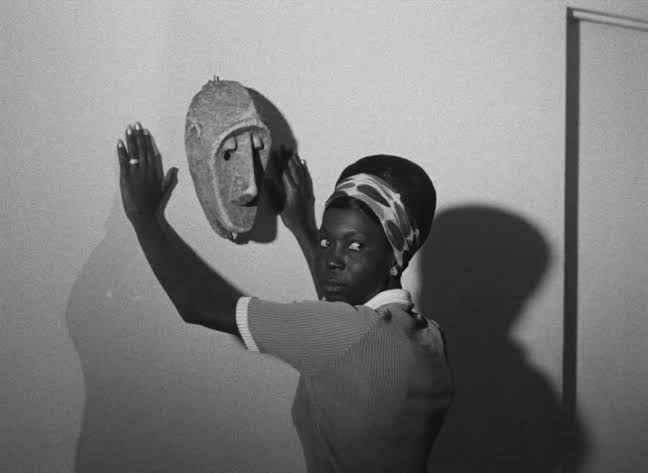
Diouana (Mbissine Thérèse Diop) in a still from Ousmane Sembène’s Black Girl (1966).
Death as liberation is hardly a comfortable political proposition to digest. In a world where Black death is often the common condition, there is a well-established insistence on our living. So what do we make of two of Africa’s greatest filmmakers, Ousmane Sembène and Souleymane Cissé, whose earliest cinematic visions, expressed through their respective debut features Black Girl (1966) and Den Muso (1975), center on the suffering, alienation, and eventual deaths of Black women?
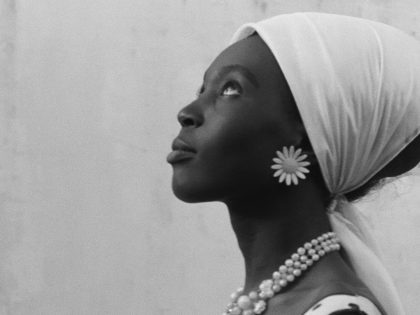
Sembène’s Black Girl is preoccupied with racial violence and the economic exploitation that continues to structure relations between Senegal and France. The film follows Diouana, a young Senegalese woman who accepts employment with a white French family and travels to Antibes believing she is embarking on a new life. While Cissé’s Den Muso, turns inward, examining interpersonal violence and the ways patriarchal power consumes family life and communities, weakening the broader social fabric of a nation. The film follows Tenin, a mute young woman who becomes pregnant after being raped, exposing the brutal underbelly of the patriarchal violence imposed upon her. Despite the differences in their circumstances, both films position death as a troubling possibility of liberation for their central characters.
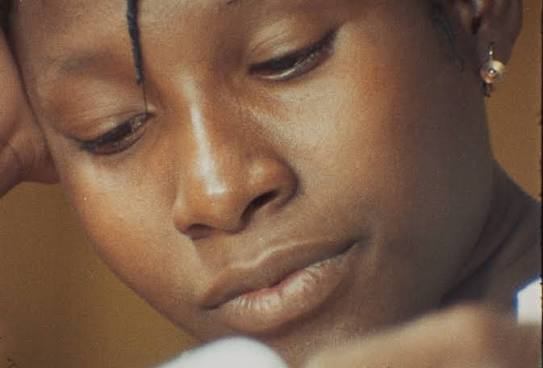
The history of Black resistance has not solely been confined to the preservation of life. From enslaved Africans who leapt from ships during the Middle Passage, to those who faced death in the fight against their oppression, It is true that to rather die than to endure is not a popular or digestible form of liberation. Although these acts are not equivalent, nor do they carry the same weight as the deaths of these fictional characters, Sembène and Cissé, raise an uncomfortable question: what does life mean for a person stripped of agency, recognition, and self-determination?
For Diouana and Tenin, freedom remains out of reach because of the structures governing their everyday lives that continually deny these women full humanity: Tenin’s father and her rapist, Diouana’s white employers. This sustained stripping of humanity produces what I would argue is already a death, albeit a social one, that precedes their physical endings. Sembène and Cissé challenge audiences by asking what is living for the dehumanized. Diouana travels to France only to find her livelihood replaced by isolation and unpaid, alienated labor, while Tenin’s body becomes a site upon which familial and communal shame, punishment, and control are dumped. Death, therefore, is at the core of both films from the outset, existing not only as a shocking culminating event, but as a condition of violence. By the end of each film, Sembène and Cissé are not arguing over whether death is a worthy or noble choice for self-liberation; rather, they position the act of self-annihilation as the only remaining form of control available to their characters, and as an indictment of a society in which death is the only option.
It is understandable to recoil at the self-inflicted violence that ultimately claims both Diouana and Tenin. One might ask why their rage is not directed solely towards those who harmed them. Why does Tenin’s retaliation extend beyond her rapist? Why doesn’t Diouana exact revenge on her employers and flee France? These questions linger because death feels like an unsatisfying conclusion, one that denies us, as audiences, the catharsis of resistance. We want these women to fight back and survive. We want their suffering to lead somewhere other than death. Yet perhaps the more daunting question is not why these women die, but whether we find their deaths more difficult to accept than the suffering that precedes them. What is ultimately more uncomfortable to confront: their deaths, or the conditions that made life itself unbearable?
Neither film offers an uncomplicated answer. To read Diouana’s and Tenin’s deaths as acts of liberation is not to suggest that their deaths resolve the violence they endure, or that self-annihilation is freedom in any complete sense. Their deaths do not dismantle the structures that dehumanized them. What death offers these women, perhaps then, is not freedom but a final assertion of agency within those systems. This is what makes their endings so devastating: the possibility of control emerges only when the possibility of living on their own terms has been all but extinguished.
Decades later, Black Girl and Den Muso remain essential viewing, not only for their place in the landscape of African cinema, but for their boldness in confronting the most uncomfortable, divisive, and difficult questions surrounding post-independent life. Both films position death as a troubling yet legible response to systems that make life itself untenable, refusing a comforting resolution. Sembène and Cissé began their careers with audacious visions and hard questions, a truth that held throughout their working lives.
Long live the giants of African cinema, and may their audacious clarity continue to shape how we see, think, and imagine our world.