Roaches in revolt
A joke born from a Chief Justice’s insult grew to 22 million followers and forced out a cabinet minister in eight weeks. What does this reveal about India and about the limits of leaderless revolt everywhere?
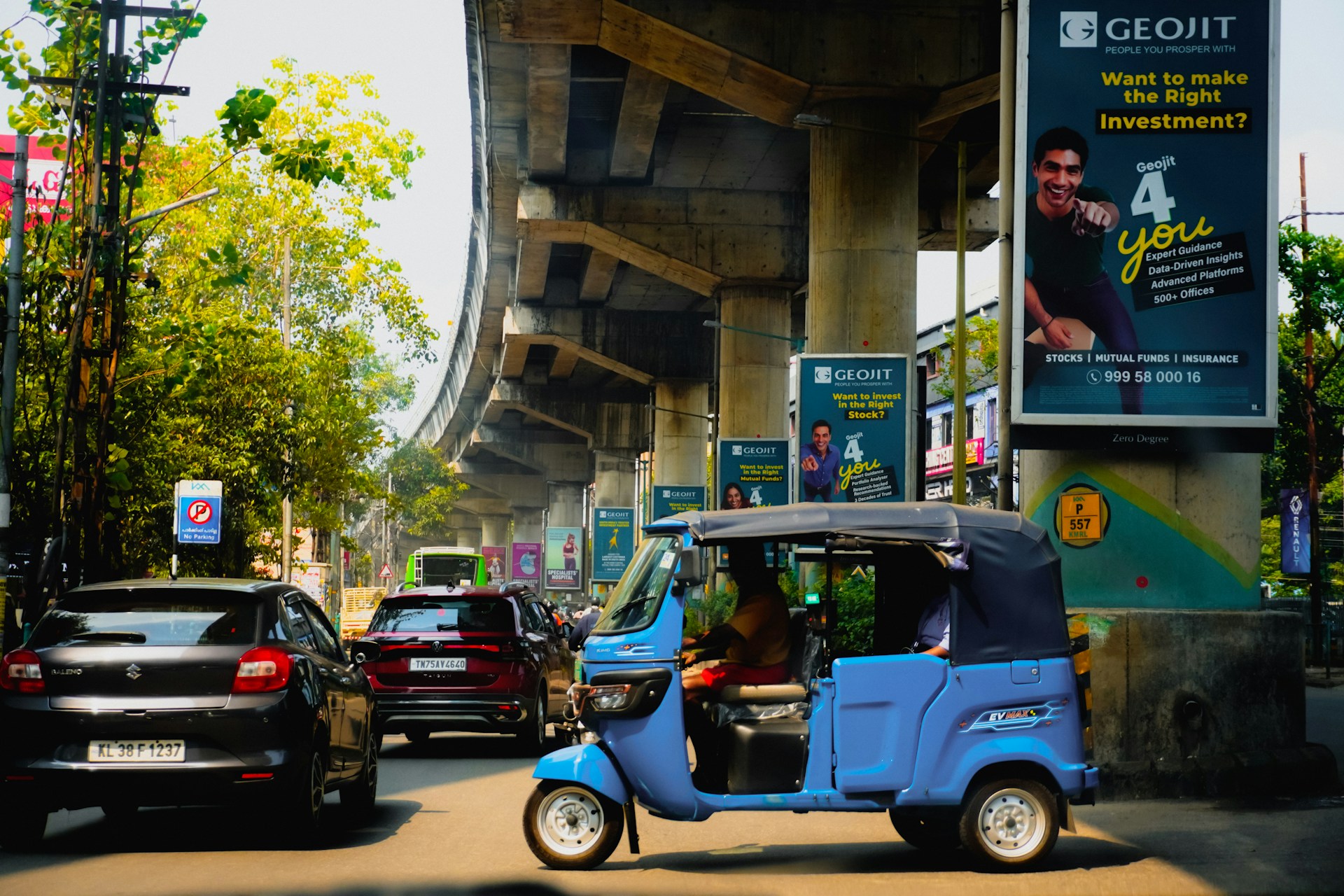
Photo by Adhitya Sibikumar on Unsplash
In May, hearing a routine case, the Chief Justice of India remarked from the bench that the country had “youngsters like cockroaches”: young people who, finding no work, become media people and activists and attack everybody. He called them parasites of society.
Within a day, a 30-year-old graduate had founded the Cockroach Janta Party (CJP), a straight parody of the BJP’s name. Membership criteria: unemployed, lazy, permanently online, and able to complain professionally. Slogan: Voice of the Lazy and Unemployed. Within three days, the account gained 3 million followers; within five days, it surpassed the governing party in followers; and by July, the total reached 22 million.
On 25 July, India’s Education Minister resigned; the first time in 12 years of Narendra Modi’s government that a street movement had removed a member of the cabinet. The organization that removed him was eight weeks old; it had no members, no funds, no offices, no registration as a political party and no program beyond satire.
That is what needs explaining: not the resignation, which was a tactical retreat, but how a joke acquired the power to extract one.
The immediate cause was an examination. In May, the paper for India’s national medical entrance test was leaked and sold in advance to some of the 2.3 million candidates competing for roughly 130,000 places. It was canceled and re-held six weeks later. This is not an isolated scandal; around 70 public examinations have leaked in seven years, affecting 17 million candidates across 15 states. Exams in India are now an industry: testing contractors, printing firms, transport handlers and a coaching sector are drawing 200,000 teenagers a year to one provincial city, and each link is a place where the paper can be sold.
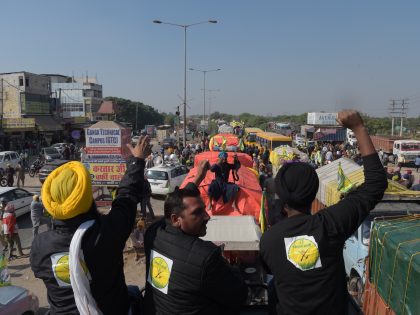
On 6 June, the students occupied Jantar Mantar, the only legally permitted protest site in central Delhi, and refused to leave. An activist held a hunger strike for 26 days before police removed him to hospital against his will. On 20 July, some 20,000 tried to march on Parliament and met barricades, batons, tear gas and a government-ordered internet blackout. Five days later the minister was gone.
That the minister fell at all is the real puzzle. Modi’s government has three responses to opposition, and all three have worked for a decade.
The first is delegitimization. The movement was declared anti-national and foreign-funded; its account was blocked on national security grounds; and television anchors arrived at the usual hypothesis about foreign money. The students replied by filming solemn confessions that China had wired them 60 rupees for bus fare and Pakistan 40 rupees for lunch—about R17 in all. The smear was not defeated so much as digested.
The second is prosecution. India’s Enforcement Directorate, a financial-crimes agency, opened cases against 193 politicians in a decade and obtained two convictions. Conviction was never the objective. The process is the punishment: the summons, the frozen assets, the years in custody before trial, and the standing offer that the file closes if the politician changes party. It disciplines people with careers and property to protect but it is powerless against nineteen-year-olds whose grievance is that they have none.
The third is waiting. Protests are expensive; students run out of money; heat and boredom finish the job. This failed because supporters from other cities and countries ordered food to the site through delivery apps, and a movement distributed across 22 million accounts cannot be outlasted at one address.
What remained was force, and force was the error. The baton charge of 20 July produced the images that turned a student agitation into a national one. Coercion is effective when it is either invisible or total; however, when it is filmed from four angles and applied to young people whom the government’s own rhetoric describes as the pillars of a developing nation, it instead serves as propaganda for the opposing side.
Nor could the government do the thing it does best: redefine opposition as a religious minority in disguise. Earlier movements were coded as Muslim or as Sikh separatist. This one had no such marker. Its base was small-town, aspirational, exam-taking and overwhelmingly Hindu—the ruling party’s own recruiting ground.
None of this explains why so many were willing to fight in the first place. In 2025, India grew at close to 7% and, inflation ran near 2%; meanwhile corporate profits stand at record levels. Yet the connection between economic growth and the people who are supposed to benefit from it has broken down. Fewer than 7% of male graduates find permanent salaried work within a year of graduating; around 40% are unemployed. India has expanded higher education far faster than employment, deliberately, because degrees are cheap for a state to supply and jobs are not. The result is a surplus population of the credentialed: not yet proletarian, but losing the security their parents had and aware of it by nineteen.
This is why the explosion occurred over an examination rather than a wage. The state has stopped promising work, but it still promises fair competition for the little that remains. That promise performs a precise ideological operation: it takes a shortfall produced by the structure of the economy—130,000 places against 2.3 million applicants—and reassigns it to the individual as a verdict on their worth. The unemployed graduate does not experience an economy. They experience a judgment on themselves, delivered by an apparently neutral procedure. In this way, those who are surplus to the economy experience their exclusion as personal failure and humiliation.
The leak destroys that operation. Once the paper has been sold, the credibility of the exam as a neutral mechanism is undermined, the verdict is exposed as a transaction, and the shame changes address: it stops being mine and becomes theirs. This is why an exam scandal detonates where an unemployment statistic does not. The leak gives the young the standing to be angry; and standing, not information, is what mobilization requires.
It would be easy to compare this with the youth revolts elsewhere and note that India sacrificed a minister, whereas others produced fallen presidents. That scoreboard is worthless. Those movements broke governments. This one confronted a fascist regime: the largest party membership of any political organization on earth, resting on a century-old cadre movement present in tens of thousands of villages, a captured broadcast media, a tested legal apparatus, and something with no equivalent in Kathmandu or Antananarivo: a hegemony that has already organized much of Indian youth into its project. A president who flees is not evidence of a deeper rupture than a minister who resigns.
The settlement itself measures almost nothing: the government conceded a person and kept the structure—no reform of the testing agency, no enforceable examinations law, and nothing about employment. But outside the negotiating room, an examination scandal has become a national argument about work. In Bihar, police fired on crowds, baton-charged in the state capital, and published photographs of a hundred protesters, inviting the public to identify them. In response, leftist student organizations organized a general strike that closed rail and road traffic across the state. On 10 August, the central trade unions and the farmers’ movement filled the jails nationwide on an eleven-point charter, with 12,000 arrested in one small state alone. Days earlier, a seat the governing party had held since 1995 fell to a newcomer in the city where repression had been heaviest.
What broke was not the regime itself, but rather the impression of its permanence; in a formation of this type, that impression is not merely decorative but an integral part of the power structure. This is what leads an editor to self-censor before receiving any calls, a businessman to determine that silence is more cost-effective, and a young person to decide that obtaining a visa is the most sensible option. Twelve years went into building it. It has now been filmed failing.
That permanence rested on more than repression. It rested on an offer, too. What exists in India is not an illiberal drift but a fascist formation, which maintains power through both offers and force. To those it cannot employ, the governing movement sells majoritarian pride as compensation for the absence of a wage: no job, no future, but the nation is yours and you may despise whoever is not in it. Millions have accepted that trade. This is why arguments based on statistics often fail to resonate.
The students made a counter-offer. Told from the highest bench in the republic that they were vermin, they took the word, wore it as a party name, and denied anyone the right to classify them. That is dignity. It is grounded in what one is owed rather than in whom one is licensed to hate, and it is the only currency in which a formation like this can be outbid. The Indian Left surrendered that ground when it decided indignation was unrigorous, and it has been losing ever since: zero state governments, a parliamentary presence rounding to nothing, and a generation with no memory of it as a force.
Nothing in the students’ demands was attainable inside the existing arrangement. A fair examination is unavailable without dismantling a private testing industry. Jobs are only available by confronting a model that has produced a decade of profits without employment. These young people did not begin from class analysis; they arrived at its doorstep by taking the state’s own promises seriously and following them to where they broke.
That is not yet a class movement. But this situation demonstrates that a connection can be made by anyone willing to link the graduate’s blocked ladder to the informal worker’s absent floor. On 10 August the unions and the farmers were already in the street.
Delhi is obviously part of something larger globally, but the list of recent youth revolts around the world is not homogeneous. There are three distinct families in it.
The first are revolts against a stolen count. Georgia has been in the streets for well over 400 consecutive days since October 2024, demanding fresh elections and the release of political prisoners. It has obtained neither—only more restrictive laws, hundreds of detentions and a failed attempt to storm the presidential palace. Mozambique’s post-election protests ran five months and cost close to 400 lives; Chapo was inaugurated regardless, and the sequence closed with an amnesty for protesters rather than a recount. These movements ask that a vote be re-counted, which an incumbent who survives a count will never accept.
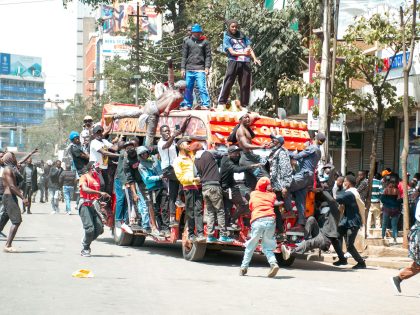
The second are revolts against the cost of living, and they carry a signature this magazine’s readers will recognize. Kenya’s 2024 uprising was against a finance bill written to satisfy creditors. Nigeria’s #EndBadGovernance protests followed a fuel-subsidy removal and a currency collapse, in a state spending some 74% of federal revenue on debt service. These are, in substance, revolts against structural adjustments administered by domestic governments on external instructions. Kenya’s young people forced the bill’s withdrawal. Nigerians were met with treason charges carrying the death penalty against 76 people, including 30 minors, as young as 14; several collapsed in court after months of malnutrition in adult jails.
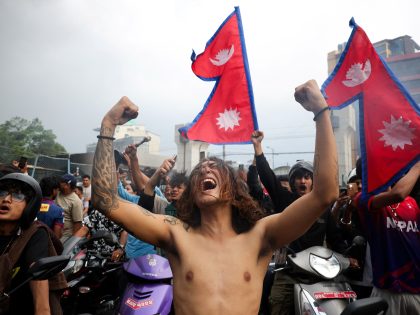
The third are revolts that took the state: Bangladesh, Sri Lanka, Nepal, and Madagascar. A quota scheme, a corruption scandal or a social-media ban becomes the trigger; the government falls within weeks; and the movement discovers it has no capacity to govern or even to bargain over what follows. Six months on, most of the substantive demands raised in Nepal and Madagascar remain unmet.
India does not fit neatly into any of these categories. The CJP demanded something else: the integrity of a distributive procedure. In doing so it went, without any theory, straight at the mechanism by which mass exclusion is converted into personal failure.
What unites the cycle is not a generation. It is a global condition: economies that grow without absorbing labor, states that have replaced the promise of employment with the promise of fair competition for scarce entry, and debt-service regimes that squeeze whatever remains. These movements do not solely represent the grievances of young people. They represent the political expression of the effects of structural adjustment on the aspirational classes, with young people the first to experience its impact.
What also unites them is a shared limit. Leaderlessness defeats infiltration, decapitation and prosecution. But it also defeats negotiation, continuity and succession. The characteristic that prevents a movement from being beheaded also makes it impossible to bind that movement to an agreement or to transform it into something that endures beyond its dispersal.
Where that energy is released and nothing is there to receive it, the organized right is usually better placed to harvest it than we are. Brazil’s June 2013 remains the standing warning: an ironic, leaderless revolt over bus fares that won its demand, dissolved, and left a field that, within three years, belonged to Bolsonaro.
So the question India’s cockroaches pose is not whether such movements can win. They can, and this one did, against the hardest target in the set. It is whether anything exists to receive them when they disperse. Nothing was ready in Delhi this time. The next one is coming, because nothing that produced this one has been touched. And the only useful question for the Left, in Johannesburg as much as in Patna, is what we will have built by then.