The left does not need priests of purity
If the South African left cannot engage the messy, contradictory spaces where working class politics are actually happening, then it cannot lead.
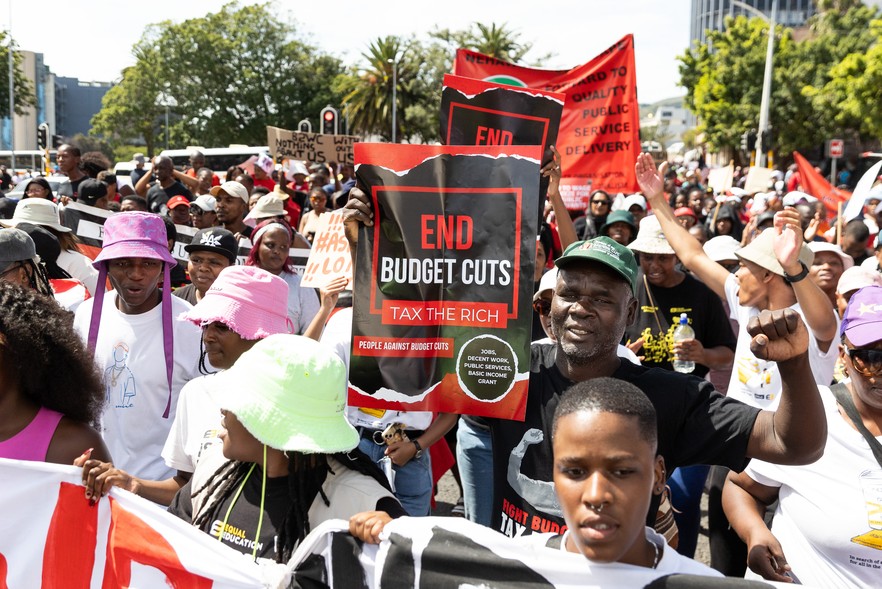
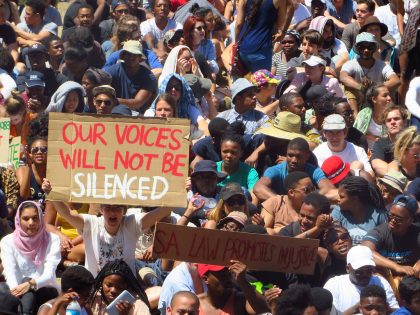
Hundreds of people marched through Cape Town ahead of the South African Finance Minister’s Budget speech on February 19, 2026. Source: Achraf Hendricks/GroundUp.
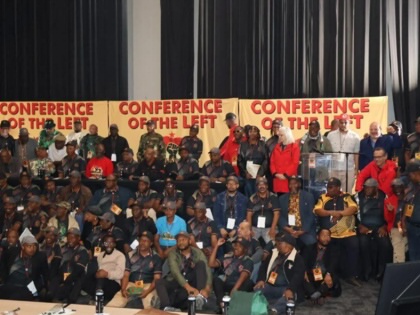
Niall Reddy’s “Nothing left” is written with the air of a final decree. The Grand Tribunal has sat. The Conference of the Left has been judged. The diversity, agency, concern, and perspectives of some 340 delegates have been dismissed. The outcome is declared hollow. The verdict is delivered: nothing left. But a decree is not an analysis. Reddy’s article makes one serious point: the South African left is in deep trouble and cannot be rebuilt through shortcuts, elite maneuvers, compromised personalities, or rhetorical anti-neoliberalism. On this, many of us agree. In fact, this was one of the central reasons the Conference of the Left had to happen. The left is fragmented. The working class is numerically vast but organizationally weak. Reactionary politics is growing. Xenophobia is spreading. Capital remains organized. The national liberation forces are decomposing. The Democratic Alliance (DA) offers neoliberal technocracy. The uMkhonto weSizwe Party (MKP) and related nationalist currents pose serious dangers of authoritarianism, ethnic nationalism, conservatism, and anti-migrant politics. None of this can be denied.
But Reddy does not stop there. He reduces a conference of about 340 delegates—representing more than 60 organizations (political parties, trade unions, community organizations, social movements, solidarity economy formations, religious bodies, youth and women’s formations, legacy organizations, and international solidarity formations)—into three organizations: the South African Communist Party (SACP), the Economic Freedom Fighters (EFF), and MKP. In doing so, he writes off everyone else in the room: Black farmers, shack dwellers, farm dwellers, student activists, workers, religious socialists, cooperators, Pan-Africanists, internationalists, community organizations, small business formations, women’s formations, and local grassroots organizers. That is not democratic critique. It is substitutionism in commentary form.
Who was in the room
The Conference declaration explicitly states that the conference was not launching a new party, not an electoral platform, and not dissolving participating organizations into one structure, but taking a collective step towards rebuilding the organized power of the working class and the poor. This matters because Reddy’s central rhetorical device is erasure. He does not engage the actual plurality of the conference. He does not engage with the commission reports. He does not engage with the written submissions. He does not engage the declaration. He does not engage the tensions inside the process. He simply selects the most compromised figures in the room and turns them into the whole room.
But let some of the formations speak for themselves. Izwi Labantu Forum, representing constituencies of Black farmers and community formations, stated that the conference focused on the livelihoods and interests of ordinary people—especially Black farmers, the working class, the rural poor, women, youth, faith-based organizations, traditional leaders and communities struggling for basic services—and stressed that agriculture is central to food security, hunger reduction and employment, and that Black farmers remain marginalized, dispossessed and blocked from land, title deeds, production support and markets. The National African Farmers’ Union, which could not attend because the invitation was received too late, nevertheless wrote that given the unfulfilled 1994 promise of “a better life for all” and the estimate that only about 7 percent of land has been returned to landless and indigenous African people, platforms such as the Conference of the Left are critical for advancing the agrarian agenda. Submissions by the South African Students Congress (SASCO), the Congress of South African Students (COSAS), the Pan Africanist Student Movement of Azania (PASMA) and other student organizations located education in the struggle over property relations, arguing that mines, banks, monopoly industries and major private equity remain in private hands and that free education cannot be secured without changing the ownership of the commanding heights of the economy.
The Amandla Gqeberha Collective came calling for a militant, democratic and internationalist left rooted in working-class and poor communities, defending collective ownership, democratic control, energy sovereignty, food sovereignty, publicly and socially owned renewable energy, agroecology, local food systems and cooperative production, and unequivocally denounced xenophobia as reactionary and anti-working-class. The Friends of Cuba Society (FOCUS) brought Cuba solidarity into the conference, calling for intensified struggle against the US blockade and the building of material and political solidarity with the Cuban Revolution. The Workers-Occupiers-Tenants-Dwellers Forum brought the struggles of farm dwellers, labor tenants, occupiers, vulnerable workers and rural communities facing harassment, illegal evictions, landlessness, workplace abuse, poverty and exclusion. The National Education, Health and Allied Workers’ Union (NEHAWU) welcomed the call for an alternative economic plan involving fiscal policy, monetary policy, industrial policy, trade policy, public investment, ownership and control of strategic sectors, developmental finance, democratic planning and social ownership. Are all these formations to be dismissed as stage props for MKP? Are farm dwellers, student activists, Black farmers, Cuba solidarity activists, cooperators, community movements and trade unionists to be told that their presence does not count because Niall Reddy has decided what the photograph means?
On MKP, let me be clear: I do not agree with its involvement in the Conference of the Left. Many others in the process were also critical of MKP, particularly its posture in relation to the xenophobic March vigilante formation. My own critique goes further: the compromised political person of its leader; allegations and histories of corruption; ethno-nationalist currents; conservative social positions; support for undemocratic traditional authority; an undemocratic internal constitution centered on the authority of Jacob Zuma; hostility to democratic constitutionalism; parliamentary supremacy fantasies; its receipt of money from Morocco; its disgraceful position on Morocco in relation to Western Sahara; and its Africanist chauvinism. These are not small issues. They are strategic and ethical questions. But after stating that critique, a serious left still has to ask: what do we do about the working-class constituency that has moved towards MKP? Do we write them off in the same way many once wrote off Inkatha supporters? Do we leave them to chauvinist leadership? Do we engage them? Where? How? Under what principles? These are difficult questions. Reddy avoids them by turning difficulty into denunciation. The Conference declaration did not endorse xenophobia. It rejected the politics of division. It identified migrants, informal workers, the poor and unemployed as part of the same oppressed social bloc, and declared that the enemy is not the migrant, the informal trader or the worker from another country, but the system that produces unemployment, hunger, low wages, inequality, dispossession, violence and despair. Commission B was clear: anti-xenophobia, anti-Afrophobia, anti-tribalism and defense of migrant workers must be central to working-class unity. MKP must be confronted. But Reddy’s article offers no strategy for confronting MKP’s social base, only a way of avoiding it.
Some formations chose not to attend: the South African Federation of Trade Unions, Abahlali baseMjondolo, key climate justice organizations, some Trotskyist formations, and others. Some objected to MKP’s presence. Some questioned the process. Some were unhappy about being listed or invited late. Some rightly demanded clarity on politics, accountability, and funding. Their concerns must be taken seriously. But they were not excluded. The Council of the Left, if it is to mean anything, must consciously involve forces that were absent, including critics of the conference. Commission B explicitly called for the Council to include forces that were not present, to prevent capture and bureaucratization, and to respect the autonomy of participating organizations. That is exactly the opposite of a closed bloc.
Reddy’s other target is the National Union of Metalworkers of South Africa (NUMSA) General Secretary Irvin Jim. But NUMSA cannot be reduced to Irvin Jim. Irvin Jim can and must answer for himself. NUMSA’s internal politics, allegations, contradictions and strategic choices require serious engagement. But NUMSA cannot be reduced to one personality. It remains a massive union with a deep industrial base and a history of militant worker organization. A left process that has no room for NUMSA workers is not serious about rebuilding working-class power. One of the diseases of South African commentary is that it often turns organizations into leaders, and leaders into total explanations. This is analytically lazy. The left must confront bureaucratization and corruption inside unions. But it must also defend the necessity of organized labor, especially in a period where trade union density has weakened, precarious work has expanded, and workers are being fragmented by outsourcing, labor broking and platformization. Reddy’s article chooses moral theater over class analysis. His tone towards smaller left and liberation formations is equally telling—he refers to them as Mickey Mouse parties. The Black Consciousness Movement of Azania, the Socialist Party of Azania, the Pan Africanist Congress, the Azanian People’s Organization, and the Black Consciousness Movement United may be electorally weak, organizationally uneven, and burdened by their own histories of fragmentation. But to reduce them to irrelevance is to misunderstand the long durée of South African radical politics. One does not have to agree with every formulation to recognize that these traditions carry and grapple with unresolved questions of race, class, national liberation, Black Consciousness, Pan-Africanism, and socialism that cannot simply be dismissed by some purist left analysis.
What was actually debated
Perhaps the most revealing weakness in Reddy’s article is its treatment of land. He treats it as if it were a backward-looking peasant romance. This is astonishing for a progressive economist. The land question is not a sentimental residue of the past. Historical dispossession must be fully and decisively addressed by returning the land to its owners. It is, further, the unresolved foundation of South African capitalism. Colonialism, apartheid, and neoliberalism produced a dualistic, racially divided agrarian structure dominated by large capitalist farms and agribusiness across the value chain. Land dispossession, cheap Black labor, apartheid state support for white commercial agriculture, and the later deregulation and liberalization of agriculture created the present system. Post-apartheid land reform failed not because the land question is obsolete, but because it was trapped inside market-based reform, willing-buyer willing-seller logic, deregulated agriculture, weak state capacity, and a political elite unwilling to trust ordinary Black people with land ownership and food production.
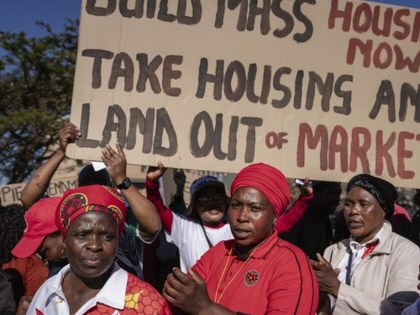
The agrarian question today is not only about the redistribution of hectares. It is about food sovereignty, agroecology, water, seed, climate resilience, rural employment, cooperative processing, local markets, public procurement, value chains, and the power of agribusiness. Research traditions associated with the Institute for Poverty, Land and Agrarian Studies (PLAAS) and others have long argued that land redistribution can support poverty reduction and livelihoods when linked to smallholder agriculture, support services, and transformed agricultural systems. Michael Aliber’s work argues for land redistribution to create a range of livelihood opportunities in meaningful numbers, rather than a narrow commercial-farm model, and critiques the policy bias that equates “small” with “non-commercial” and “large” with “commercial,” showing how inherited expert systems overvalue large-scale commercial agriculture. Land is also urban. Ndifuna Ukwazi, Abahlali baseMjondolo, Abahlali Baahi, the Gauteng Housing Crisis Committee, Reclaim the City, Housing Assembly, and many others have shown that urban land justice is about dignity, housing, transport, livelihood access, spatial justice, and undoing apartheid geography. Abahlali Baahi’s conference input put this sharply: the land question is the national question; the housing question is the class question; 1994 gave the vote but left the Black working class in shacks. How then does a progressive economist hollow out land into a caricature of peasant nostalgia?
Reddy’s article also gives the impression that no serious economic policy debate took place. That is false. Commission B identified anti-austerity work, land redistribution, food sovereignty, public services, employment, insourcing, public ownership, anti-privatization, political education, rural development, affordable transport, health care, housing and local government transformation as strategic terrains of struggle. It proposed immediate six-month actions: establish the Council of the Left, convene provincial and local assemblies, create campaign task teams on land, cost of living, unemployment, anti-privatization, anti-xenophobia, gender-based violence (GBV), political education, public ownership, international solidarity and local government. Janet Cherry’s input went further, arguing that the left must build alternative power, distribute economic power, and take social and working-class ownership of the means of production—pointing to practical examples such as the Saltuba Energy Cooperative in KwaZakhele. The declaration called for public, social, worker, cooperative, and community ownership; nationalization of land without compensation; organized seizure of unused land and abandoned buildings for community need; state-led industrialization based on beneficiation, housing, health, education, municipal services, and ecological rehabilitation; democratic control of the Reserve Bank, banks, mines, energy, transport, and telecommunications. This may not be the fully worked-out program we need. But to say there was “nothing left” is unserious.
Where things stand
Reddy’s conclusion—that the left does not need unity, it needs rebuilding—sounds profound but collapses under scrutiny. Rebuilding what, with whom, through what institutions, on what terrains, with what campaigns, and through what organizational forms? Rebuilding without unity is fragmentation with better language. Unity without rebuilding is summit politics. The conference attempted, imperfectly, to hold both tasks together: unity in action and rebuilding from below. This was precisely the point of the Council of the Left. Commission B insisted that the Council should not be a new party or command structure, but a broad, democratic, accountable coordination mechanism for campaigns, strategic discussion, political education, and implementation. That is not a shortcut. It is one possible beginning.
There is a legitimate line of critique emerging from Imraan Buccus, Ebrahim Fakir, Vishwas Satgar, Niall Reddy, and others. It warns that the left must not launder corruption, normalize xenophobia, confuse nationalist populism with socialism, or subordinate mass democratic politics to compromised elite maneuvers. That warning is correct. But the weakness of this critique is that it often collapses into a politics of distance. It lectures on the messiness of actual politics from the safety of analytical cleanliness. It sees danger clearly, but not always the possibility. It names contamination, but not necessarily strategy. It is strongest at denunciation and weakest at organization. The working class is not waiting in a pure room somewhere. It is fragmented across unions, churches, campuses, township economies, informal settlements, rural communities, traditional structures, student formations, migrant networks, small businesses, cooperatives, social movements, party branches, and populist formations. Some of these spaces are politically confused. Some are compromised. Some are contradictory. Some are dangerous. But they are where politics is happening. A left that cannot engage contradiction cannot lead.
The Conference of the Left must not be defended uncritically. It must be deepened, corrected, and tested. The funding of the conference and post-conference work must be transparently disclosed—no left process can demand accountability from the state and capital while hiding its own financing. The Council of the Left must adopt a clear anti-xenophobia, anti-Afrophobia, and anti-tribalism program, with practical work in communities where reactionary mobilization is growing. MKP must be engaged critically and publicly on xenophobia, constitutional democracy, internal democracy, corruption, Morocco and Western Sahara, traditional leadership, women’s rights, and social conservatism. Absent formations must be engaged respectfully: SAFTU, Abahlali baseMjondolo, the Mining Affected Communities United in Action (MACUA), climate justice formations, Trotskyist groups, feminist formations, community organizations, and independent left intellectuals. The land and agrarian reform campaign must be placed at the center. The economic program must move beyond slogans into working groups on public ownership, industrial policy, municipal transformation, social protection, taxation, monetary policy, cooperatives, solidarity economy, energy democracy, transport, and food systems. Political education must be rebuilt across the left, not as abstract theory, but as cadre development rooted in campaigns. And the left must measure itself by implementation: local assemblies, workplace forums, campaign task teams, cooperative initiatives, community organizing, youth and women’s leadership, and six-month public reports.
Reddy is right that the left must be rebuilt. But he is wrong that the Conference of the Left showed there is nothing left. What it showed is that there is still too little organized left; too much fragmentation; too little trust; too much baggage; too many unresolved contradictions; too much elite commentary; and too weak a connection between socialist ideas and working-class organization. But it also showed that Black farmers want land and production support. Students want property relations transformed. Workers want public ownership and social protection. Farm dwellers want dignity and land rights. Cooperators want a solidarity economy. Internationalists want anti-imperialist unity. Community organizations want a voice. Women want safety and leadership. Youth want a future. Left parties want coordination without liquidation. Movements want accountability. Even critics want a better left. That is not nothing. That is raw material. The task is to organize it.