The heart of the South African film industry
A debut feature set on the Cape Flats turns a familiar crime premise into a quiet study of fatherhood, masculinity, and survival. But its limited reach reveals the deeper problems facing South African film.
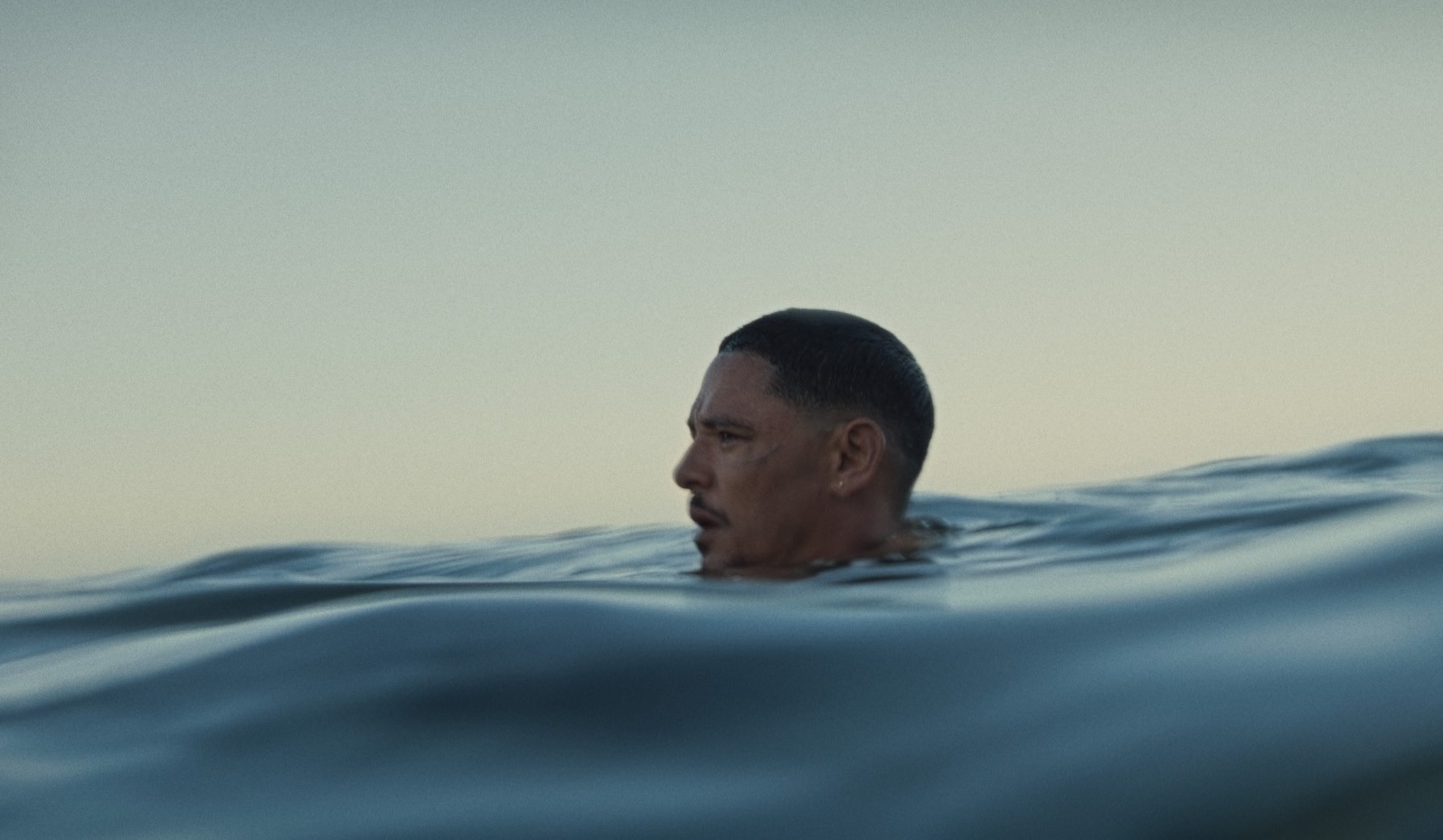
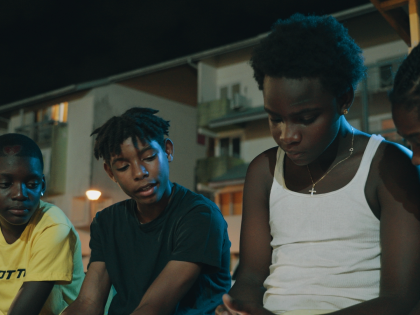
Promotional still from The Heart Is a Muscle © 2025.
In Njabulo S. Ndebele’s essay “The Rediscovery of the Ordinary,” Ndebele observes that South Africa’s “overwhelmingly oppressive” social formation prompted a school of literature that orientated itself towards spectacle. From coast to coast, the absurdity of colonialism and apartheid created a fractured and cratered landscape of a country, and any attempt to reconcile these fragments into a coherent narrative work inevitably found itself in the realm of sensationalism. The true measure of any South African storyteller isn’t to out-sensationalize a country spoiled rotten with it, but to rummage through the noise and find the tender root of how South Africans live and relate to themselves.
The debut feature film from writer/director Imran Hamdulay, The Heart Is a Muscle, reclaims the ordinary out of the absurd. It’s a humble independent film about a father on a path towards self-discovery after his son is kidnapped. In lesser hands, the stakes and dramatic arc of the film would’ve been ratcheted up to a substandard John Wick—esque crime-action thriller. In Hamdulay’s, it becomes a tender portrait of masculinity, fatherhood, and how the Cape Flats have molded those identities.
Previously an urban wasteland, the Cape Flats became Cape Town’s “dumping ground” to house families of color forcibly removed from the inner city during apartheid. Unlike Soweto or other urban constructs built to house people of color in apartheid, the soil on which the Cape Flats was built was scarcely a home to anyone at all, and thus this township was born of exile and grief. It’s argued that the forced removals from people’s original neighborhoods fractured embedded familial and social networks (which in part curbed local gang activity through informal social control), and opened the opportunity for piddling gangs to transform into sophisticated crime syndicates. Cape Town remains the most unequal city in one of the most unequal countries in the world, and the endemic poverty and unemployment exacerbated by the Flats’ distance to education and employment in the town’s inner city compounds the material and social conditions for gang culture to thrive. Regardless, it’s a place where human life is settled, and despite the shroud of historical grief and contemporary violence that cloaks the Flats in infamy, people continue to live, struggle, love, and flourish. It’s in that warmth of humanity that The Heart Is a Muscle finds its home.
The film’s story is mostly set in Ottery, a suburb on the outskirts of the Cape Flats, a liminal space between secure middle-class quietude and the looming threat of crime and gang violence next door. Ryan (Keenan Arrison) is introduced with a close-up of his knuckles, coated in gang-related tattoos. He’s pushing a grocery trolley with his young son (Jude) as he begs for a treasure trove of sweets and treats his father should buy him as they pass through the aisles. The contrast of the archetypal middle-class chore and the stamped legacy of his past is a striking metaphor of the central tension throughout the film and of his character.
Keenan Arrison plays Ryan with an anxious tension resting in his chest, knowing, like all good actors do, that the key to a character’s interiority is in their eyes. Ryan is always guarding something. With a keen sense of the magnetism of his expressions and physicality, Arrison’s eyes communicate the gentle pressure and release of Ryan’s consciousness, allowing Ryan to unfurl and retreat as the film’s narrative challenges and stretches him.
Through Jude, Ryan yearns to rewrite the history of violence that runs through his personal life and lineage. As rich as the potential of the father-son relationship is for Ryan’s redemptive arc, the relationship with another character is where the majority of the film’s drama lies. Whilst searching for Jude, Ryan attacks André, a resident of the Cape Flats, whom he falsely accuses of kidnapping Jude. After Jude is found, Ryan seeks out André, wishing to make amends, ultimately hoping that if André can forgive him, countless others before him will. A script contrivance ties the characters closer to each other, and the dramatic tension doesn’t have the legs to carry a feature length’s worth of drama, yet it provides some of the more revelatory scenes in the film.
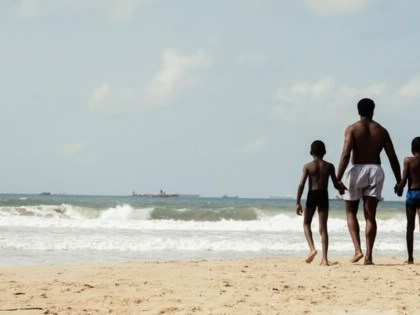
The film is steeped in many contemporary platitudes on how Black male masculinity should be interrogated, and they are sometimes delivered flatly without complication. The script can struggle to bear the heaviness of its weighty themes, and can opt for the expected as far as dialogue goes, but what saves the film is when Hamdulay allows his images to speak for him. A beach scene, as derivative of Barry Jenkins’s Moonlight as it may be, is a deeply emotive moment for reflection for Ryan, and the film’s conclusion allows more room for fruitful imagination than many open endings do in cinema.
Wholesale, it’s the quintessential debut feature for an impressively talented filmmaker. It is as earnest as it is clumsy, and Hamdulay’s strengths shine just as much as his weaknesses. It’s a compelling film amongst a growing filmography of standout South African films in recent years. However, it won’t be seen by a majority of South Africans.
The Heart Is a Muscle is also South Africa’s submission for the Best Foreign Film at this year’s Academy Awards. The nominees for the last Academy Awards were announced on the same day as an industry-wide protest at the Department of Trade, Industry and Commerce. Under the “SAVE SA FILM & TV JOBS” banner, thousands of film practitioners marched to Parliament to address the delays in the DTIC rebate system (a government system within which South African productions are paid back up to 35 percent of their total expenditure for their film). The delays meant scores of film practitioners and production houses had not been paid in months, and people were foreclosed from their houses, blacklisted from banks, dispossessed from their homes and assets, amidst other financial hardships.
As per the last official box office report released for 2023, South African films accounted for only 0.9 percent of the country’s total box office spend. Therefore, film practitioners are largely reliant on various government-funded bodies to both fund their practice and recoup filmmaking expenses. At this year’s South African Film and Television Awards ceremony, Sports, Arts and Culture Minister Gayton McKenzie echoed the call for increased capacity in film distribution and audience development, expanding local cinema’s reach. He further promised nominees and attendees that their overdue DTIC rebates will come soon. The response to Minister McKenzie’s trademark egoistic assurances was tepid applause. Many industry veterans in the room understood with a painful intuition that his promises were vapid and soon to be neglected once the glitter and sheen of the ceremony was behind them.
If The Heart Is a Muscle were nominated for or won at the Academy Awards, there would be great fanfare amongst those in the industry sheltered from its disrepair. Diatribes would be written, speechified and posted about how the South African film industry is finally on the rise. It would be a tremendous and deserved victory for Hamdulay and the film’s cast and crew, securing them future work they would’ve otherwise still deserved, and their film would get the theatrical release it always deserved. After everything is said and done, the status quo would return. This is true of South Africa’s first Best Foreign Film award winner, Tsotsi.
In referring to the Oscars, Bong Joon Ho, the director of the Oscar-winning Parasite, lamented, “It’s not an international film festival, it’s very local.” The anti-imperialist fervor from the school of mid-century filmmakers in the Global South has withered, and filmmakers from around the world tacitly understand the Oscars are cinema’s local-but-international award ceremony. Bong Joon Ho’s Best Picture win for Parasite marked what many thought to be a reorientation of the Academy Awards towards a more multipolar ceremony, where the Best Foreign Film category would retreat into redundancy, and all the world’s cinema could compete at the awards for an equal chance at local-but-international recognition.
There is a pervasive belief that proximity to Hollywood grants an industry a piece of its stature. What’s neglected in that aspiration is that to create it. America breached international antitrust laws and handicapped domestic industries in other countries to expand its reach and revenue when its own domestic market couldn’t sustain its own ambitions. Hollywood did not independently manifest an international entertainment ecosystem that made it exceptionally profitable; it created one where it could only be exceptionally profitable. It’s reported that over 70 percent of Hollywood’s gross box office comes from international markets, and this figure comes at the expense of many domestic film industries across the world, including South Africa, where Hollywood accounts for the remaining 99 percent of our box office spend. For the Best Foreign Film category, international countries aren’t being offered a seat at the most prestigious table there is in cinema; they’re jockeying for a seat at a table they helped build. For almost every year in the 21st century, more than any other African country, South Africa has thrown its hat in that ring.
In line with the welcoming of Netflix, Amazon Prime, and most recently, Canal+, too much weight has been placed on the importance of integrating our industry into an international framework at the expense of developing distribution avenues and fostering a more independent media economy. After French media giant Canal+’s recent acquisition of Multichoice and the cancellation of the beloved streaming platform Showmax, which also employed dozens of filmmakers, shareholders are making their reservations to invest in the industry known, and the impacts on film practitioners are devastating. As previously mentioned, local productions gross a next-to-negligible percentage of the country’s box office spend. Any attempts to supplement this are obstructed by a conglomeration of cinema distributors that are privately owned and are under no present obligations to comply with domestic screening quotas to screen local films for wide-release and for a significant amount of time (as exists in Australia, Brazil, and South Korea). A similar measure in South Africa would only take hold after a significant organizing force and political will. As of writing this article, The Heart Is a Muscle is only available to watch through select screenings, film festivals, and limited theatrical releases lasting a few weeks at a time at smaller cinema outlets. The first of those limited theatrical releases was to qualify the film for the Best Foreign Film category award. I shudder to think of the number of South Africans who would’ve gotten the chance to watch the film if it weren’t for that ulterior motive.
And still, against it all, filmmakers continue to make films, and contrary to the belief of an unfortunate number of South Africans, they’re damn good. It is not simply that more people should see The Heart Is a Muscle because it’s a film that I adore, it’s because it’s a film amongst a good company of recent South African films that deserves our patronage. It also deserves a concerted effort from our government and a curtailing of private cinema distributors to prioritize domestic film distribution. I don’t imagine that under a more progressive domestic cinema ecosystem, South Africans will, overnight, choose to watch local films at the expense of more polished and reliably entertaining Hollywood productions; what I believe is that they deserve a competitive choice between the two. Our industry cannot set its aspirations towards becoming a simulacrum of Hollywood without understanding that paving the road towards media independence is part of the route you take to get there.