Greater Israel and the new regional order
Israel’s campaigns in Gaza, Lebanon, and Iran are not discrete crises but interconnected fronts in a broader project of regional dominance.
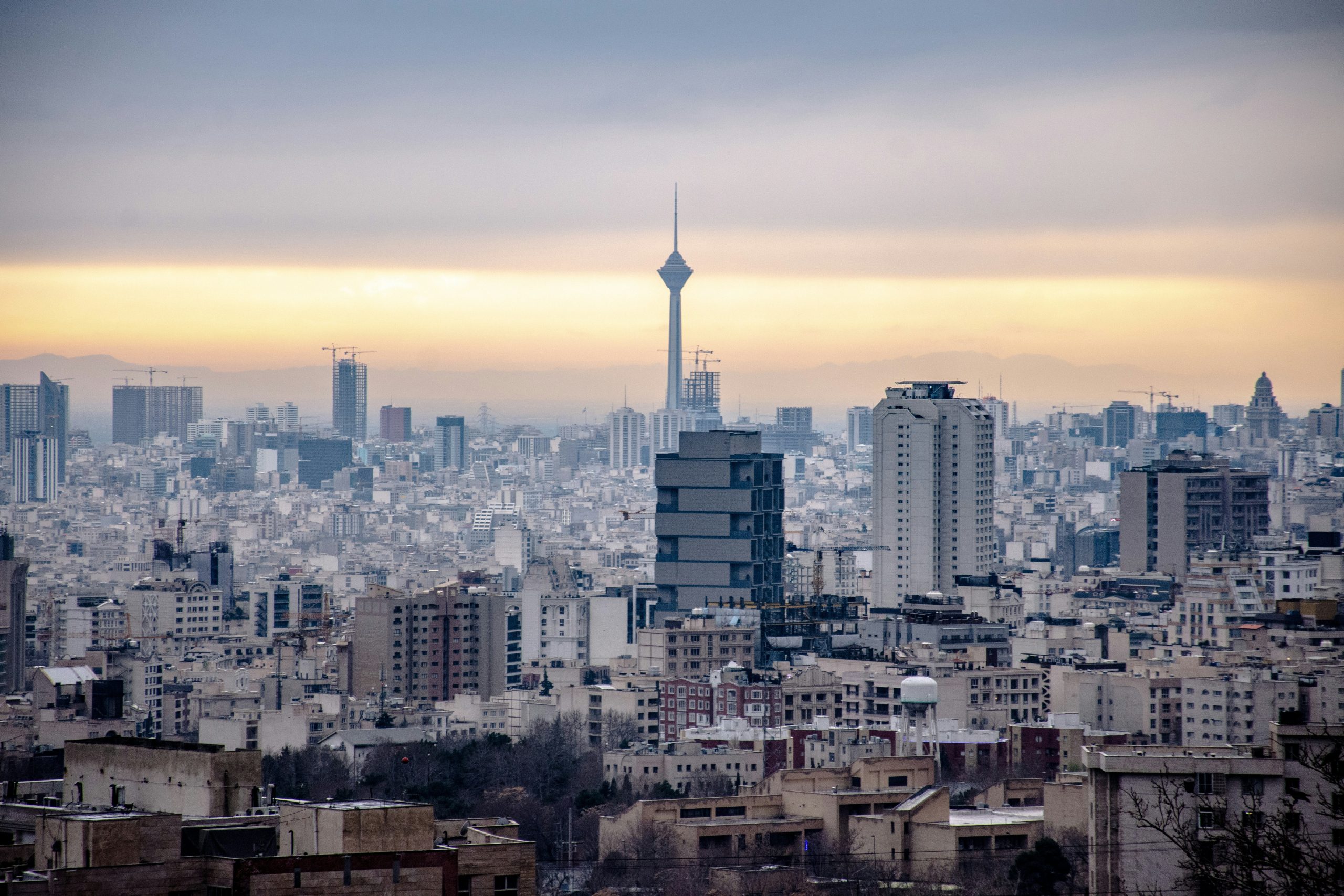
Photo by Hosein Charbaghi on Unsplash
On February 28, the US and Israel launched coordinated strikes across Iran. Among the first sites hit was a girls’ elementary school in Minab. The building was destroyed. Nearly 170 children were killed there. A US military investigation, now facing photographic evidence of a US missile, is ongoing.
There is a way of reading the current moment as a series of unconnected emergencies: a war in Gaza, Israeli incursions in Lebanon, strikes on Iran. Each has its own actors and logic of escalation.
Across Arab and Western media, the question circulating is often: Why is Iran hitting Arab countries? Framed this way, the presence of US military bases across the region is treated as natural, while Iran’s response is presented as an anomaly.
What disappears is the expansionist logic often described as Greater Israel. It is not only an ideological imagination, though it is that too. It is, right now, an observable fact on the ground.
Within hours of the joint strikes, Iran, as it had publicly warned it would, launched counterattacks on US military bases and allied assets across the Middle East, including in Jordan, Kuwait, Bahrain, Qatar, Iraq, Saudi Arabia, and the United Arab Emirates. Consolidated estimates place the civilian death toll in Iran from the opening wave of attacks and subsequent strikes at well over one thousand, with rescue teams continuing to recover bodies from collapsed structures and damaged industrial sites. Among those killed in the initial offensive was Supreme Leader Ali Khamenei, whose death was confirmed by Iranian authorities and whose passing has since ushered in a period of political uncertainty. Iran has since targeted vessels in the Strait of Hormuz, forcing the International Energy Agency to release 400 million barrels of crude oil to stabilize global supply.
Since October 2023, Israel has been expanding its physical borders in every direction.
In Gaza, the ceasefire was broken, and military operations resumed. The strip is being reoccupied; its population sealed under total blockade. In the West Bank, 2024 saw a record 59 new unauthorized outposts established, with 70 illegal outposts receiving state funding. In 2025, 50,000 new settlement units were on track for approval, four times the previous annual record.
In Lebanon, more than 517,000 people have been displaced in the past week alone, the second mass displacement in less than two years. This is not a new front. Before this round began, Israeli forces had already killed close to 400 people during the declared ceasefire period and refused to withdraw from five military positions inside Lebanese territory.
Each of these moves has been narrated as a separate crisis. Taken together, they trace a border moving in every direction. Beyond West Asia, Israel’s growing political and security ties in Africa, highlighted by Yotam Gidron, reinforce the occupation in Palestine and, in effect, support the territorial ambitions often described as Greater Israel.
Days before the bombs fell on Iran, the ideological ceiling came off entirely, and what lay above it is everything that has to do with imperial administration in the region.
US Ambassador Mike Huckabee said it would be “fine” if Israel claimed all the land between the Nile and the Euphrates: a sweep of territory stretching across modern Israel, the 1967 Palestinian lands, Jordan, Lebanon, Syria, vast swaths of Egypt, Iraq, and Saudi Arabia. Netanyahu unveiled his “hexagon of alliances,” a security design that ties Israel to India, Greece, Cyprus, and a ring of unnamed Arab, African, and Asian states, with Israel at the center of every spoke. The Israeli opposition invoked biblical borders as national consensus.
Netanyahu’s hexagon is about order. Huckabee’s statement was about land. One names what is to be seized; the other designs the system through which the seizure is administered and normalized. Territory without governance architecture is occupation.
The hexagon places Israel at the center of a regional security system Fthat makes Greater Israel governable. What makes this architecture so precise in its imperial ambition is who it names and who it doesn’t. India brings military-technological depth and a shared framework for framing resistance movements as terrorism. Greece and Cyprus bring Mediterranean legitimacy and NATO adjacency. The normalization that the Abraham Accords began and the hexagon seeks to complete: the transformation of Arab governments into stakeholders in Israeli regional dominance, their silence on Palestinian dispossession exchanged for security guarantees and economic access.
In other words, the hexagon is offering a structure in which the terms of protection and the terms of complicity are the same terms, offered simultaneously, to governments whose populations cannot be told what has been agreed on their behalf.
The disconnect between anti-colonial struggle and the capitalist nation-state is nowhere more visible than in the Gulf itself. Gulf populations have been absorbing Iranian missiles for 13 days at the time of writing, because their governments host the infrastructure through which this war is being fought.
The Gulf state system is the colonial arrangement in its most refined form. Their wealth is built on extraction from Sudan and Yemen, their labor regime on the exploitation of the kafala system and South Asian migrant workers, and their security on alliances with the very powers that colonized the region, and on deepening military ties with Israel’s occupation of Palestine. The petrostate, by its very design, survives by ensuring that the conditions that produce poverty are never fundamentally challenged. To struggle against imperialism in the Gulf is to struggle against the state itself.
This is the structure the hexagon was designed to protect and extend; a territorial vision stated openly before a single bomb fell on Iran. The framework was laid in advance so that when the strikes came, they would arrive already narrated and positioned within a regional order that had been described as inevitable.
Within this logic, every neighbouring state that could mount a coherent challenge to Israeli regional dominance has been fractured while Iran remains intact, militarily capable, and politically committed to the architecture of resistance, which is precisely why it has been targeted.
The hexagon’s architecture of dominance depends on uncontested energy corridors. Iran is contesting them directly. Since the IMEC physically routes around Iran, the hexagon politically encircles it; the strikes aim to do what fragmentation could not, to remove the last standing obstacle to a regional system in which Israel operates as the unchallenged hub.
This architecture is documented. In 1982, Oded Yinon published “A Strategy for Israel in the 1980s” in Kivunim, the journal of the World Zionist Organization. The premise was explicit: the fragmentation of neighboring Arab states into smaller, controllable entities. Each fractured along its internal fault lines of sect, ethnicity, and geography until none could mount a coherent challenge to Israeli regional dominance.
What followed, the dissolution of Iraq, Libya, and Syria, cannot be attributed to a single plan, and to insist on internal causation alone is to ignore what becomes of fracture once it exists. The empire produces the conditions, installing dictators, imposing sanctions, and funding proxies, then uses the resulting instability as justification for intervention. The dissolving of these states looks less like orchestration and more like a pattern of exploitation, which is, if anything, a more unsettling conclusion.
The Yinon framework is most accurately read as a structure of opportunism: a commitment to treating existing fracture lines as resources, to deepening what is already cracked, to ensuring that no neighbouring state develops the coherence to constrain Israeli expansion.
Achille Mbembe’s concept of necropolitics names this mechanism: the death-world, a space organized so that killing becomes illegible as a system, each zone of devastation sealed within its own temporality and cast of local actors available for blame.
This illegibility operates at the territorial, economic, and epistemological levels simultaneously. When missiles fall on a capital, we read local escalation. When sanctions strangle an economy, we call it diplomacy. Each event arrives in its own frame, and by the time we sense a pattern, the structure is already in place.
The question of who struck first is posed as a matter of sequence, not of structure. The deeper question of what larger vision this war serves remains unasked. This is what the system cannot account for. You can design a hexagon and draw a corridor and dissolve the states that surround you, and there will still be a man in the rubble with a speaker pushing through the concrete, and that will be enough to begin again.
Every fire is the same fire. So is every return.