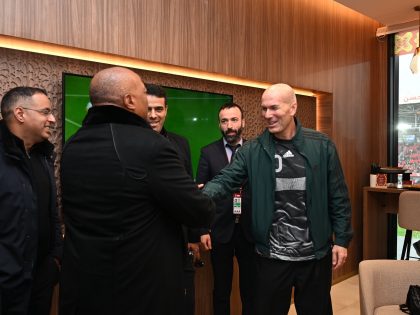
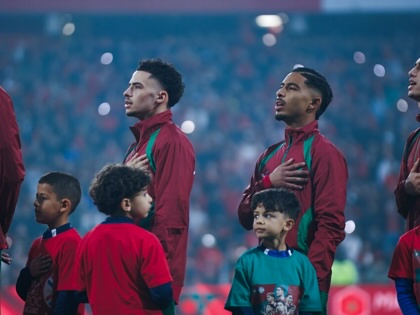
Just touched down in Morocco
Does the development of African football necessitate a trade off in vibes at continental tournaments?
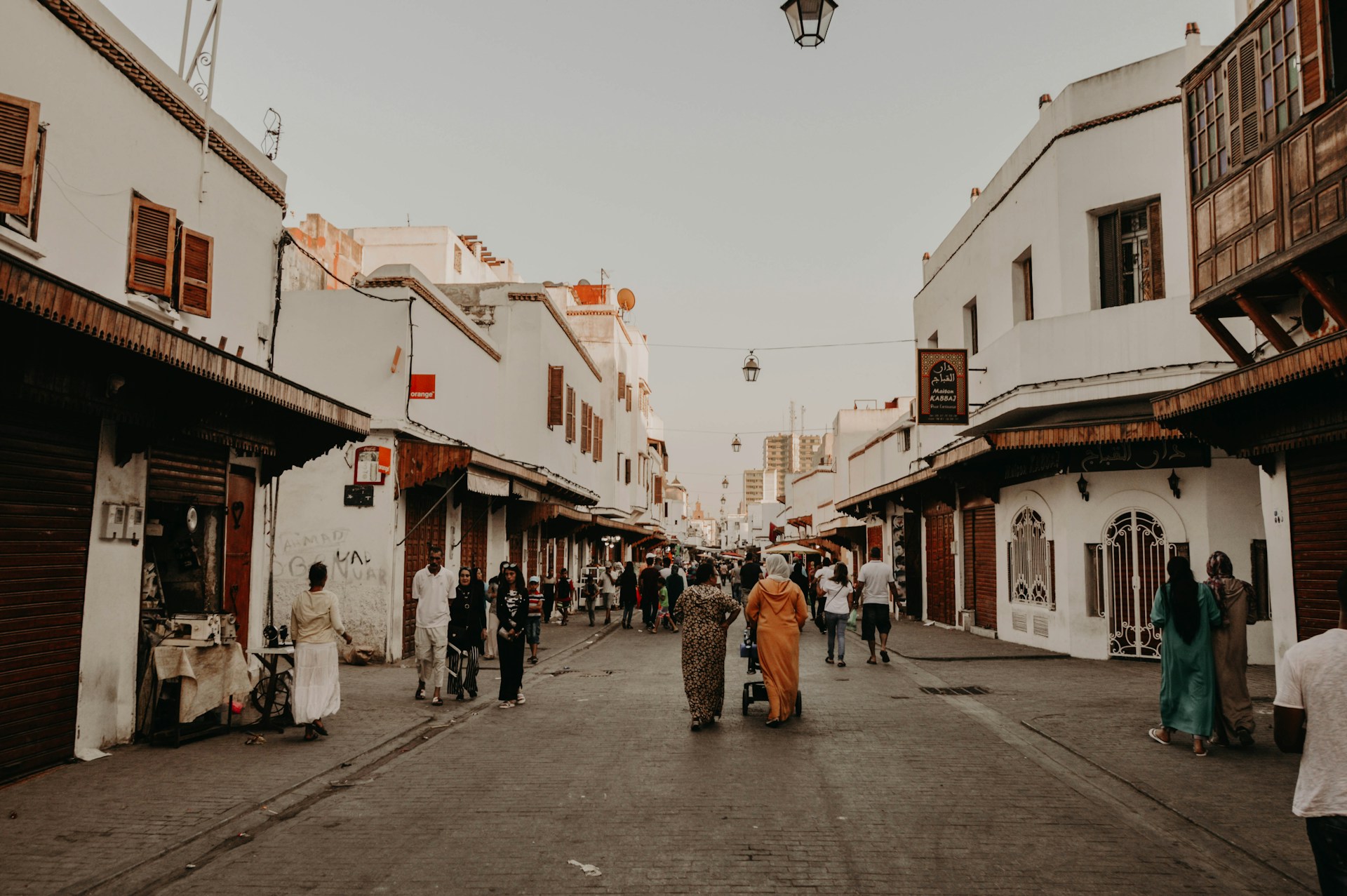
Photo by Idriss Meliani on Unsplash
Ahead of South Africa’s final group match against Zimbabwe, Bafana Bafana head coach Hugo Broos sat down with a gaggle of South African journalists, and in a moment of candor sparked a debate that has since rippled across the African footballing world.
“In the Ivory Coast and in Gabon, every second of the tournament you felt that you were in a tournament,” Broos said. “When we went by bus to training, people were waving flags, running alongside us. Here, you see nothing. There is no vibe. There is no typical AFCON vibe. I don’t feel it here.”
The remarks proved divisive. Some echoed Broos’ assessment, while they angered others.
Those who agreed with him drew comparisons between the ongoing 2025 Africa Cup of Nations and the 2023 edition in Côte d’Ivoire, arguing that the current tournament lacks some of the spontaneity, warmth, and energy that defined the last AFCON.
Others, however, felt Broos’ comments carried the stench of European essentialism. He implied that “African vibes” can be reduced to caricatural spectacle: people running after buses, screaming and dancing.
Regardless of what side one lands on the issue, it’s important to underline that this was not Broos’ first controversial media outing in recent weeks. Before the tournament even kicked off, the 74-year-old Belgian unloaded on young defender Mkezeli Mbokazi for arriving late to camp.
“He is a black guy, but he will leave my room as a white guy,” Broos said, without ever clarifying what he meant.
He later took aim at Mbokazi’s agent, Basia Michaels, after she facilitated a move to Chicago Fire in a move that many felt undersold the youngster’s talent. Broos dismissed her as “a little woman (that) . . . thinks she knows football . . . ”
The Bafana coach denied being racist or sexist, though he conceded that his choice of words “was not the right one.”
Most South African journalists I spoke to shared the assessment that Broos is not racist by nature, but profoundly clumsy with his language. As for his AFCON comments, many felt they were accurate. So, perhaps the issue demands a simpler framing. Let’s define the terms: What are AFCON vibes?
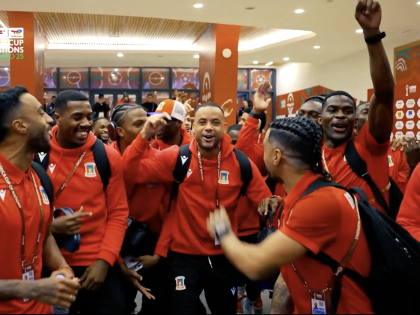
This is my fifth AFCON, and having attended both the 2023 tournament in Côte d’Ivoire and the current one, I believe that I can put forth a fair comparison. What made the 2023 edition so special was not merely footballing quality, but its setting. Côte d’Ivoire is a country deeply embedded in a region defined by migration and movement. Treichveille in Abidjan is home to thousands of Burkinabè, Malian, Senegalese and Guinean fans. Fans watched matches together, broke bread with one another, let off streams of jokes at each other’s expense and celebrated with one another. The tournament felt shared.
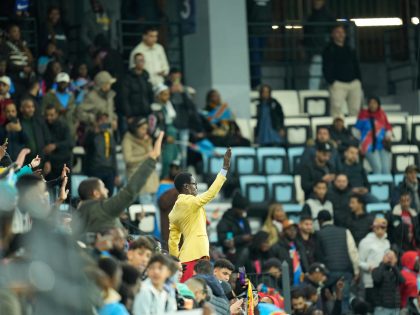
Morocco, as host, was always going to struggle to replicate that environment. This year’s tournament remains one of the better-organized AFCONs I’ve attended, yet several factors have undeniably contributed to a more muted atmosphere.
Unlike West Africa, North Africa is not a region characterized by regional integration. Travel between Morocco and its neighbors is neither free nor easy. Algeria’s border closure is one obstacle. The decision to move AFCON to the winter months is another.
This winter has been particularly rainy, and while that has been a blessing for a water-stressed region grappling with drought, it has undeniably pushed people indoors and away from public spaces.
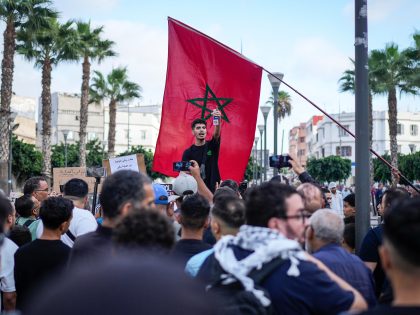
On Friday, January 2nd, I joined colleagues in search of Congolese supporters in Rabat’s Medina and the Kasbah of the Oudayas. We wandered for hours through the two stunning UNESCO heritage sites, animated by Moroccan families enjoying a beautiful evening. Yet we only encountered a handful of Congolese fans and they refused to be filmed. It was disappointing for a city hosting nearly a third of the tournament’s matches.
Then there was “Yalla,” Morocco’s official tournament app. Organizers made the app mandatory for journalists and fans alike, but it was an unmitigated disaster from launch. Bugs were endless. Fan IDs were issued only to holders of biometric passports, despite the fact that several African countries do not issue them. E-visa requirements further delayed or discouraged potential visitors, particularly from neighboring countries.
Finally—and perhaps this is more my personal intuition than tangible evidence—but, I can’t help but wonder if Moroccans are simply too accustomed to hosting football events. When you host as often as Morocco has, and when you have a World Cup on the horizon, novelty can fade.
To voice any of this publicly, however, is to invite backlash. As a journalist, that can be exhausting. If objective observation is unwelcome, you sometimes wonder why continental media is invited at all. There are enough communications agencies perfectly capable of producing glossy tributes of the hosts without opening the doors to scrutiny.
Yet, one interaction this week shifted my perspective.
A ride-share driver, making casual conversation, asked me the question I’ve been asked every day for the last two weeks: “How do you find Morocco?”
I responded honestly, that I loved the country, that people had been incredibly kind, that the infrastructure was world class. He paused, then said something that lingered.
“All of us Moroccans have sacrificed for this AFCON. All of us. The price of everything has gone up. Vegetables used to cost three or four dirhams—now they are double.”
His words reframed everything. They explained why criticism can feel personal and why online backlash is so visceral. Many Moroccans feel personally implicated in the hosting of this tournament.
That leaves us with a final question that is crucial for the future of the AFCON, and modern football in general: Is the price of development a culture that lacks in spirit?
The global trend thus far has been that development always means controlled, sanitized football, engineered for consumption rather than communion. Yet, in Africa, profit has never been at the center of why we practice sport.
That does not mean the game should not be profitable or that labor should not be compensated fairly, but there is danger in over-commodifying our football, which we all find attractive precisely because of its organic nature. And, as FIFA’s corporate shadow looms ever larger over African football, we must remember that the success of our tournament is inextricably linked to the freedom of people to travel, gather, and experience football together.