An anthropological mood board
For the next month we'll be bombarded with commercials riffing of the 2010 World Cup in South Africa. There'll be lots of "African" themes.
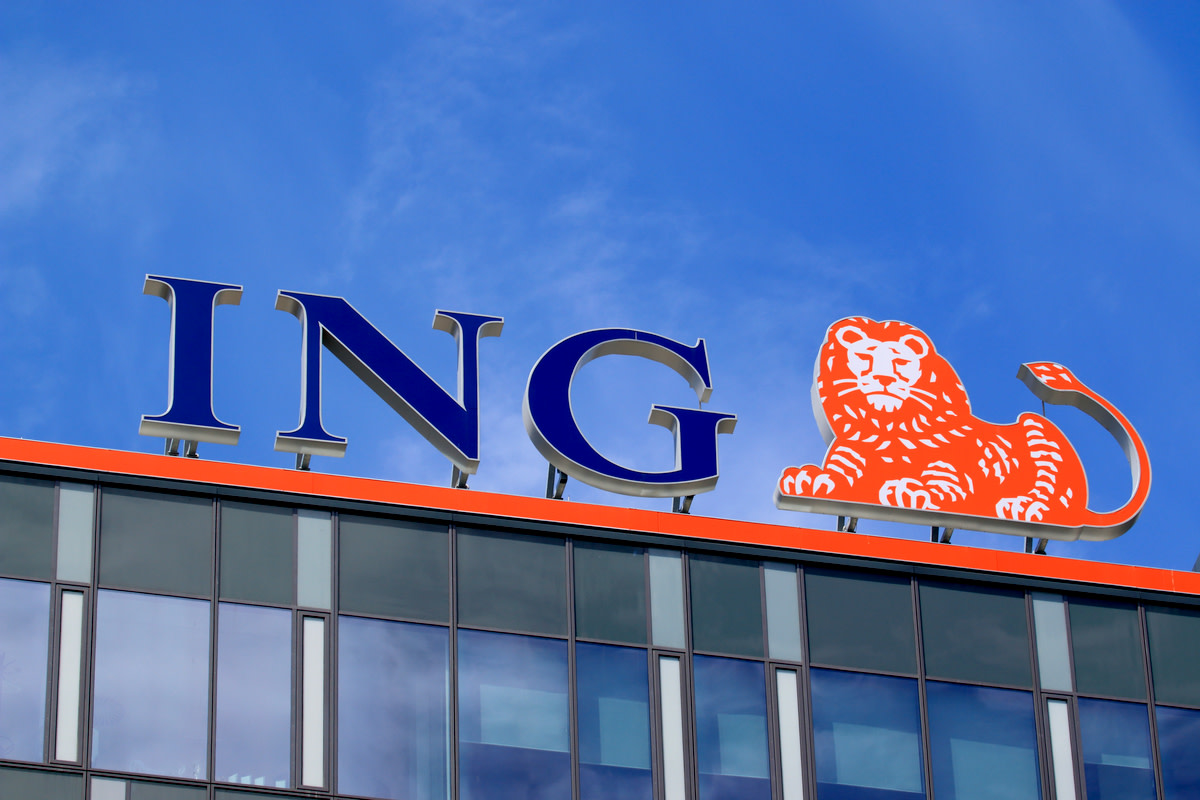
The head offices of ING (Photo: Dividend.com).
Earlier today, somewhere between a pre-World Cup friendly football involving Ghana and the Netherlands and the quiet miracle of cable television, I stumbled onto an ING Bank commercial—official sponsor of the Dutch national team, and apparently also of a certain idea of “Africa.”
The premise is simple enough: an orange-and-white lion (how convenient that both ING and the Dutch crest share the same heraldic beast) departs Amsterdam in a jeep—yes, a jeep, because of course—and heads south. Very far south. Across the Sahara, no less, though the ad mercifully spares us the logistics. One assumes the lion packed snacks.
What follows is less a journey than a checklist. Sand? Check. Giraffes? Absolutely. A lion is climbing onto the vehicle because subtlety is overrated. Then come the pastoral scenes in East Africa: smiling children, wide skies, and obliging Maasai, or Samburu, who can tell, and more importantly, who at ING cared enough to find out—framed as if they’d been waiting all along for Dutch branding to arrive and give their lives narrative purpose.
There’s no dialogue. There doesn’t need to be. Hugh Masekela’s “Don’t Go Losing Baby” does the heavy lifting, looping cheerfully as if to reassure us that what we’re seeing is not a collage of clichés but a celebration. And yes, you can rarely go wrong with Masekela—though here he’s reduced to sonic wallpaper for a safari of the European imagination. I hope he got paid well.
The humans, when they appear, are almost entirely black Africans—until, that is, the jeep reaches Cape Town. Suddenly, as if summoned by latitude, white Dutch fans materialize in their usual carnival attire, spilling into the streets to escort the lion home. It’s a neat trick: Africa as backdrop, South Africa as arrival point, and whiteness reintroduced right on cue. No need to overinterpret, of course—but the geography of visibility does most of the talking.
In between, we get quick cuts of the Dutch stars—Arjen Robben, Robin van Persie, the De Boer brothers —scoring, celebrating, doing the things elite footballers do when not being spliced into an anthropological mood board.
One wants to enjoy it. Really. But the accumulation is relentless: Africa as timeless, rural, and available; animals as shorthand; people as scenery; culture as vibe. By the time the jeep rolls into Cape Town, the message is clear: it’s the World Cup, it’s in Africa, and marketers have decided that means we must be shown Africa—loudly, insistently, and with all the nuance of a souvenir shop. This is going to be a long summer. Waka Waka. It must be Africa.