A judicial solution to a political problem
When Venâncio Mondlane goes on trial, Mozambique’s ruling party may achieve in court what electoral fraud and the violent suppression of protest could not.
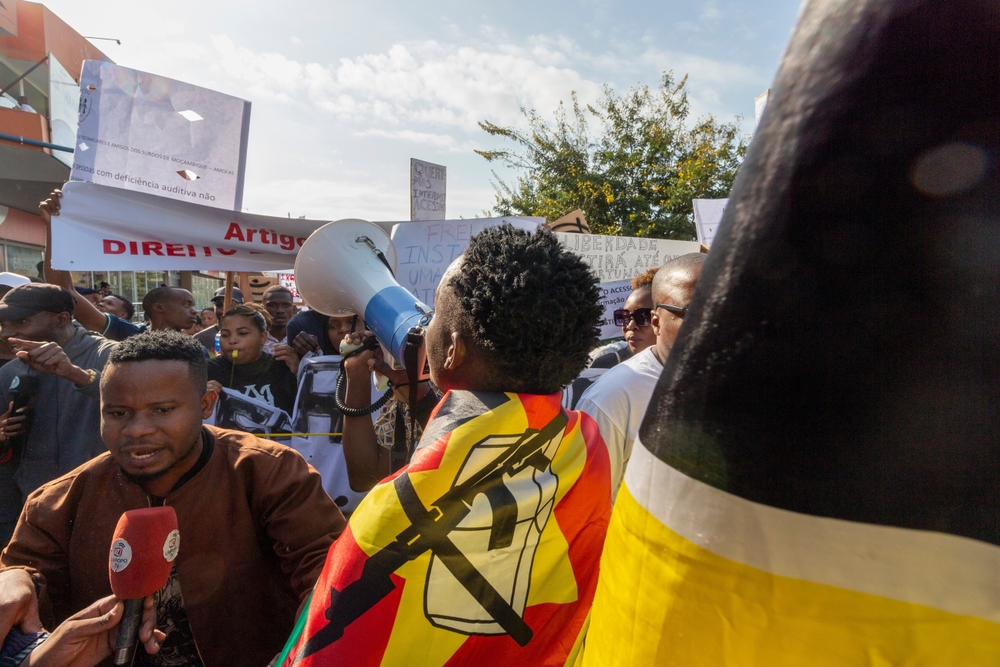
Demonstrators march in Maputo, Mozambique, on May 18, 2024. Photo: Ivan Bruno de M/Shutterstock.
Venâncio Bila Mondlane, the leader of the Mozambican opposition, finds himself awaiting trial (scheduled for November 17) for his alleged role as the progenitor of the seismic protests that followed the 2024 elections and threatened to topple the state. Mondlane is president of the recently formed National Alliance for a Free and Autonomous Mozambique (ANAMOLA) party. He is accused of five crimes by the Public Prosecutor’s Office, namely public justification of crime, incitement of collective disobedience, public instigation of crime, instigation of terrorism, and incitement of terrorism. A conviction could mean up to 20 years in prison for the presidential runner-up, the crippling of the opposition, and a transition in the state’s handling of political opponents.
Mondlane’s road to the 2024 ballot was lined with legal and procedural obstacles. Blocked from contesting the leadership of his party at the time, the Mozambican National Resistance (RENAMO), he left it and allied his campaign with the Democratic Alliance Coalition (CAD), whose electoral eligibility was confirmed on May 9, but was excluded by the National Election Commission (CNE) on July 18. The Constitutional Council (CC) upheld the decision on appeal, arguing that the parties who had formed CAD failed to notify the Ministry of Justice and Constitutional and Religious Matters of their intention to form a coalition. The court framed the decision as a purely technical issue; however, its consequences were undeniably political. Mondlane found himself politically isolated only two months before the elections. Forced to reorganize his campaign, Mondlane forged a last-minute partnership with the Optimistic People for the Development of Mozambique (PODEMOS), running as an independent with the party’s political and parliamentary support.
This chronology illustrates how the political agency of Mondlane and his supporters was repeatedly at odds with applications of the electoral law. It may not establish that each application of electoral law was politically motivated, but, at the very least, it raises a broader question of how ostensibly procedural outcomes can reshape the field of political competition, and suggests that legal procedure is not necessarily neutral.
After the October 9, 2024, vote, the CNE declared Daniel Chapo, candidate of the ruling Mozambique Liberation Front (Frelimo), the winner with about 70%, to Mondlane’s 20%. In December, after more than 300 complaints of electoral crimes and irregularities had been lodged with local and district courts, the Constitutional Council revised those figures to roughly 65% and 24% respectively. The revision was, in effect, an admission that the election commission’s results were dubious at best and fictional at worst. The CC altered the results when, as a body of electoral oversight, it could only order the CNE to recount the votes or annul the elections. Unsurprisingly, the Mozambican Bar Association (OAM), opposition parties, and civil society groups expressed concerns over the CC’s vague legal reasoning and the lack of an evidentiary basis for its alteration of the results.
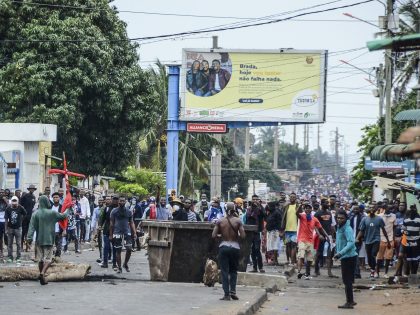
What ensued in the wake of these opaque elections was a six-month period of unprecedented violence. In Mozambique, several elections have been followed by periods of armed conflict. What made this period unprecedented, however, was that the antagonism was not between the state and an organized army, but rather between the state and a mobilized mass of unarmed civilians. According to a report by the Mozambican NGO Plataforma Decide, 411 civilians were killed, some 3,700 were injured, and around 7,200 were illegally detained between October 2024 and January 2025. These figures were disputed by the then commander-general of the police, Bernardino Rafael, who stated that 96 civilians were killed. Even so, charges have only been brought against two officers, and, with no updates, it is unclear whether the prosecution is pursuing these cases at all.
The protests began on October 21, when Mondlane called for a peaceful march in tribute to Elvino Dias, his lawyer, who was assassinated by assailants of no particular origin as he prepared an appeal challenging the preliminary election results. This march, like many that followed, was dispersed violently, including through the use of tear gas and live ammunition. In an environment where constitutionally protected political activities are met with violence, the credibility of official mechanisms is decimated. Inevitably, direct, “extralegal” forms of political action are increasingly regarded as the only legitimate mechanisms of contestation.
The result is a call-and-response cycle of escalation, in which protesters become increasingly militant as they respond to outrages perpetrated by security forces. Mondlane and others have alleged that state security agents infiltrated the protests with the mandate of spreading terror and destruction and discrediting the protests in the eyes of more moderate observers. While these allegations require independent substantiation, what is undeniable is that the protests were accompanied by widespread destruction of private and public property. The Confederation of Economic Associations of Mozambique (CTA) estimated that some 17,000 jobs were lost.
Almost two years to the day since the months of rage, Mondlane finds himself awaiting trial for inciting, stoking and justifying the chaos. The trial and his potential conviction carry implications which extend far beyond Mondlane’s personal criminal liability. According to article 118 (a–b) of Law no. 7/2004 and article 147 of the Constitution, candidates who have been convicted of an intentional criminal offense lose their active electoral capacity and are rendered ineligible for public office. The question of electoral eligibility is determined by the National Election Commission and the Constitutional Council as the court of appeal. Once Mondlane exhausts his appeals and a conviction is final, the opposition leader would be unable ever again to run for public office. Through this trial, the judicial process would succeed, bloodlessly, where electoral fraud and political violence failed. In one fell swoop, the political opposition would be castrated, and the current administration would have found a judicial solution to a political problem.
So much for the trial’s political stakes. What of the case itself? In determining whether the prosecution is politically motivated or represents a legitimate application of the law, its legal merits, or lack thereof, must be considered. It is important to note at the outset that, at the time of writing, neither the then commander-general of the national police nor, for that matter, any government official has been charged in connection with the protests. Additionally, no high-ranking member of PODEMOS has been charged. This disparity does not on its own establish political motivation, but, read in the wider context, it raises questions as to what motivates the law to be applied so rigorously in some instances and not at all in others.
To the tens of thousands of viewers who watched Mondlane’s Facebook livestreams or the millions who engaged with the politician’s social media accounts, it is obvious that Mondlane did in fact incite the people to protest, block public roads and refuse to pay utility taxes and toll fees. One question before the courts, then, is whether these acts can be considered criminal conduct under the law.
Mondlane has a strong argument that his exhortations fall within the protections afforded by articles 48 (1), 51, and 80 of the Constitution. These enshrine, respectively, the freedom of expression, assembly, and resistance. The latter protects the right of citizens “not to comply with orders that are unlawful, or that infringe on their rights, freedoms and guarantees.” The rights in the Constitution are not absolute and are subject to restriction. However, their limitation is regulated by article 56 (2–4), which states that rights can only be limited through legislation in order to “safeguard other rights and interests of the constitution” and “in cases expressly provided for by the constitution.” Law no. 1/2020 was promulgated on March 31, 2020, to limit citizens’ rights, such as the right of movement, during the COVID-19 pandemic. During the protests, however, there was no such legislation nor any declaration of emergency in effect. These constitutional protections do not on their own settle the question of criminal liability. Another question to be determined by the courts is whether the restrictions on Mondlane’s political speech and mobilization are proportionate to Mondlane’s political actions.
In determining the proportionality of the limitation, it must be recognized that at no point did Mondlane incite or encourage the destruction or theft of public and private property. On the contrary, he condemned these acts on several occasions, going as far as threatening to refuse to take up any position in the government should the destruction continue. It is at this point that it becomes unclear who exactly is on trial here: Mondlane or the protesters? It is obvious that Mondlane encouraged civil disobedience; it is, apparently, less obvious that those who engaged in direct action did so not because “Venâncio said” but because of their daily run-ins with death, both corporeal and social. If it is the case that those who attacked police stations, state institutions and private businesses were instructed to do so, then this instruction came from within, inspired by a collective consciousness and informed by a material reality. Put plainly, those who revolted did so simply because, for many reasons, they could no longer breathe.
As the protests evolved from a focus on electoral justice toward broader issues such as the cost of living, youth unemployment and a desire to be recognized as living, thinking beings by the state, the already thin case for Mondlane’s criminal liability grew thinner still. Candidly, it is not Mondlane who stands accused in the dock but a conception of politics, one that contests beyond the comfortability of the state. The destruction that Mondlane is being tried for did take place, but it would be far too convenient to believe it happened on his orders.
To broadcast or not to broadcast
The Supreme Court has dismissed an appeal lodged by Mondlane’s legal team challenging the court’s decision to ban the live audiovisual transmission and recording of court proceedings. The Court substantiated this decision by invoking article 452 (c) of the Code of Criminal Procedure, which provides for the non-appealability of any decisions that fall under the discretionary power of the Court. The position rests on the view that the audiovisual transmission of court proceedings is not a constitutional right. However, in addition to being enshrined in article 48 of the Constitution, the freedom of information is supported by the Right to Information Law (Law n.º 34/2014). The Court will allow journalists to sit in on the proceedings and record the events in writing. Nevertheless, the interpretation of criminal procedure law which the court has utilized to restrict constitutional rights is inconsistent with constitutional principles to the extent that it violates the spirit thereof.
The spokesperson of the Supreme Court has defended the ban, arguing that livestreamed proceedings could be taken out of context, circulated as short clips on social media, and instrumentalized for propaganda. He also raised concerns that broadcasting could expose judges and witnesses to political pressure. It is true that live transmission of witness testimony could influence future testimonies, while the circulation of decontextualized footage can distort public understanding of proceedings. Nevertheless, if the courts regard public opinion as detrimental to the administration of justice, then what safeguards protect these same judges from pressure exerted by the legislative and executive branches of government?
Furthermore, there is strong historical precedent for the live broadcasting of politically sensitive trials in Mozambique. The 2002 murder trial of Mozambican journalist Carlos Cardoso is one example. Cardoso was assassinated in 2000 while investigating the theft of $14 million from the state-owned Banco Comercial de Moçambique (BCM) on the eve of its privatization, as Mozambique transitioned to a free-market economy. The murder of Cardoso, the nation’s foremost journalist, created a particularly delicate issue for the state. At the time, Mozambican democracy was only eight years old, and the government needed to present itself as a genuine democracy, transparent enough to attract foreign investment and distance itself from its authoritarian past. The trial was broadcast live on state television and radio. The then minister of justice explained the rationale, stating, “this is to show the country that there is transparency here, and that we are serious. . . . people don’t trust the government, but this trial and the way it is being held publicly will help to end that.”
For similar reasons, the trial in the “Hidden Debts” case (dívidas ocultas) was broadcast live in 2021 and 2022. The case involved 19 defendants and $2 billion in loans granted in 2013 and 2014 by European and Russian banks. These loans were granted in secrecy without parliamentary approval. Both of these cases involved highly sensitive political information; nevertheless, they were broadcast. These precedents demonstrate that broadcasting a politically sensitive trial is not inherently incompatible with the administration of justice. Additionally, they illustrate that the decision to deny transmission requires more substantiation than an abstract appeal to judicial discretion.
The use of social media as a tool of political participation and mobilization is central to this discussion. During the protests, Mondlane developed a strategy that leveraged the generativity of the digital public. His livestreams were conducted on Facebook to tens of thousands of users, peaking on October 25, when he reached 115,000 concurrent viewers. The final report of the European Union Election Observation Mission documents that the very next day there was a national internet shutdown.
Understood within the context of Mondlane’s political strategy, the court’s decision strips him of his principal vehicle of messaging. This may serve as yet another warning for political movements that have leveraged the digital public. Though the internet and social media may promise a safer, more democratic public within which people may strategize, organize, and mobilize, access to the internet is very much dispensed at the discretion of the state and corporations and can be suspended at their whims. The Zimbabwean and Kenyan protests of 2019 and 2024, respectively, provide examples of how easily states are able to react to social movements and collapse communications infrastructure. The point is not to foreclose the generative potential of social media but rather to illustrate how the control of digital infrastructure and platforms is central to guaranteeing this potential.
To be or not to be
The fact that this trial is taking place at all demonstrates the “stealth authoritarianism” of the Mozambican state. The legal scholar Melissa Crouch, building on Ozan Varol, uses the phrase to describe the manner in which an ostensibly democratic system can be wielded by the dominant political formation as a means of maintaining its power. Such a stealthily authoritarian state is furnished with a plethora of ideological and repressive apparatuses with which to quash opposition. The law is one such mechanism, available, at all times, to further authoritarian ends. It can palatably achieve results which could otherwise only be achieved through murders and kidnappings.
Apartheid-era South Africa was not a “stealth authoritarian” state, but a comparison is worth making. In 1968, the Department of Foreign Affairs proclaimed that “[t]he South African legal system is soundly based on the rule of law”; seven years later, the minister of justice, Jimmy Kruger, boasted in parliament that the country’s legal system was “held in high esteem in all Western countries,” as Alfred Cockrell records. The point is not that the contemporary Mozambican state is equivalent to apartheid South Africa. Rather, the comparison illustrates how legal procedures and discourse can be deployed to legitimize a state that is obviously illegitimate. When the sheen of democracy and the rule of law is draped over a state, it becomes easy for those who are so inclined to pretend that what’s gilded is solid gold.
The 2026 Bertelsmann Transformation Index (BTI) Country Report classifies Mozambique as a “clientelist state” presenting “the facade of electoral democracy.” This facade is an integral part of the resilience of authoritarian states. As a state constructed around and catered toward the interests of international, multinational, and multilateral clients, it is crucial that the state present itself as a palatable business partner. The concern is not with the actual operation of the state but rather with how it appears to operate. One is reminded of the famous joke told by Soviet workers: “We pretend to work, and they pretend to pay us.”
The seismic shock of the protests has shifted the landscape and disrupted the status quo of Mozambican politics. The government now finds itself in a double bind. On the one hand, the state cannot simply allow the opposition to organize itself and disseminate information as it very well pleases; this would spell the death of the liberation party’s 50-year rule. On the other hand, the government cannot resort to its tried and tested methods again in 2029, not only because the international client community is watching but, more importantly, because the chaos and destruction that may ensue could create an even more volatile situation.
The Mozambican state stands in the wake of a mass protest movement that presented the most politically legible threat to the liberation party since independence. Thus, it must be pragmatic in considering how best to secure its power. At this juncture, it appears that the safest choice is to rely on the judicial process to eliminate its most formidable threat from the political stage. While Mondlane will most likely not be jailed, he may be convicted, and in any case, the mere fact of this trial spells a transition in the state’s handling of political opposition. Moreover, the decision not to broadcast the trial seems to form part of this strategy, raising questions about the role of the digital public in the future of Mozambican political participation.
The truth of the matter is that the merits of the state’s case are not of great importance; it would be naive to imagine that they are. Rather, the importance lies in the state’s quest for new methods of guaranteeing its resilience. If you will indulge the hyperbole, it is an existential quest: to be or not to be.