Tanzania’s peace was never peaceful
A year after security forces opened fire on protesters across Tanzania, the violence looks less like a rupture than the return of a colonial past.
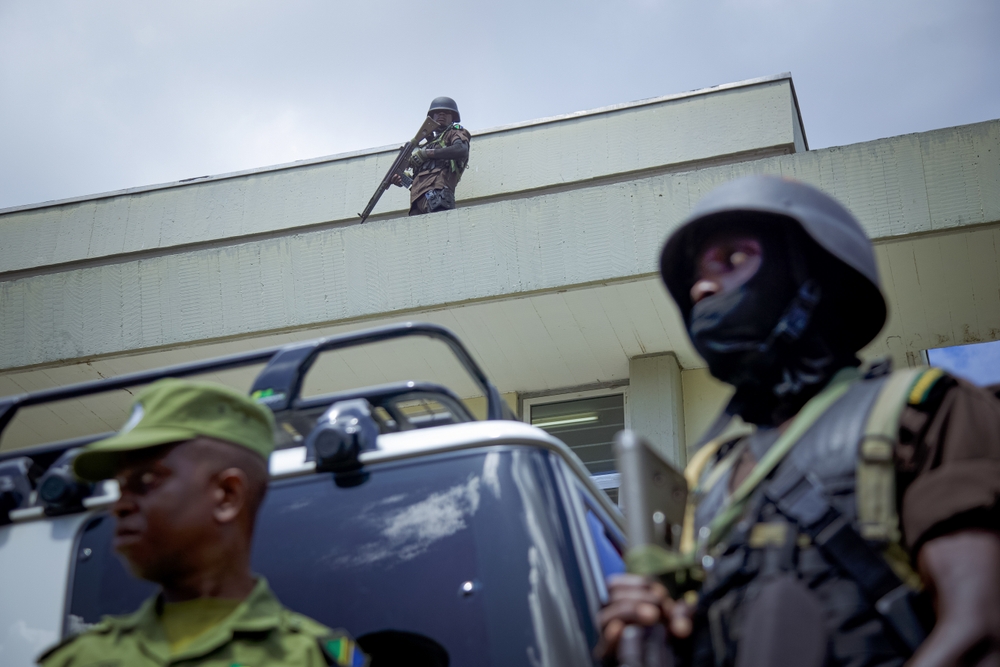
Tanzania police officers stand guard at the Kisutu magistrate's court after the Tanzania's main opposition leader Tundu Lissu arrived at court in Dar es Salaam on May 19, 2025. Source: Ericky Boniphace / Shutterstock.com.
One year ago, on October 29, 2025, the sound of bombs and bullets rang out around Dar es Salaam and several other cities across Tanzania. Before last year’s election, Tanzania had enjoyed an international reputation as a peaceful haven in an often tumultuous region. Foreign governments and tour companies certainly helped craft this image, but so did Tanzania’s government and population. Since I started visiting the country in 2017, people have often cited amani (peace) as one of Tanzania’s best attributes. People attributed this purported peace not to satisfaction with the government or living conditions, but to fear. Watanzania ni woga (Tanzanians are cowards), my friends tell me self-deprecatingly. This fear belies the peaceful image Tanzania has cultivated overseas.
Histories, or perhaps more accurately colonial histories, place Tanzania in the category of African countries that peacefully acquired independence. To consider Tanzania’s transition to independence as peaceful is to take a short view of history. This narrative ignores the Hehe killed during seven years of fighting against the Germans, which ended in 1898 with Chief Mkwawa killing himself rather than surrendering and his skull being taken to Germany. It ignores the organized resistance that involved the entire southern half of Tanzania, the Maji Maji war of 1905–1908, which some consider the first Pan-African anticolonial resistance movement. The Tanzanian historian Gilbert Gwassa estimated that 300,000 Africans died in this movement, most of them from starvation. The narrative of peaceful transition also ignores the roughly 600,000 Africans who died as a result of World War I military incursions on Tanzanian soil. In these three events alone, almost one million would-be Tanzanians lost their lives to colonization.
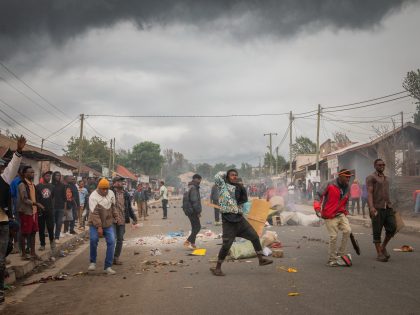
I was in Dar es Salaam last year during the election. The internet cut out at about noon, and the sounds of bombs and bullets started around 1pm and continued off and on for another four days. Without internet, radio, or television, I got my news the old-fashioned way: through other people. My friends in Arusha and Moshi sent frequent messages, and I went out to my courtyard and sat with my neighbors who were connected to other cities across the country. We exchanged what we had heard: someone’s niece had stepped outside her apartment in Dar and encountered a body, Muhimbili Hospital was overflowing, bodies were being stacked outside mortuaries, ballot boxes had been burned. There would be no votes to count. By day three of the lockdown, rumors were circulating that the government was preparing for a prolonged battle, and that Dar’s drinking water might be poisoned. By day five, the store next door to me had sold out of airtime, water, sodas, and milk. Amid the fear, though, was excitement.
Watanzania wameamka, one of my neighbors said proudly. Tanzanians have woken up. A neighbor who stopped by noted that hakuna mafanikio bila sacrifice. No success without sacrifice. Another neighbor said she was going to give 10,000 shillings to any bodaboda and bajaji drivers (the motorcycle and three-wheeler taxi drivers who ferry much of urban Tanzania) she saw; they were the ones leading the protests.
On day six, Mama Samia—as President Samia Suluhu Hassan is popularly known—was sworn in as president at a ceremony closed to the public. The sounds of bombs and bullets had fizzled out over the days, and the morning marking one week since the election radiated with the usual city sounds of buses, bajajis, and bodabodas that had gone quiet for so long. The halt in violence did not result from any recognition by Samia of the illegitimacy of the election, which did not include any candidates from the country’s main opposition parties. The electoral commission barred Chadema, the largest of them, and disqualified the candidate of ACT-Wazalendo. After days of police shooting live rounds into crowds and indiscriminately killing civilians caught in the wrong place at the wrong time, the protests stopped. Tanzanians decided they did not want to die. After the election, there was a general feeling of “Where do we go from here?”.
Months before the election, in March of last year, I attended a memorial event on the slopes of Mount Kilimanjaro in Old Moshi, remembering the 19 area chiefs whom the Germans hanged on March 2, 1900, on accusations of subversion. One of the elders recalled a phrase he heard often growing up, anytime a bad event happened: Hatujazika babu zetu (We have not yet buried our grandfathers).
What if we apply that thinking to the 2025 election? What if we consider the violence of 2025 not only as a result of the intimidation, abductions, and political violence President Samia’s regime has enacted, but also as a product of decades of unaddressed generational trauma still lingering from the violence Tanzanians experienced under colonization? This kind of recognition would require formerly colonizing powers to share in the responsibility for election violence and do more than issue statements of condemnation. Addressing generational trauma requires addressing the continued damages caused by colonization. How can a country peacefully move forward when its people haven’t yet buried their grandfathers?