Who will pay to belong to South Africa?
A landmark housing ruling in Cape Town and anti-migrant marches in Durban look like opposite stories. But they are two extremes of the same colonial question: who is permitted to occupy space?
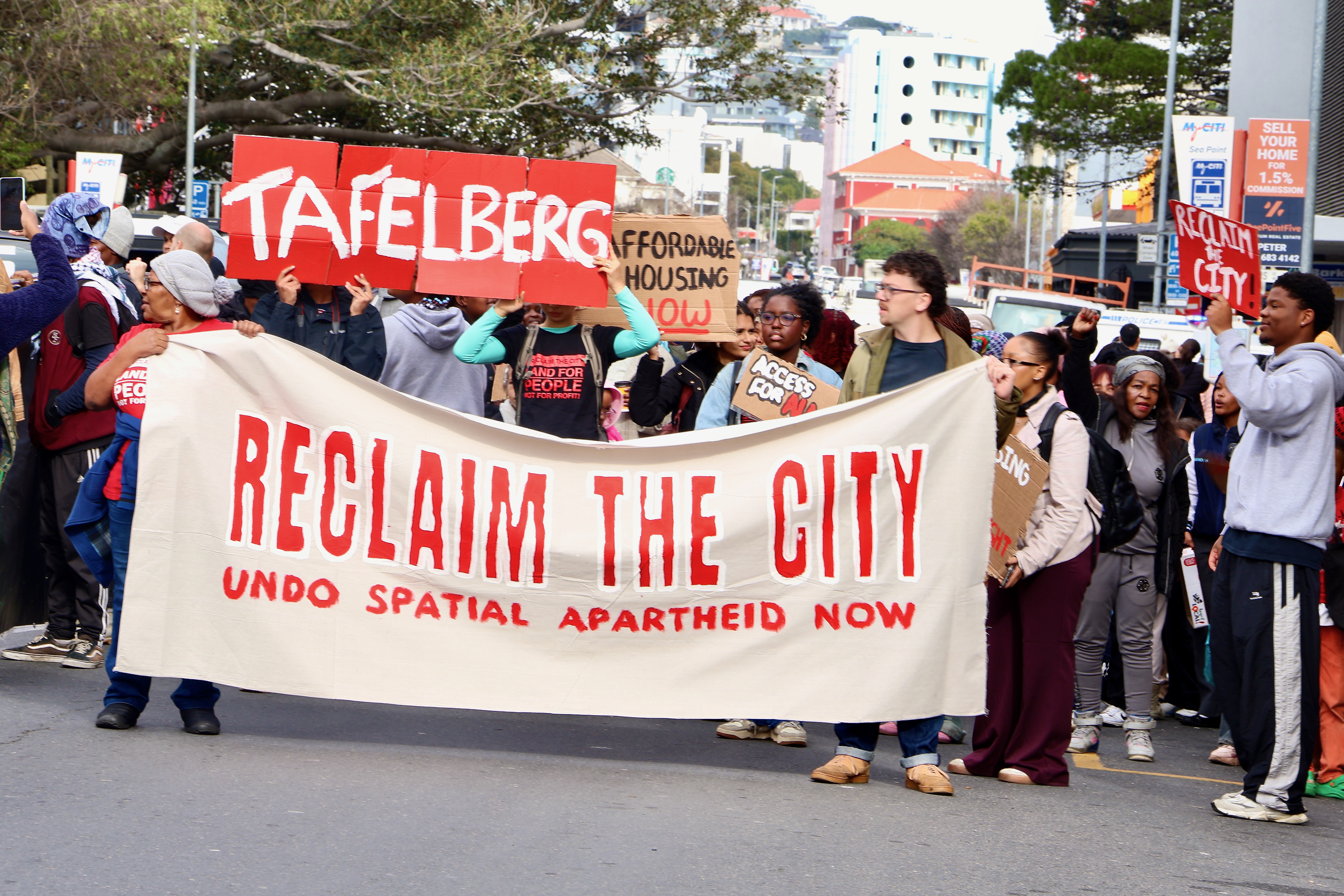
Housing activists celebrate in Sea Point after South Africa’s Constitutional Court ruled that the City of Cape Town and the Western Cape government are obliged to provide affordable housing in well-located areas. Photo: Matthew Hirsch/GroundUp
Property investment and xenophobia are two extremes of spatial apartheid in South Africa. Where do we draw the border? Two recent developments proved that the question of who belongs where is still being settled. On June 30 in Durban, the March and March movement told a crowd of more than 5,000 that it would return to the streets every Thursday for six months, until every undocumented migrant among them was gone. On July 2, the Constitutional Court found that the City of Cape Town and the Western Cape government had, for a decade, failed their constitutional duty to create affordable housing within the city.
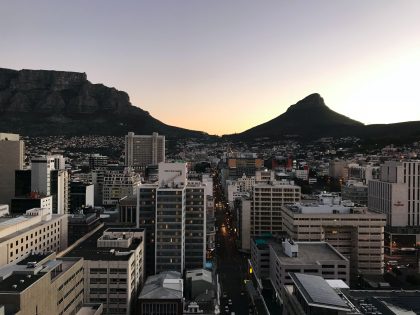
In 2016, the Western Cape government sold a disused remedial school on Sea Point’s Main Road to a private Jewish day school for R135 million, setting off a decade of housing activism demanding social housing on the site. Justice Nonkosi Mhlantla, delivering a unanimous judgment this July, explained that a city’s architecture tells the story of its soul, and that Cape Town’s still tells one of division, of spatial apartheid. Location, she said, is not a peripheral consideration in housing policy but integral to it.
The displacement and alienation of black people in South Africa predates democracy and apartheid, was structural to the development of modern South Africa, and will not end with a court order. Sea Point’s property prices now sit at roughly one and a half times the citywide median, up from 1.2 times a decade ago. A quarter of the suburb’s apartments are no longer homes but Airbnb listings, which have grown by nearly 200 percent since 2022. But the renter priced out does not disappear. Many end up in the peripheral settlements and townships that apartheid planning built at the city’s edge to distance white areas and central business districts from the black population.
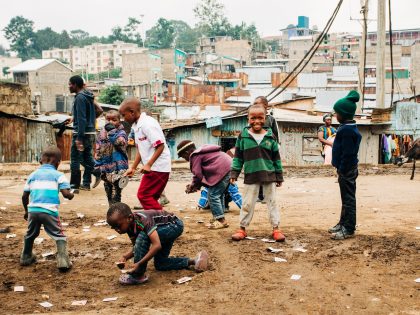
These peripheries host long-established black African and coloured communities, and absorb whoever the inner city prices out, citizen and migrant alike. They are not exclusively black spaces, and they are not the only destination for the displaced, but they remain the most under-resourced part of the city: fewer clinics, thinner policing, underserviced water and electricity, and schools starved of the resources that the ones across the highway receive.
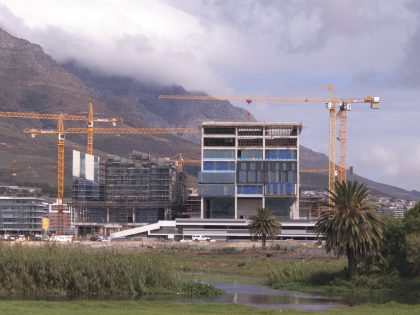
The anthropologist Kenneth Tafira describes this kind of enforced proximity as “coerced co-habitation,” a growing population living side by side because they have nowhere else to stay, placing pressure on already under-resourced areas. It is precisely this arrangement, not any inherent hostility between neighbors, that makes friction between the excluded citizen and the excluded migrant so combustible. The Constitution’s promise of dignity is not evenly distributed, and Cape Town’s funding and resources show who it reaches. The province markets itself as a gateway for the foreign capital that displaces the locals.
Spatial apartheid, displacement, and xenophobia in South Africa are recurring historical events. The researcher William Mpofu argues that “what is termed xenophobia is actually racism”—the same colonial logic that once sorted black South Africans from settlers now sorts citizens from black migrants.
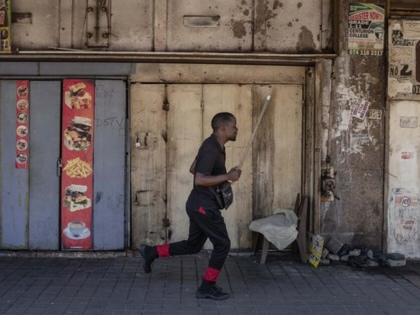
In KwaZulu-Natal, the same colonial logic of who is permitted to occupy space operates by inversion. Where Cape Town’s property market prices the poor out of the center to make room for wealth, March and March organizes to push the foreign poor out of the country altogether, chanting the slogan: Mabahambe, they must go. Its organizers have met with the Democratic Alliance, ActionSA, the Patriotic Alliance, the Inkatha Freedom Party, and the uMkhonto weSizwe party, and its founder has thanked ANC figures, including Gauteng’s premier, from the stage. Sabelo Ndlovu-Gatsheni observed that “nationalism is nativist in character,” and each party, in its own dialect, has found something in this movement worth affirming about belonging.
Responses to migration are, as the political scientist Audie Klotz argues, “intricately linked to the demarcation of borders” drawn under colonial rule and inherited, almost unquestioned, by the democracy that replaced it. The barriers to being declared a “legal” and “documented” foreigner are language (consider the difference between being called an expat and an immigrant), money, location, and origin. Documentation is a privilege built on the histories of war, dispossession, and dislocation that produce the undocumented in the first place. South Africans know this all too well—and yet find themselves marching into a repeated history.
Sea Point and Durban sit at different extremes of the same reality: spatial apartheid. One displaces the local and houses the foreigner. The other displaces the foreigner and alienates the local. Both rest on a history that the country never unlearned: deciding which body has earned the right to stay. And this raises the question: can Africans belong in South Africa? And can South Africa belong to Africa?