The grid inside the grid
Africa’s new AI factories promise digital sovereignty. Their electricity deals may instead create private power islands inside public systems.

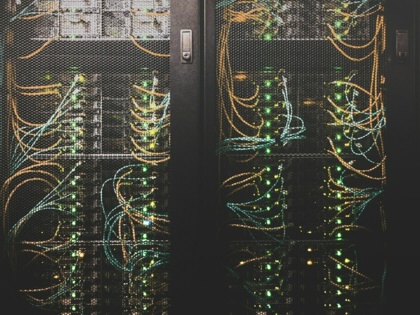
Photo by Igor Shalyminov on Unsplash.
In March, when Cassava Technologies announced the launch of an AI factory powered by NVIDIA in South Africa, the company described it as a turning point. African businesses would gain local access to high-performance computing. Data would remain within African borders. Developers would be able to build models for local languages and local problems.
The promise matters. African researchers and firms cannot participate meaningfully in artificial intelligence if they must rent every unit of computing power from servers abroad. But the most consequential infrastructure inside an AI factory may not be the graphics processor. It may be the electricity connection.
Artificial intelligence is exceptionally energy hungry. The International Energy Agency expects global electricity consumption by data centers to nearly double by 2030. The pressure is not evenly distributed. Data centers cluster in particular cities and industrial corridors, where their demand can collide with already constrained transmission systems.
South Africa shows how this collision is being managed. Data center operators are increasingly securing electricity through private renewable plants and wheeling arrangements, which allow power generated in one province to travel across the national network to a customer elsewhere. Teraco, a major operator, is developing a 120-megawatt solar plant in the Free State to supply its facilities in Johannesburg and Cape Town. Other operators have signed similar agreements.
This can look like responsible investment. Private procurement adds renewable generation, reduces dependence on coal, and helps large customers avoid drawing all their electricity from local distribution networks. South Africa’s electricity supply has also improved after years of blackouts. Yet the country still needs to expand and strengthen its transmission network. A private solar farm does not create a private route from the sun to a server. It still depends on substations, power lines, and grid capacity financed and governed as part of the national system.
The concern is not abstract. In May, community organizations challenged plans for two Equinix data centers in Cape Town, arguing that the applications did not provide enough information about electricity demand, water use, emissions, and backup power. The proposed facilities could require up to 160 megawatts combined. The dispute asks a basic democratic question: How should cities weigh private digital investment against competing claims on shared resources?
This is the grid inside the grid: a layer of firm, privately secured electricity built for facilities that cannot tolerate interruption, operating within a public system still struggling to expand transmission and connect new generation. The AI factory may be geographically located in South Africa, but its relationship to the surrounding economy can resemble an enclave. It receives dedicated power, imported equipment, sophisticated cooling, and backup generation. The wider public is promised future innovation, jobs, and growth.
The same tension is visible in Kenya. A proposed $1 billion data center involving Microsoft and the Emirati company G42 was presented as a geothermal-powered foundation for East Africa’s cloud and AI economy. By May 2026, negotiations had stalled over requests for guaranteed capacity payments, while the scale of the project’s power requirements remained under discussion. The episode revealed what investment announcements often conceal: Governments may be asked not only to host digital infrastructure but also to guarantee its market and reorganize scarce energy capacity around it.
None of this means African governments should reject data centers. Local computing capacity can reduce latency, support universities and startups, keep sensitive data closer to home, and create alternatives to total dependence on overseas cloud regions. The issue is not whether AI infrastructure should be built. It is whether public systems become stronger because it is built.
That requires more than celebratory language about sovereignty. Governments should disclose the electricity, water, land, tax, and guarantee arrangements attached to large data center projects. New power procurement should demonstrate that it adds generation rather than simply reserving existing transmission capacity. Contracts should require investment in shared grid infrastructure, meaningful local access to computing resources, and credible plans for skills and research partnerships. Backup diesel use and environmental impacts should be visible rather than buried in technical filings.
Sovereign AI cannot mean that data remain inside national borders while the infrastructure around them becomes inaccessible to the society hosting it. The real test is simpler: After the servers are switched on, is there more power, more capacity, and more public value than there was before?