Who owns the memory of struggle?
An exhibition in Ibadan recovers Nigeria’s buried history of activism, raising urgent questions about access, erasure, and whether archives can inspire new political action.
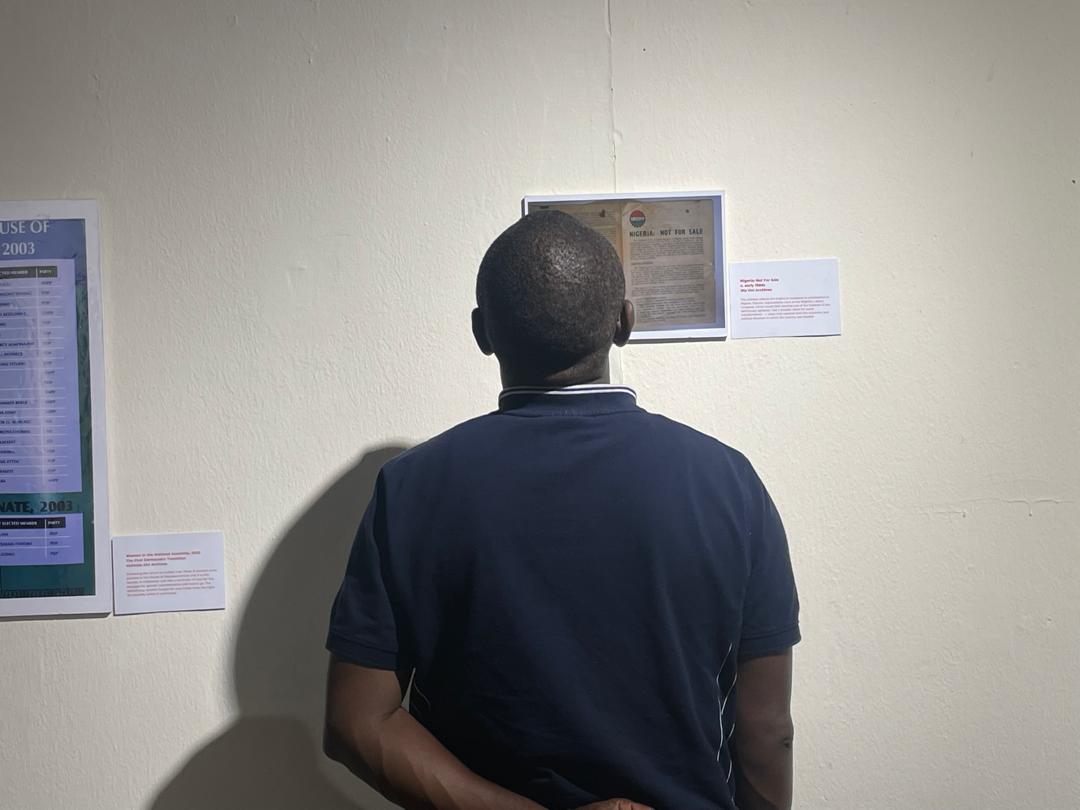
All images courtesy Sa’eed Husaini © 2026.
Archives are repositories of the past. A way of holding on. Of preserving. In various forms. Of different people. There is a need for archiving, for the future, for the past. To be a part of something larger, for belonging. But archives constantly raise new questions. Who decides what stays? What determines the longevity and sincerity of what stays? Who can we trust to tell the story correctly?
It has become obvious that it is largely believed that the left had little to no representation in Nigeria until the advent of social media. But before this time, people didn’t take bad governance lying down. They pushed back. Women pushed back. Men also. Communities and bodies were formed to discuss topical issues and express the displeasure of the public, especially in an era when dissent could mean death. It made all the difference and opened up the civic space—despite how limited—that we now enjoy.
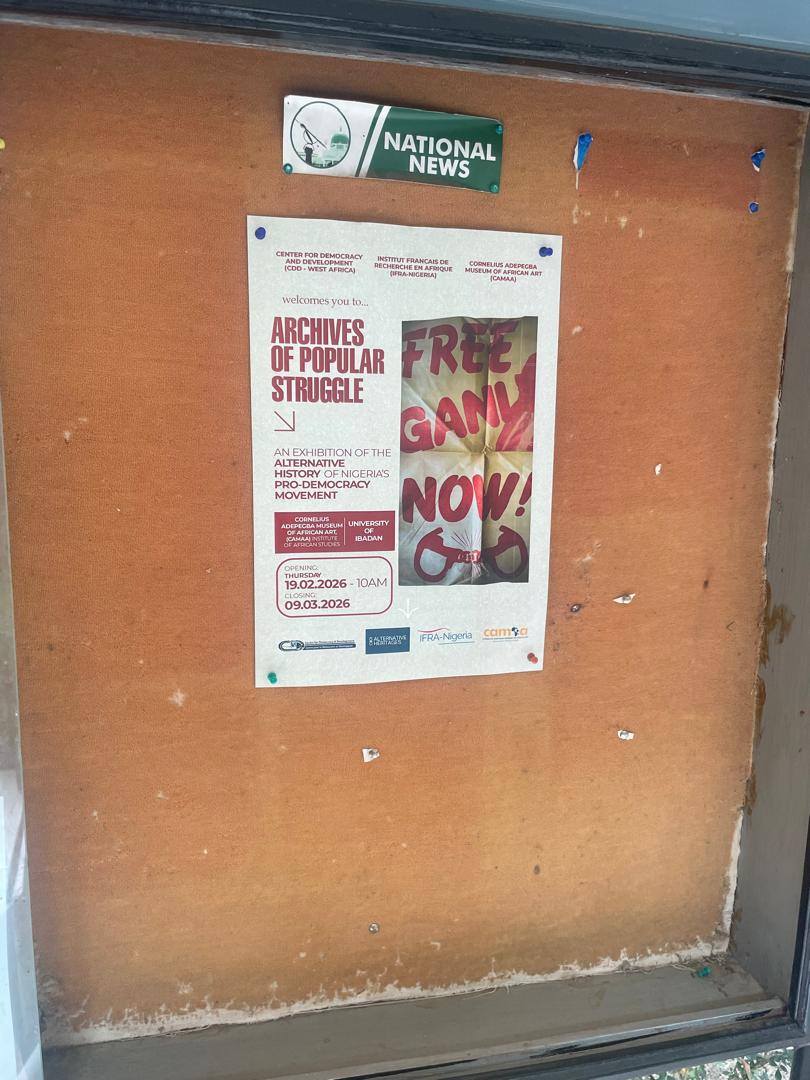
The recent exhibition, Archives of Popular Struggle, at the Corneliis Adepegba Museum, Institute of African Studies, University of Ibadan, opens a much-needed conversation on the history of activism and the role of the revolutionary intellectual in Nigeria. There is a large gap in the history of Nigeria that is not accounted for, so the average young person with little information at his or her disposal may believe that not much notice has been taken of certain issues, and that people have always stood around waiting for a saviour while letting go of their agency. The exhibition brings to the fore many people who have been relegated to the background and are largely unknown to the younger generation: from Chief Gani Fawehinmi, Kehinde Oni, and Tai Solarin to Patrick Wilmot. There is strength to be drawn from knowing that the path one is about to embark on has been travelled by others before.
Walking through the exhibition, I felt as though I had stepped into an alternative reality where time paused. The curators attempt a reconstruction of the past with posters, flyers, letters, and bits and pieces of correspondence that shared information about movements that had hitherto been out of public view. We see the works of campaigns and organisations such as the Gani Fawehinmi Solidarity Foundation, Women In Nigeria, The Action Women of Nigeria; movements such as The Abacha Must Go Rally are displayed as visible reminders of obvious rebellion against the totalitarian government. Among the exhibits are posters from the Kehinde Oni archives, Yusuf Bala Usman archives, Ola Oni archives, and Baba Omojola archives.
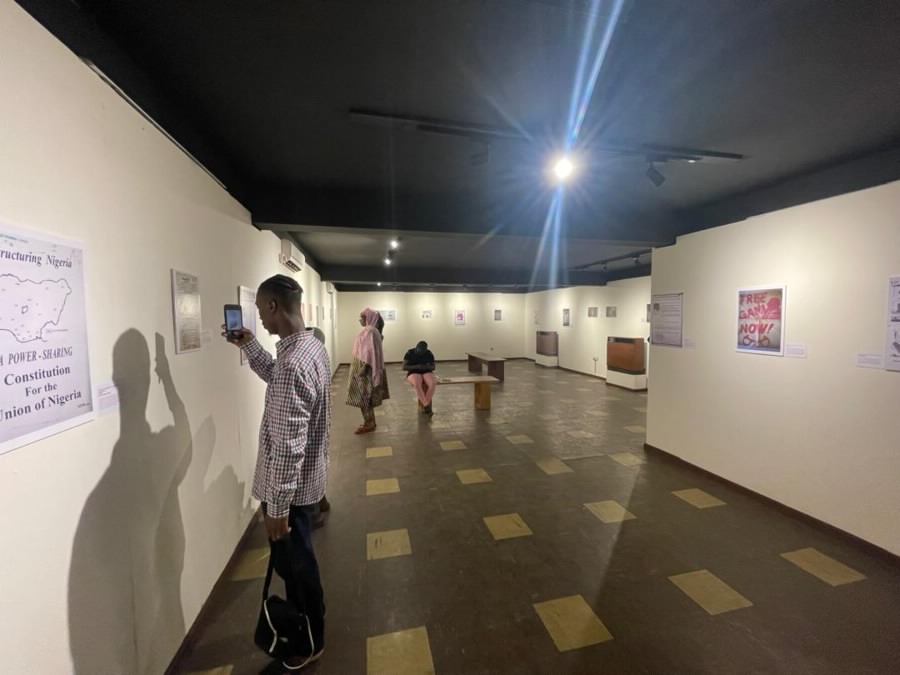
We see the existence of bodies such as the All Nigerian Socialist Conference in far-reaching corners of the federation; of Nigeria’s main Academic Staff Union, ASUU, pushing back against the Babangida regime’s structural adjustment programmes right as they were deployed in the mid 1980s, and ASUU’s prescient foretelling of the devastating effects these policies would have on public education.
One of the most striking things about the exhibition is the representation of the collective, the masses as active voices in the struggle for their own liberation. It is a reminder that ordinary people took part in their own redemption. Workers pushed back against leaders who betrayed the cause (receiving funding from state governments) by ousting them from power.
Although this exhibition tells a much-needed story, is it accessible to the general public? The vast majority of the viewers have been academics. There is not much room for an average Kunle to view the works. Indeed, I had difficulty gaining access to the exhibition venue because it was locked during official hours. It is not enough that works like these are curated. Special care ought to be taken that they are curated and exhibited within reach of everyday people.
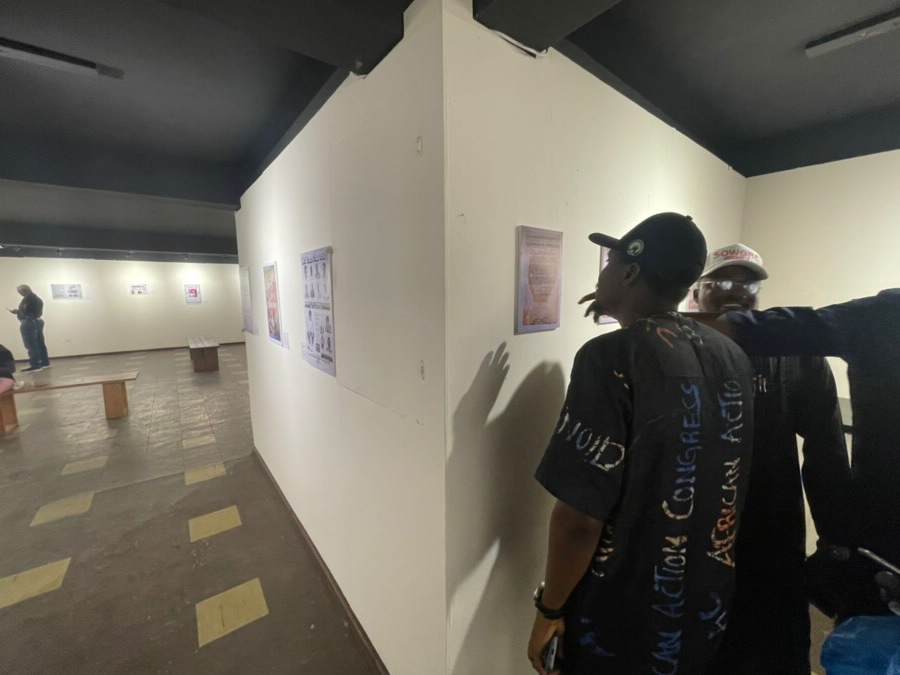
Moreover, will such an exhibition create conversations that lead to action? What can be expected to come of it? Will the opportunity arise to juxtapose the works of our predecessors against the work of our present-day activists? Will we learn from their mistakes and figure out how to do better without wasting resources? How can we begin to keep evidence of our reality in Nigeria in the present times? How do we intend to show the generation coming after us evidence of movements such as #EndSARS? And perhaps more pressing: If so much work was done in the past, why are we still struggling with the same socio-economic issues today? These are vital questions to be answered if the full political potential of the work is to be realized.
The Archives of Popular Struggle exhibition is a reminder that there is space for the intellectual in struggles, and there’s a nuance that only they can bring. There is a need for archiving, for the future, for the past. To be a part of something larger. To understand our struggle better.