Trumpism in Nigeria
Why does the anti-Black racism of the US president have defenders in Africa’s largest Black nation?
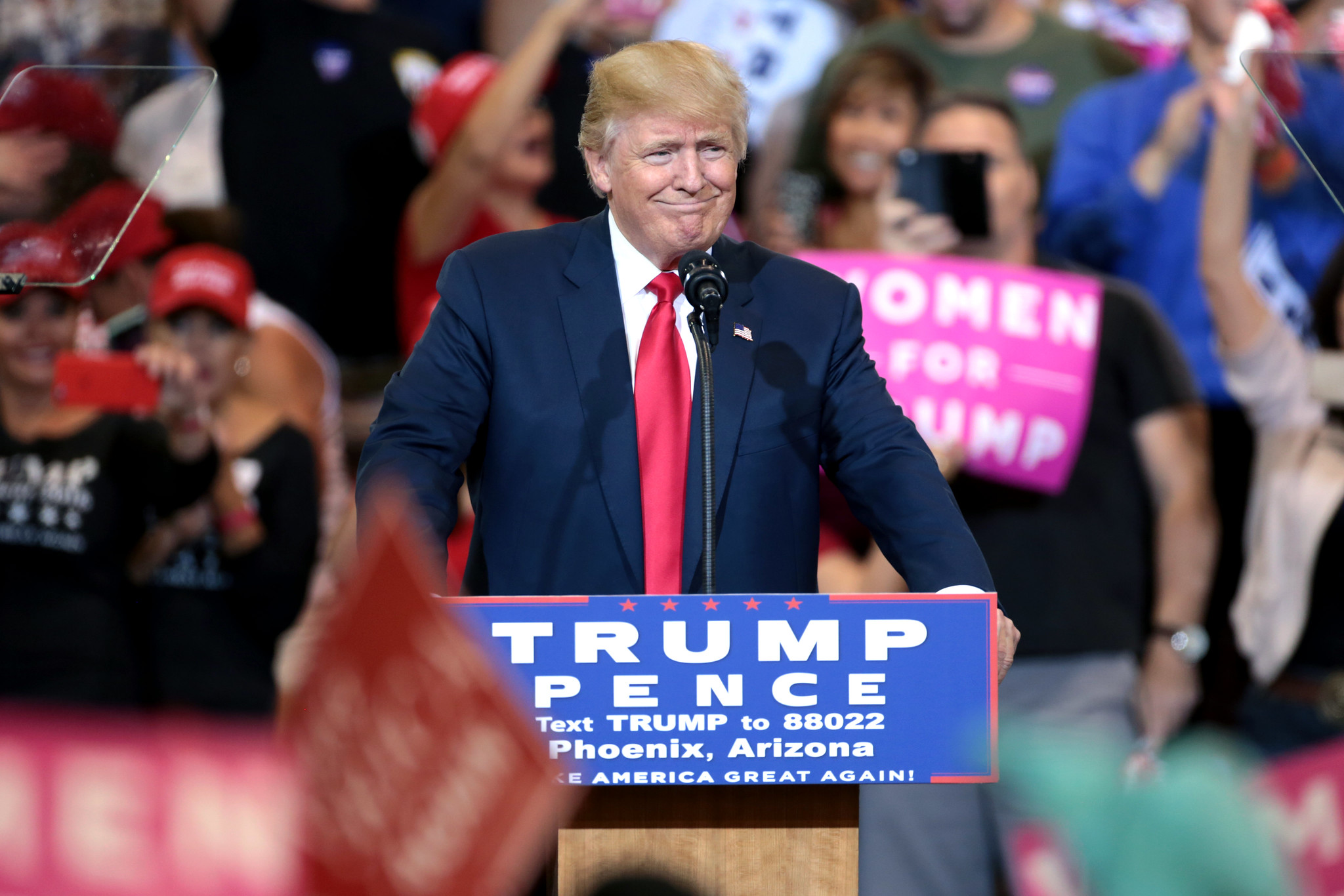
Donald Trump speaking with supporters at a campaign rally at the Phoenix Convention Center in Phoenix,
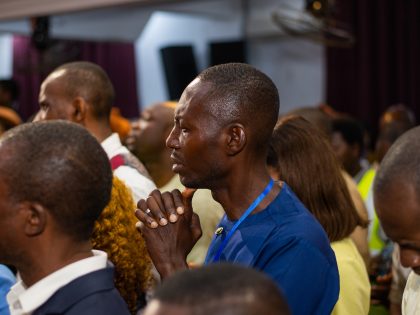
Trump’s posting of racist images of the Obamas provoked condemnation across the world, though few outside Nigeria noticed what happened next. As the images spread, Nigerian timelines lit up. In Nigeria, the reactions were sharply divided. Some joined the global condemnation of this anti-Black vitriol, while others, worryingly, defended Trump, anchoring this in his newfound role as a (white) savior to many Nigerian Christians, especially following his allegation of a Christian genocide in the country.
The continuing strength of Trumpism in Nigeria is particularly striking given that Nigeria has been subject to discriminatory US anti-immigration policies, including travel bans that targeted the country directly. Why, then, would Nigerians—themselves targets of the same anti-Black racism—embrace degrading imagery of the first Black US president?
Granted, Trump thrives on the attention from provocation. Yet Trump’s racist imagery is not mere provocation: It is part of a deliberate geopolitical strategy to deepen racial capitalism and inflame religious tensions in Nigeria for his own imperial ends.
Nigeria’s Christian nationalism and religious conservatism are being exploited—Trump’s populist overtures are a convenient smokescreen for the fortification of US influence in West Africa and the Sahel region. Nigerians have consistently ranked among Trump’s most favorable international audiences. Trump uses Christian propaganda, which feeds off historical ties to the evangelical churches in the United States, to reinforce Nigerians’ deepening social conservatism across religions and ethnic groups, and feeds into the admiration for strongman politics, the distrust of the new liberal internationalism and radicalism, and Islamophobia. On the other hand, many Muslims condemned the bombings and rejected US interventions. These split reactions expose a widening chasm between Christians and Muslims, the North and the South, and demonstrate how imported culture‑war scripts, religious nationalism, and a stubborn white‑savior fantasy shape responses to anti‑Black imagery in the world’s most populous Black nation.
The lack of global attention to the plight of Nigerians suffering under decades of domestic terrorism has given room for Nigerian Christians to cast Trump as an external savior of persecuted Christians, despite the Nigerian government’s pushback against “genocide” narratives. In contrast to Trump, Obama’s refusal to perform patronage is read as betrayal. This turns policy disappointment into permission to accept anti‑Black insults. Nigerian praise for Trump and disdain for Obama is not a contradiction—it’s a symptom of overlapping forces: white‑savior fantasies, religious nationalism, unmet expectations of racial kinship, and affective inversions that punish Obama more harshly because he is Black.
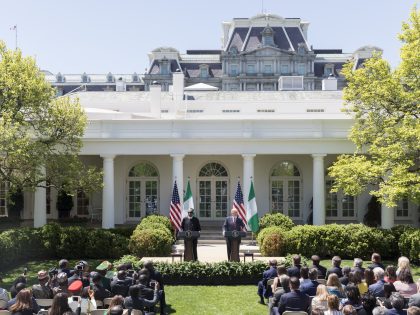
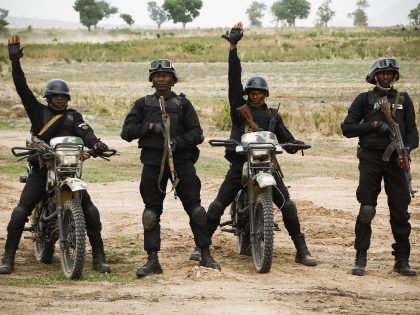
Yet the politics of race seems to be a distraction for Trump’s global imperialist agenda through racial capitalism and the attempts to rebuild the US empire. Trump’s play on religion and race meant that US troops landing on Nigerian soil and the ongoing development of a drone base in Northern Nigeria is going largely unnoticed and unchallenged.
Trump’s moves in Nigeria are beneficial to his faltering popularity back home. By presenting himself as a defender against global Christian persecution, he motivates his conservative Christian base and appeals to evangelical voters. He also uses Christian persecution to justify military actions and intelligence cooperation, giving him political cover for geopolitical actions in Nigeria. The Tinubu government used this to its own advantage, shifting the rhetoric to welcome US military assistance and strengthen its own geopolitics in the region.
In Nigeria today, the spectacle around Trump—his racist imagery, his white-savior posturing, and his amplification of “Christian persecution”—operates precisely as a distraction. It shifts attention away from geopolitical maneuvering and away from the everyday insecurity Nigerians face. In the project of racial capitalism, identity is instrumentalized and leveraged to authorize intervention, secure access, and reassert hierarchy. Nigerian identities are segmented for strategic use. First, Trumpist rhetoric casts Nigerian Christians as redeemable victims and Muslims as security problems, mapping neatly onto older racialized scripts that legitimate Western tutelage. Second, Nigeria’s crises are converted into political currency in US domestic debates. Third, the resulting ties are extractive; security cooperation and economic deals that continue to tie Nigeria into global order in a subordinate position, reproducing a familiar hierarchy with US (white, Western) actors as arbitrators of Nigeria’s governance, morality, and security, while Nigerians themselves are positioned as objects of rescue or discipline.
The political payoff is two-sided. While Trump mobilizes his conservative base; Tinubu welcomes US assistance through framing it as responsible statecraft amid cascading insecurity. Between them lies a bargain: spectacle at the surface, structure underneath. As attention is consumed by outrage and defense, the harder questions go missing: Who sets the terms of security cooperation? What forms of economic engagement are being locked in? Which Nigerian communities bear the risks, and who reaps the rewards?
To “un-ape” Trump, then, is not merely to repudiate his imagery. It is to refuse the racial-religious dramaturgy that legitimates unequal arrangements. It is to insist that Nigerian lives are not leverage for US elections, that faith is not a permission slip for militarized policy, and that Blackness cannot be conscripted to stabilize a racialized global economy. It is also to foreground Nigerian agency: cross-religious coalitions that resist imported culture-war scripts; civil society oversight of security agreements; transparent accounting of the costs and beneficiaries of foreign partnerships; and a development vision anchored in life-chances for the most vulnerable, not in the optics of patronage.
The stakes are clear. If distraction is the method, attention is the counter-practice: attention to the material, to the local, to the slow violence of extractive deals and securitized everyday life. Naming Trump’s Nigeria project for what it is—a racial-capitalist strategy that converts identity into imperial advantage—clears conceptual space for a different politics. The work ahead is to fill that space with Nigerian-led horizons of safety, dignity, and shared prosperity that neither seek nor require validation from a white-savior script—and grounded instead in Nigerian-led demands for an end to the violence, inequality, and religious manipulation that shape everyday life across the country.