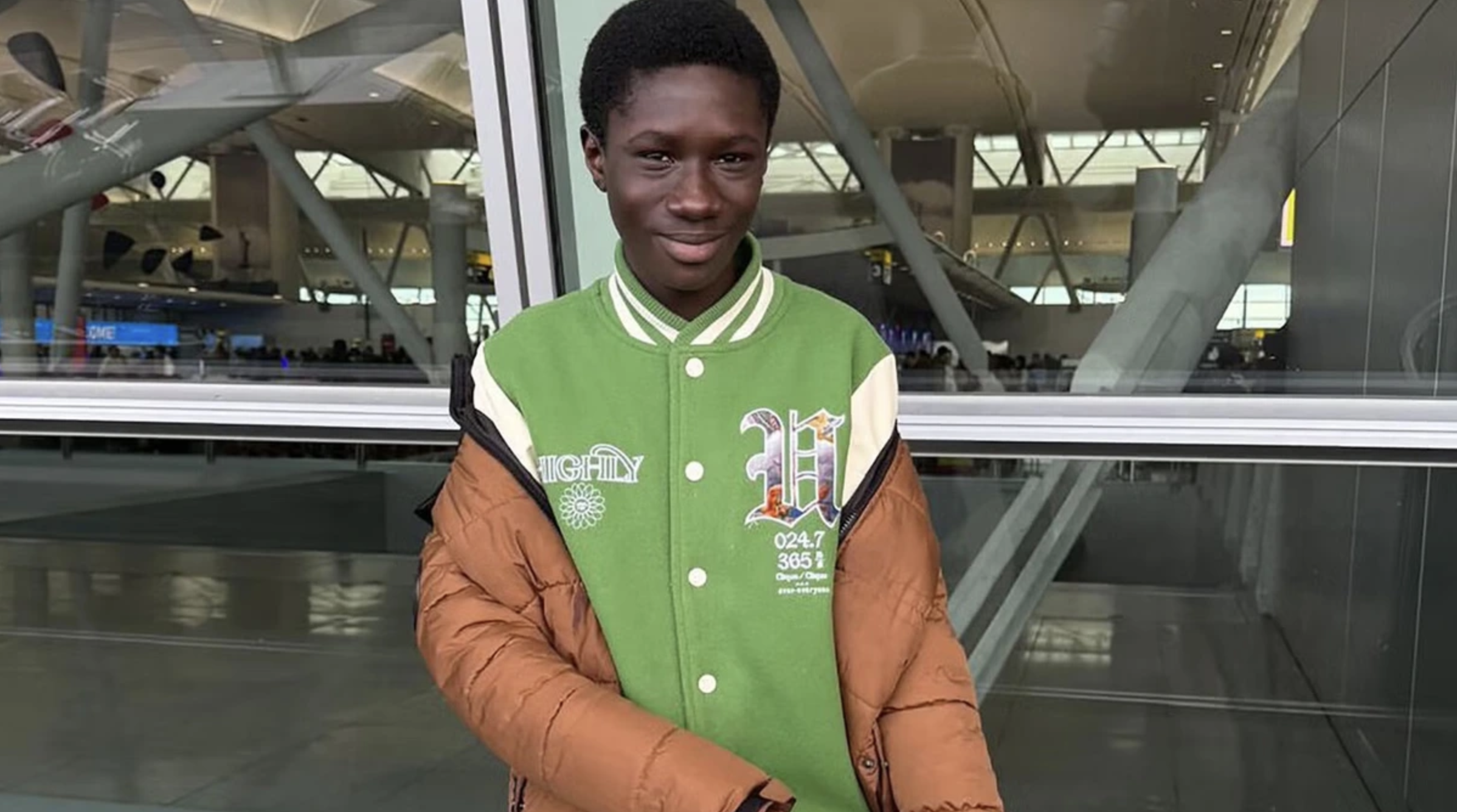
Javits Frimpong. In the latter half of the 20th century, New York City’s northernmost borough was effectively abandoned and left to burn by municipal authorities. Out of those ruins came some of the most influential countercultural movements in modern history, from hip-hop to the inextricable cultural nexus of salsa and freestyle. Over half a century later, the metropolis has become exceptionally skilled at embracing the cultural legacy of the Bronx, but still fails to meaningfully confront and repair the conditions that produced it. I grew up in what we affectionately call “Uptown New York.” Harlem was my primary stomping ground, but the Bronx was also an integral part of my coming of age. When the pressures of building a life in this city nearly crushed my family, the Bronx offered us somewhere to land: my mother, undocumented and raising two young children, found temporary shelter for us in the South Bronx, off 149th Street, and later in a short-stay motel further north in Baychester. These were far from glamorous beginnings, but the borough that much of New York had so casually written off had offered us something resembling the possibility of starting again. While we may have survived being relegated to the bottom of New York’s informal caste system, there were many moments when that outcome seemed far from guaranteed. Perseverance is not an inexhaustible resource, and New York is a punishing city; at several points, my mom nearly collapsed under the pressure of trying to get food on the table, shifting between nannying, cleaning houses, and working at garment factories. I became a latchkey child, exposed to physical and emotional violence in the hours she could not be present despite being a “good kid.” I witnessed my first stabbing in fourth grade, while my mother and I were living in a transitional facility near Claremont Park, and can still see the trickle of blood trailing the stretcher going down Morris Avenue. That same year, I gave my first witness testimony for a grand jury indictment. Before the age of 12, I viscerally understood that the poor communities of NYC were viewed by the rest of the city as irredeemable jungles where the Black and Brown underclass was abandoned to destroy itself while they looked on in feigned despair. This is the Bronx in which Thomas Frimpong was trying to build a life for his 15-year-old son, Javits, before he was senselessly and brutally murdered by masked assailants during his morning commute to school. Javits’s tragic shooting was around the corner from the stabbing I witnessed all those years ago, and while it happened decades removed from my childhood experience, some elements remain the same: a local community feeling abandoned in a moment of devastation, while nearby residents remain calcified in their fear of retaliation by both the streets and law enforcement (including the possibility of being taken by Immigration and Customs Enforcement, or ICE). In the midst of all of this panicked self-preservation, a young boy lay dying on the street for over half an hour, sealing his future before he had a chance to even fight for it. Javits’s death traveled farther than the young boy ever had the opportunity to, leaving waves throughout the Black Atlantic. From the Bronx to Accra, London, and all of the numerous interlinked digital communities of the Black diaspora, this tragic killing became a vessel for grief and anger, prompting responses from celebrities ranging from Ghanaian executive Bozoma Saint John to Cardi B and Ayra Starr. The now-viral video of his father’s abject despair and grief has been seared in my brain since last Thursday, reminding me of the innumerable moments of helplessness etched on my mother’s face whenever she would find out yet again that she couldn’t protect us from the violence and xenophobia endemic to the white supremacist American project.Yet, what began as an emotional demand for justice quickly spiraled into an opportunity to prosecute arguments that long preceded Javits’s brief time on Earth, the circulation of his death revealing some of the worst impulses of diasporic discourse. At the time of writing this, the identities and ethnic backgrounds of the perpetrators remain unknown, but that has not stopped dangerous speculation from metastasizing throughout social media. An investigation that unfolds at a deliberate pace does not satisfy the demands of an outrage economy, and creates a vacuum that invites further rumor; viral posts have alleged knowledge of the ethnicity of the attackers, prompting days of intraracial antagonisms. Police are investigating reports of school bullying, gang violence, and mistaken identity as possible causes—as the case involves children, the process of reviewing student records and naming possible suspects is naturally deliberate and in accordance with federal laws around children’s privacy. But with limited information, the delay between what is known and the answers people are seeking is giving way to amplifying unsubstantiated rumors on social platforms that do not monitor distinctions between allegation and fact (even going so far as to circulate screenshots of Javits’s classmates’ discussions on social media under the guise of detective work). Instead of coming together in a moment of unique grief, a murdered child has become another round in an endless competition over which segment of the Black diaspora has suffered the greatest indignity at the hands of another, as the apps we use to navigate these hostilities guilelessly stoke the flames of outrage that are threatening to boil over. This explosion of misinformation and dangerous vigilante detective work here is not so much a failure of individual digital fact-checking as it is evidence of political fragmentation. It is tempting to interpret Javits’s death exclusively through the framework of xenophobia, particularly given the hostility that any group of “others” has historically encountered in American schools. Assimilation to Americana requires adopting the informal hierarchies of exclusion that organize that community through daily edits to the self. One learns which accents attract ridicule, which names invite suspicion, which neighborhoods are considered dangerous, and which groups can be safely blamed for the failures of the social order. In an ideal scenario, that knowledge would produce solidarity across our nuanced struggles; but more often than not, it produces a desire to separate oneself from the people who remain most vulnerable. Violence and xenophobia are endemic tentpoles of American socialization, and New York’s cosmopolitan self-image is no exception to that rule: it is no surprise that our youth, in turn, internalize the mechanics of that hostility and capitulate to the same aspiration to secure one’s precarious position by placing someone else beneath it. There is a psychological violence inherent in growing up with the understanding that your future has already been condemned to that of a statistic; that feeling of inevitability seeps into your pores and teaches you that your life, much less the lives of others, has little value. For most of my life in the United States, I was the first person from the Comoros that most of my peers had ever encountered. I made my complicated and relatively obscure identity a point of connection, finding common ground with African Americans, Latinos, West Africans, Caribbeans, and anyone else whose cultural world overlapped with mine in some way, and have long understood this curiosity as the foundation of my intellectual relationship to Black cultural production. That remains true, but over the years I have come to realize that part of the impulse behind that practice was the inherent desire to be accepted. Every connection was, in some small way, an attempt to tell the people around me that I was just like them, before anyone could decide that I did not belong. While I was never ashamed of my identity, I knew enough about being different to understand the potential dangers of standing apart. I recount these experiences cautiously—despite both being stories of poverty and immigration in the Bronx, my shared narrative with the Frimpongs has clear limits. Although French was my dominant language when I started school in kindergarten, whatever traces of an outside accent I might once have carried had disappeared by second grade; my brother was born in New York. Our experiences of displacement and exclusion are of a different degree than that of a teenager arriving from Ghana at 14. But it is impossible to separate the circumstances of Javits’s murder from the social infrastructure of a city that has trained generations of children to feel that their futures are conditional. It would be uncomplicated to adopt a single silver bullet of xenophobia and Afrophobia as the comprehensive explanation of this tragedy, but Javits’s death instead sits where several systems meet, from a deeply segregated school system to a punitive police force prepared to monitor children more consistently than it supports them or offers anything resembling neighborhood safety. Even his father’s career as a taxi driver is a factor, as the crushing burden of taxi medallions has taken a toll on many African drivers, some of whom have died trying to make ends meet. Even the rumored gang violence has a systemic thread: many young people in the Bronx join groups seeking protection and belonging in their neighborhood, only to find themselves participating in the very forms of intimidation they initially hoped to escape. Any narrative that doesn’t wrestle with all of these layers is nothing less than an oversimplification. Absent any clear answers, I have spent the last few days thinking about the present value of a young Black boy’s life. The immigrant dream has always been a wager at best; a willingness to gamble that relocating to the center of the empire will afford someone the mobility to change the lives of the family they left behind, and that the eventual returns will justify the immense financial and emotional cost of separation. Javits’s parents could not have possibly known that the journey imagined as an opening might end as a death certificate. His mother was thousands of miles away, separated from her child by the economic and bureaucratic realities of transatlantic migration. The family was trying to do what generations of immigrant families have done: assemble a future incrementally, scraping the funds together one visa at a time. But once Javits was killed, the usually frozen levers of migration and displacement began to move. Mayor Mamdani personally contacted the president of the United States to secure a visa for his mother as Ghana’s government mobilized diplomatic assistance and committed to covering her travel costs. Municipal officials began issuing statements; a GoFundMe to support the family’s immediate needs is rapidly approaching a seven-figure sum. The resources, access, and institutional attention that can take years for an immigrant family to obtain suddenly became available once their child was dead; I can only imagine how unbearable that cruel irony must feel alongside the overwhelming grief. I have spent much of my adult life thinking about the cultural worlds that people like us created under the weight of those conditions, and keep returning to this question of value. What is the value of a child’s unfinished dreams? What does it mean to belong to a global Black community that can mourn a child across oceans, but has not yet learned how to guarantee him a future? What is the value of a life that the city only learns to recognize once it has ended? Understanding violence is not the same as excusing it, but if we want to prevent another child from being killed, we must be willing to ask how violence becomes an available language for children in the first place. We tell young people that their lives are precious while surrounding them with institutions that often treat them as disposable. Punishment, humiliation, and coercion are the primary instruments of American social order, yet we are surprised when they adopt that same violence. Javits Frimpong deserved more than the opportunity to survive; he deserved a future. But the task is not simply to make sure that the next murdered child receives the same outpouring of public attention; it is to make material commitments to create a world where poverty and social death are not viewed as predetermined fates in a child’s life. This undertaking requires that we not only challenge the state, but also challenge the ways we reproduce its hierarchies among ourselves. We cannot denounce the violence and xenophobia of the American state while reproducing its hierarchies in our own communities and digital spaces, and we certainly cannot demand that Black children be treated as fully human while reserving our empathy for those whose ethnic origins resemble our own. On Monday, Javits’s classmates organized a school walkout and gathered in mourning, carrying signs demanding justice and protection from gun violence. They reminded reporters that Javits was more than a symbol—he had friends, family, and a community that was deeply traumatized by losing someone they loved. These young people were not speaking in the language of the diaspora wars being waged on the internet on their behalf; they were asking for the ability to live. We should listen to them. – Shamira Ibrahim, Francophone regional editor |