The game behind the game
The football gambling industry across Africa preys on the risk factors built into the game. The only viable solution is investing in durable, developmental frameworks at the grassroots level.
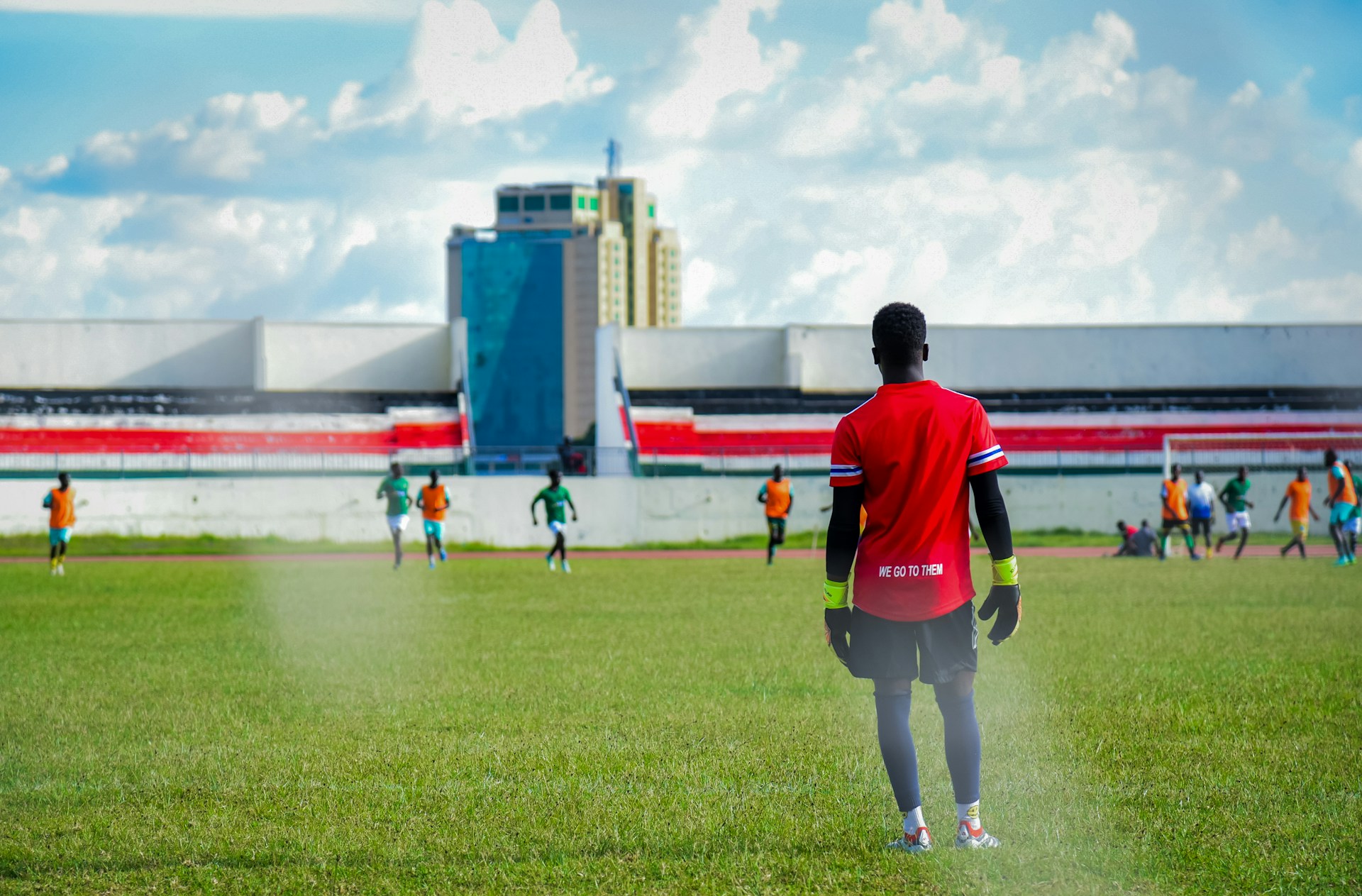
Photo by Hammilton Ojijo on Unsplash
Across much of the investigative writing around gambling, betting, and football, the most obvious narrative is usually told in four ways: Footballers, referees, and the institutions responsible for developing the sport are corrupted; betting destroys youth; gambling companies exploit poor people; society has lost its morals.
None of these are wrong, but over time they seem to produce more outrage than understanding about how football leaves itself open to betting.
Betting does not actually create football’s culture of risk from scratch. It finds and enters a game already built and already training millions to become fanatical about living inside long odds, uncertain progression, selective visibility, and emotionally charged hope.
Along with many others across the grassroots levels of the game, every weekend I watch football and ask young people to make a socially acceptable, life-defining bet: to risk time, identity, and often education for a very narrow chance of going pro. Football invites hundreds of millions into its emotional and aspirational universe, while offering genuinely professional outcomes to only a microscopic fraction. This extreme-risk aspiration is a fundamental feature and story of the game.
FIFA’s own amateur football environment analysis suggests a global football population of roughly 28 million registered players, 75 million unregistered competitive players, and 300 million casual players. The FIFA Professional Football Report then shows that the global professional layer is only 128,694 professional players across 3,986 professional clubs in 135 countries, with 71 countries reporting no professional players at all.
That means football’s aspirational universe is vastly larger than the formal pathways and structures through which the game is governed and administered. For many young players, the game becomes a structure of long odds before the betting industry enters the picture and sets up to monetize them.
This is part of what makes the Kenyan game so revealing. Here, football is socially enormous but thin developmentally. The game is present everywhere: in schools, estates, villages, WhatsApp groups, betting slips, matatu conversations, TV broadcasts, and on young bodies carrying ambition far larger than the structures meant to hold it.
Football is one of the most emotionally available things in public life, and the mobile phone is the new football terrace. Through it the game has outgrown the pitch and the stadium, migrated through the screen to where it now also lives across social media platforms, betting wallets, deposit prompts, odds pages, accumulator screenshots, and loan apps. At the same time, real-life stable pathways through the game are rare, uneven, and weakly protected.
The amateur football environment analysis goes on to show that only 73 percent of member associations have regional associations, 74% collaborate with the confederation on development, 20 percent of governments have plans to improve health and well-being through amateur football, and 76 percent of member associations are not well-connected with private organizations. It also says 84 percent of countries report that governments are responsible for amateur football infrastructure, while only 20 percent of governments have active plans to use amateur football to improve health and well-being.
Taken together, this suggests that football, given its cultural capital, is often expected to carry significant social weight without a correspondingly strong public-development framework around it. If public systems are weak in such ways, other actors step in.
Weak public-development frameworks also tend to produce weak labor protection inside football. Here, the Professional Football Report continues to be useful: Globally, only 69 percent of member associations have a standard contract, 50 percent have a player association, 41 percent have a minimum salary requirement, and only 19 percent report a collective-bargaining agreement.
In Africa specifically, the landscape is weaker. The report says the current register shows 8,485 professional players in CAF reporting countries, with 92 percent of players homegrown. But only 50 percent of CAF member associations have a standard contract, 46% have a player association, 28 percent have a minimum salary, and just 4 percent have collective bargaining agreements.
This matters because it means the betting and match-fixing story should not be told only as a moral story about bad actors. FIFA’s own data helps show that many football labor environments are weakly protected, and betting preys most easily where football labor is least protected.
The young player, the underpaid player, the unpaid player, the coach without structure, the referee without cover, the club without stability—these are not side stories to football’s betting problem. They are part of the environment that makes the problem possible.
FIFA also shows that globally 55 percent of top-tier competitions have a title sponsor, and among the top three sectors, betting companies rank second at 18 percent, behind telecommunications at 26 percent and ahead of banks at 14 percent. CAF’s snapshot shows 56 percent of top-tier competitions have a title sponsor, with betting companies second at 12 percent, behind telecommunications and ahead of alcoholic beverages.
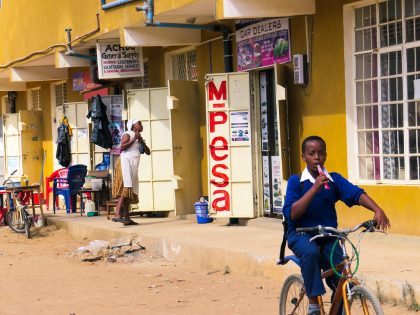
The 10-year KES 1 billion (8 million USD) SportPesa sponsorship of the Kenyan Premier League is a local example of the point made by FIFA’s own global benchmarking: Betting is not some fringe commercial category hovering at the margins of the game. It is already one of the leading title-sponsor sectors in top-tier football competitions and a key player in the operating logic and marketing of the game.
The fact that in CAF the homegrown proportion of players is 92 percent shows clearly that football is still overwhelmingly local in terms of who plays it. However, the game is rarely local in terms of who profits from it. The problem is the degree to which it is increasingly shaped by commercial systems that are not local and which monetize it in ways that are extractive, external, or indifferent to development.
The gap between development rhetoric and commercial reality is also highlighted by one of the most revealing statistics in the Professional Football Report: regulations specifically designed to support homegrown players exist in only 27 percent of countries globally. In CAF, only 11 percent of member associations have such regulations, yet betting is already one of the top title-sponsor sectors.
In other words, many football systems are not even strongly regulated around developing homegrown players in the first place. In these kinds of contexts and environments, football easily becomes more organized around competitions, sponsorship, transfers, and audience extraction than around actual player development.
Alongside this lack of public-development will and frameworks, the reports also highlight how football, despite being so socially huge, is at the same time physically underprovided for. With just 59 pitches per 1 million people around the world, the game has been developing mass participation on relatively thin infrastructure. So, betting appears both as temptation and as one of the few highly organized monetization systems attached to the game. The developmental ecosystem is underbuilt, while the systems, platforms, and business models that monetize attention are not.
This is what football ends up looking like when development has not been built strongly enough to resist extractive forces. It is not just that betting is harmful; it is that the game is weak where it is strong.
Betting succeeds in football not only because people like risk but also because football already operates as a world of mass hope and the long odds that come with weak labor protections, low homegrown regulation, incomplete amateur support structures, limited infrastructure, and uneven professional opportunity.
The game’s cultural and economic universe is enormous, but its developmental frameworks and guarantees are not. Betting enters that gap, studies it, and learns how to profit from it.