Constant Messiah
Singer Kaneng Lolang is a cosmopolitan currently living in Ouagadougou. She’s spent quality time in Siberia and Brooklyn, but her roots are in Nigeria, Lagos, specifically
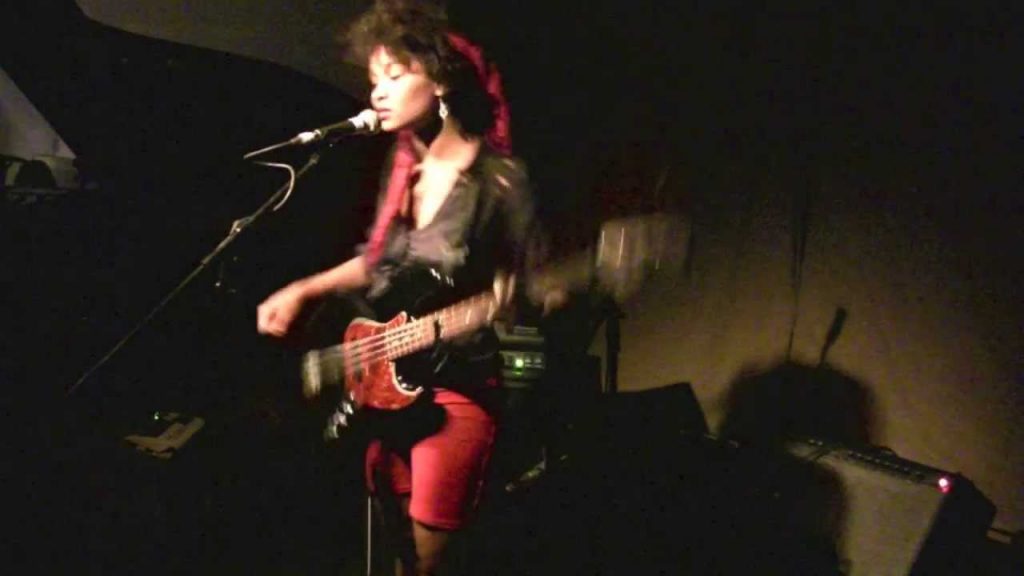
Image: Kaneng Lolang.
Earlier this year I attended a museum opening in which the curator admitted to being completely unaware of the existence of Burkina Faso until shortly after the artist being presented, the late Christoph Schlingensief, had relocated there. It was an innocuous enough confession—coming well before the leadership upheavals of the past two weeks—but one that made me aware of my own shortcomings re: the landlocked West African nation. I’d certainly been aware of Burkinabes for quite some time, but if asked I might not have been able to picture exactly where they were on a map without being reminded that they’d lived in a French colony called Upper Volta until 1984 (read: years after my last high school geography class). I suspect the curator, a cosmopolitan German about my age, probably had a similar excuse.
Singer Kaneng Lolang is a cosmopolitan currently living in Ouagadougou. She’s spent quality time in Siberia and Brooklyn, but her roots are in Nigeria, Lagos, specifically. In interviews she’s suggested that Lagos may have lost its ability to musically hypnotize her, and it’s clear that the video for “Constant Messiah”—shot earlier this year in and around Bobo Dioulassa in southwest Burkina Faso—is an attempt to retain some of the trance-like mysteries her music embraces. As a result, the minimalist bass loop seems both tribal and inviting; the violin pierces, creaks and crackles, an eerie echo to the video’s distorted images. What does it all mean? Don’t expect Lolang’s lyrics to put a fine point on it. She’s clearly opting for blurred lines.