Paul Kagame Spins Youtube
Paul Kagame is a skilled media operator. Sending unprepared interviewers his way, is not how to do journalism.
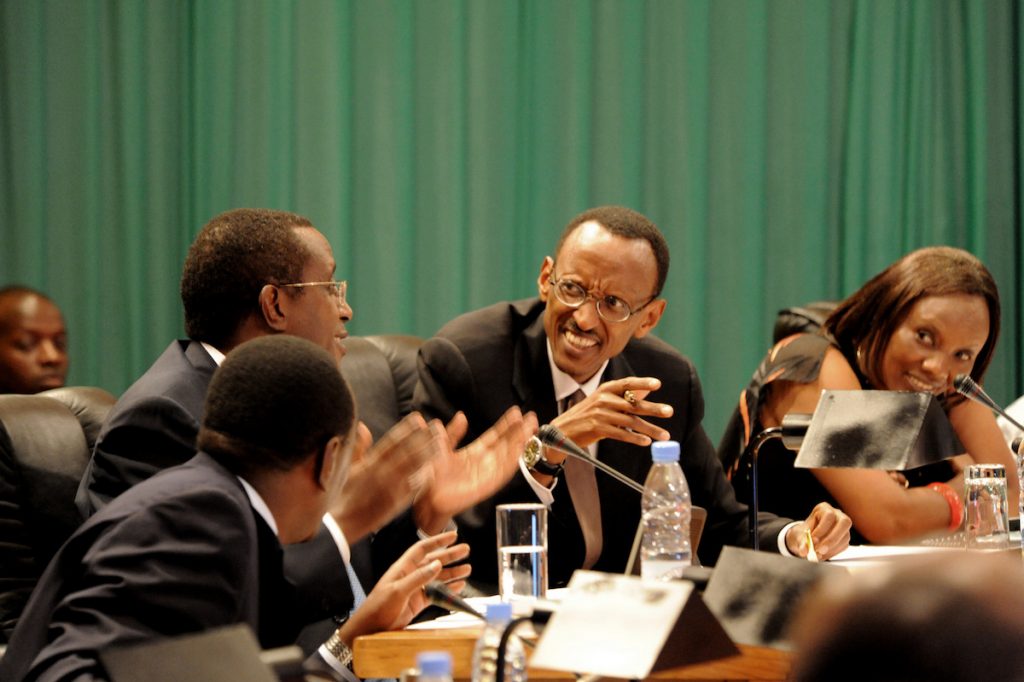
Kagame in Umushyikirano. Image credit Government of Rwanda via Flickr.
I just wasted 47 minutes watching the latest installment in YouTube’s much hyped “World View” series with presidents and prime ministers; this time the subject was Rwanda’s Life President, Paul Kagame. The interview was conducted by Khaya Dlanga, the South African blogger and “YouTube partner,” and billed as “ . . . the first YouTube World View interview with an African leader.” Previous interviewees included David Cameron and the Spanish Prime Minister José Luis Rodríguez Zapatero. Many people have tweeted about the Kagame video or blogged about it with little comment. I doubt many of them even watched it.
Basically, it is like watching paint dry. But that’s probably the point with the whole thing. Kagame gets away with saying nothing. Dlanga is no match for Kagame. Of course, we’re not surprised by Kagame’s tactics. As we know, he is good at that. (Adam Hochschild recently referred to Kagame as “the media-savvy autocrat.”)
Kagame is never forced to answer real questions by Dlanga: whether about his regime’s destructive role in the neighboring Democratic Republic of Congo (retaliatory violence against Hutus, but also Rwanda’s role in the DRC’s drift into a long war) or the persecution and assassination of political opponents and journalists back in Rwanda, among others.
It felt like the questions, submitted online, were prescreened. They were all softballs. Kagame gets asked questions about “the future of Africa;” the diaspora; “the youth;” and what advice he has for “undemocratic leaders” (that when he wins elections with plus 90 percent of the vote) or for countries “like Nigeria, Libya and the DRC divided along ethnic lines.” Finally, about 20 minutes in, a viewer got to ask Kagame about stepping down after his second term ends in 2017 (technically Kagame has served more than two terms, but who is counting). Kagame, clearly annoyed, doesn’t really answer the question, and Dlanga doesn’t follow up. Which is when Kagame faces the final question: “If you could dine with one person . . . who would it be and why?” Shake my head. What?
To sum it up: Kagame has a strategy for being elusive in interviews (just mouth a bunch of platitudes and hide your annoyance well), but we have to ask what Dlanga and the producers were up to here. Did Dlanga actually prepare for this interview? Or was he just wise, knowing how Kagame’s supporters deal with his critics? (The link takes you to a story about academics who wrote a critical book about Rwanda and Kagame.)
UPDATE: Here’s what happens when Kagame comes up against journalists or interviewers who are well-prepared and ready. Kagame, who is quite active on social media (an exception among national leaders) will go on a twitter rant.